
Lithuanian traditional foods
Rauginti agurkai
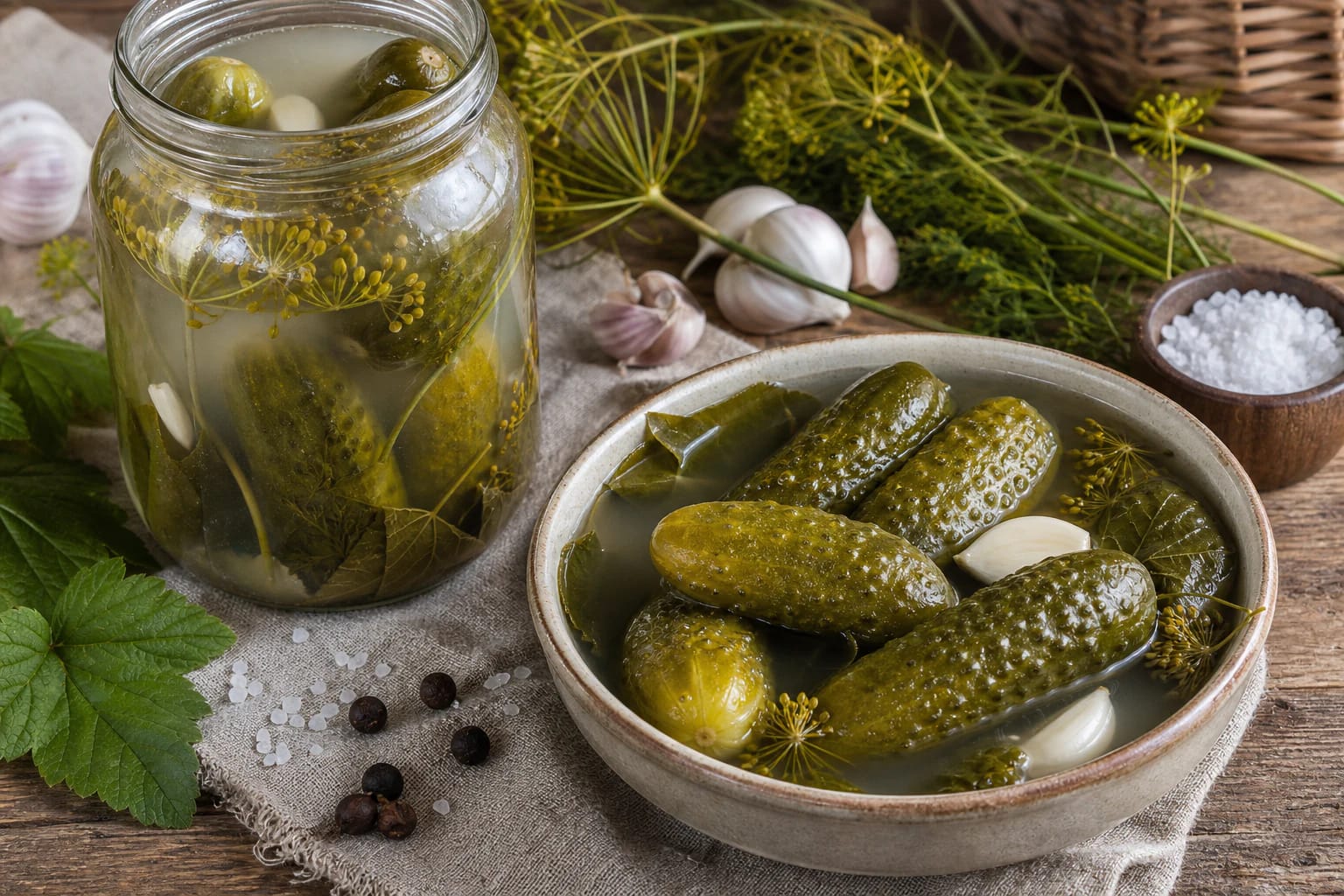
Rauginti agurkai are cucumbers kept in salt brine with dill, garlic, horseradish or other leaves while lactic fermentation takes place. They differ from vinegar-pickled cucumbers because the acidity develops through fermentation rather than added vinegar.
Food and heritage context
- Category
- Fermented vegetables
- Type
- lacto-fermented cucumbers in brine
- Heritage status
- living winter preserves tradition
- Context
- Cucumbers, brine, dill, garlic, horseradish leaves, fermentation, small barrels, jars
Names and variants
Fermented cucumbers, Barrel cucumbers
Fermented, not vinegar-pickled
In rauginti agurkai, acidity develops during fermentation. In vinegar-pickled cucumbers, the acidity is supplied by vinegar.

Fermented cucumbers therefore have a livelier lactic acidity and a different aroma. According to the Universal Lithuanian Encyclopedia, fermentation is a biochemical preservation method: lactic acid formed from carbohydrates during fermentation preserves the products by suppressing spoilage bacteria, so 1-3% salt is added and vitamin C remains in fermented products.
Spices
Dill umbels, garlic, horseradish leaves, cherry, currant, or oak leaves add aroma and help cucumbers stay firm.
Family recipes vary in spices, but the brine logic remains the same.
Under the brine
Cucumbers must be submerged. If they rise above the liquid, they can mold and spoil.
A clean weight, small plate, or special fermentation weight is used for this.
Serving
Rauginti agurkai are eaten with potatoes, meat dishes, porridges, sandwiches, herring dishes, and winter soups.
They add acidity and crunch to rich dishes.
Recipe
How to ferment cucumbers
When fermenting cucumbers, do not reduce the salt casually and keep the cucumbers under the brine. This matters for both flavor and safety.
Ingredients
Method
- Wash the cucumbers and soak them in cold water for several hours.
- Place spices and cucumbers in a clean vessel.
- Dissolve the salt in water and pour over the cucumbers.
- Weight them down so the cucumbers stay under the brine the whole time.
- Keep at room temperature until fermentation begins, then move to a cool place.
Notes
Mold, a bad smell, or slimy brine are signs not to eat the product.
Use food-safe vessels for fermentation.
Rauginti agurkai: frequently asked questions
Which cucumbers are best?
Small, firm, fresh cucumbers without soft spots. Overgrown cucumbers soften more often.
How much salt should be added when fermenting cucumbers?
About 30-40 g salt per liter of water is common, but follow a tested recipe.
Why add horseradish and oak leaves?
For aroma and firmer texture. Their tannins can help cucumbers stay crisper.
Hot or cold brine?
For fermentation, cold or cooled brine is often used. Hot brine can change the texture.
Why do cucumbers soften?
Old cucumbers, too much warmth, too little salt, unsuitable vessels, or fermentation mistakes can cause softness.
How are fermented and pickled cucumbers different?
Fermented cucumbers sour in brine, while pickled cucumbers are preserved with vinegar.
Can they be fermented in jars?
Yes, if the jars are clean, cucumbers are submerged, and there is room for fermentation gases.