
Lithuanian traditional foods
Raugintos daržovės žiemai
Raugintos daržovės žiemai are one of the most important Lithuanian ways to prepare stores: cabbage, cucumbers, beets, and other vegetables are fermented with salt and spices and kept cool so winter meals have acidity, crunch, and vitamins.
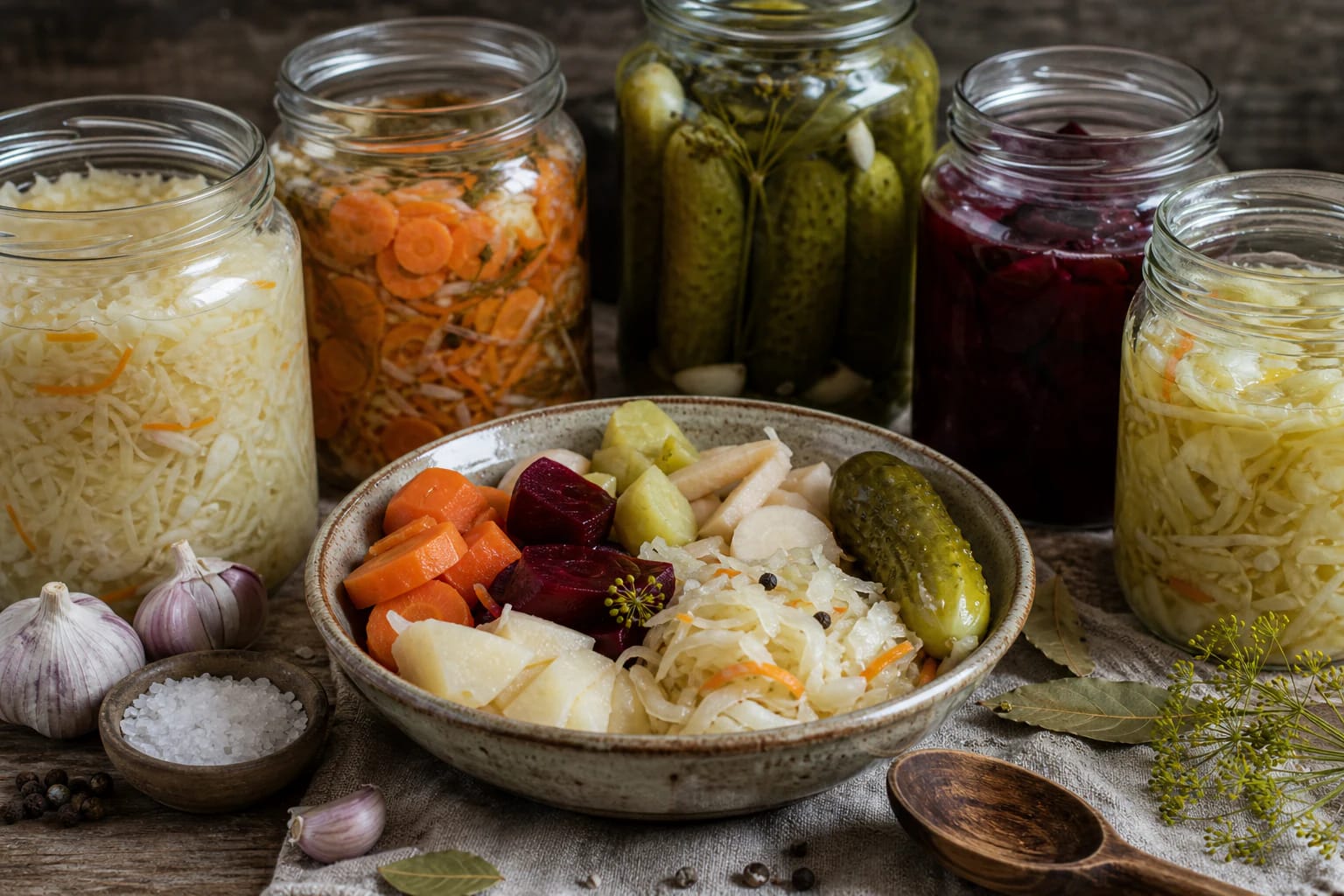
Food and heritage context
- Category
- Fermented vegetables
- Type
- lacto-fermented vegetable stores
- Heritage status
- living winter preserves tradition
- Context
- Cabbage, cucumbers, beets, carrots, caraway, cranberries, salt, brine, barrels
Names and variants
Vegetables for winter, Fermented cabbage and vegetables
Winter stores
Fermentation made it possible to keep vegetables for winter without modern refrigerators. Acid, salt, and cool storage help preserve food.
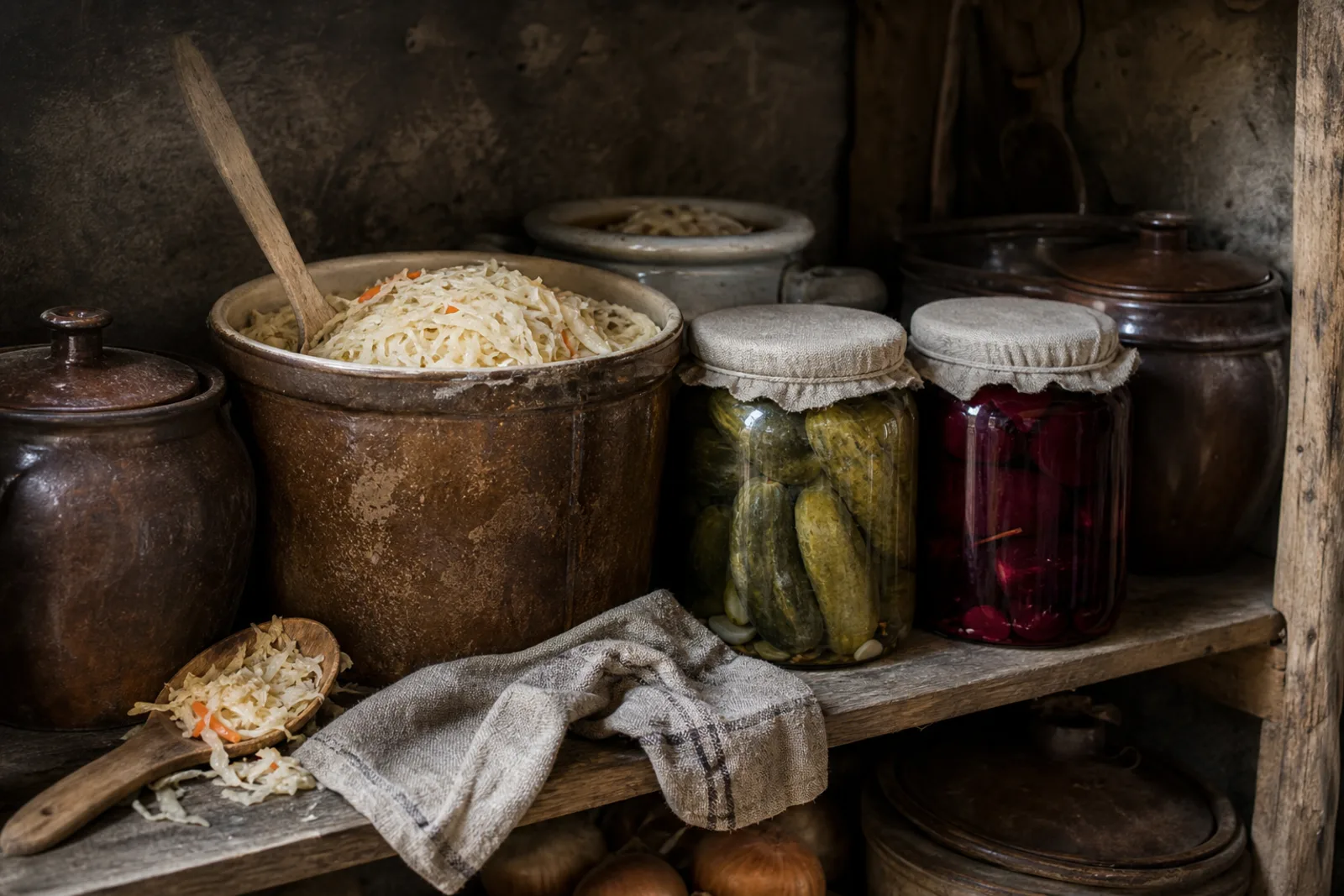
In Lithuanian cuisine, sauerkraut, fermented cucumbers, and fermented beets are especially important. According to the Universal Lithuanian Encyclopedia, during fermentation vegetables are preserved by lactic acid formed from carbohydrates, so 1-3% salt is added; cabbage and cucumbers in particular are fermented, as are fruits and mushrooms, and vitamin C remains in the products.
Dry fermentation and brine
Cabbage is often fermented dry: salt draws out its own juices, and the vegetables ferment in their own liquid. Cucumbers and many mixed vegetables are prepared in brine.
In both cases, the vegetables must be submerged under liquid.
Spices
Caraway, carrots, tart apples, cranberries, dill, garlic, horseradish, and leaves create different flavors.
Additions must be clean and must not prevent the vegetables from staying under liquid.
Safety
Fermentation is not random souring. It requires proper salt, clean vessels, weight, and temperature.
If mold, a bad smell, sliminess, or an unpleasant soft texture appears, the product should be discarded.
Recipe
How to ferment vegetables for winter
Fermented cabbage with carrots and caraway
Cabbage is fermented dry with salt, while cucumbers or assorted vegetables more often need brine. All vegetables must remain under the liquid.
Ingredients
Method
- Finely shred the cabbage and grate the carrots.
- Mix with salt and caraway, then knead firmly until juices are released.
- Layer into a clean vessel and press very well so liquid appears on top.
- Weight down with a clean weight so the cabbage stays under the liquid.
- Keep at room temperature until sour, then move to a cool place.
Notes
Do not reduce the salt casually, because it matters for fermentation and texture.
Use food-safe vessels, and do not eat products with mold or a bad smell.

Raugintos daržovės žiemai: frequently asked questions
Which vegetables can be fermented together?
Cabbage with carrots, cucumbers with spices, beets separately, or tested mixed-vegetable combinations can work.
How do dry fermentation and brine differ?
In dry fermentation, salt draws out the vegetables' own juices; in brine, vegetables are covered with a salt solution.
How much salt does cabbage need?
Often about 1.8-2% of the vegetable weight, but follow a tested recipe.
Why must vegetables stay under liquid?
This protects them from air and mold and lets fermentation proceed more safely.
What temperature is suitable?
Room temperature at the start, then a cool place so fermentation slows.
Is vinegar needed?
No vinegar is needed for fermentation because acidity develops during the process. Vinegar belongs to pickling.
Can the salt be reduced?
It should not be reduced casually. Salt matters for safety, texture, and the course of fermentation.
When should fermented vegetables be thrown out?
If there is mold, a bad smell, slimy brine, unusual softness, or a suspicious taste.