
Lithuanian traditional foods
Rauginti burokėliai
Rauginti burokėliai and their rasalas are an old way to keep beets and obtain a sour base for beet soup, šaltibarščiai, or salads. The acidity develops during fermentation, so cleanliness, salt, and proper storage matter.
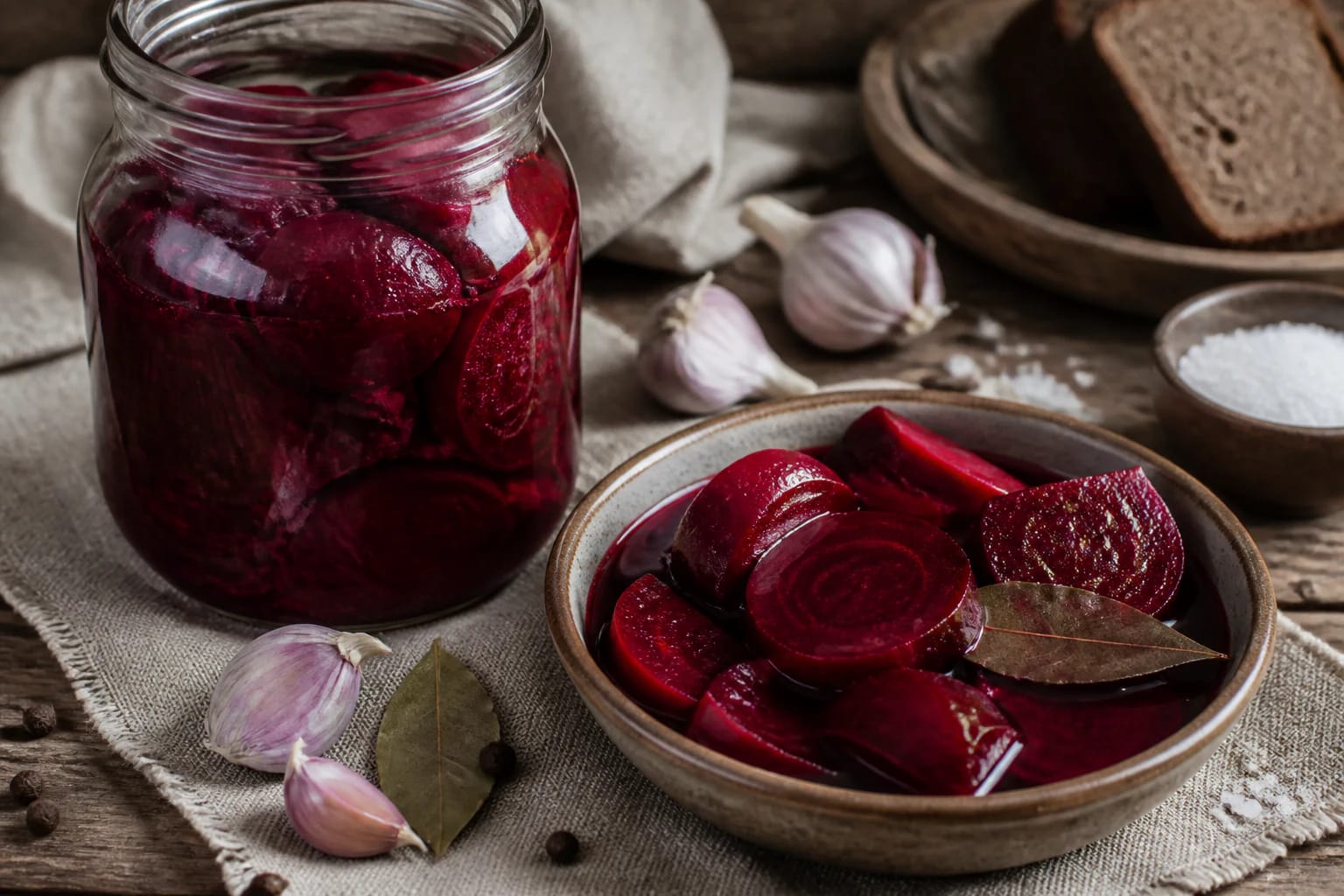
Food and heritage context
- Category
- Fermented vegetables
- Type
- lacto-fermented beets and beet brine
- Heritage status
- old vegetable fermentation tradition
- Context
- Beets, rasalas, beet soups, šaltibarščiai, fermentation, brine, garlic, rye bread
Names and variants
Beet brine, Fermented beets
Beets in Lithuania
The Universal Lithuanian Encyclopedia's beet context shows their old place in Lithuanian food history: they are mentioned in manor inventories from the mid-16th century and in the price list of the Third Statute of Lithuania of 1588. Fermented beets are one way to preserve them and give acidity to soups; during fermentation they are preserved by lactic acid.
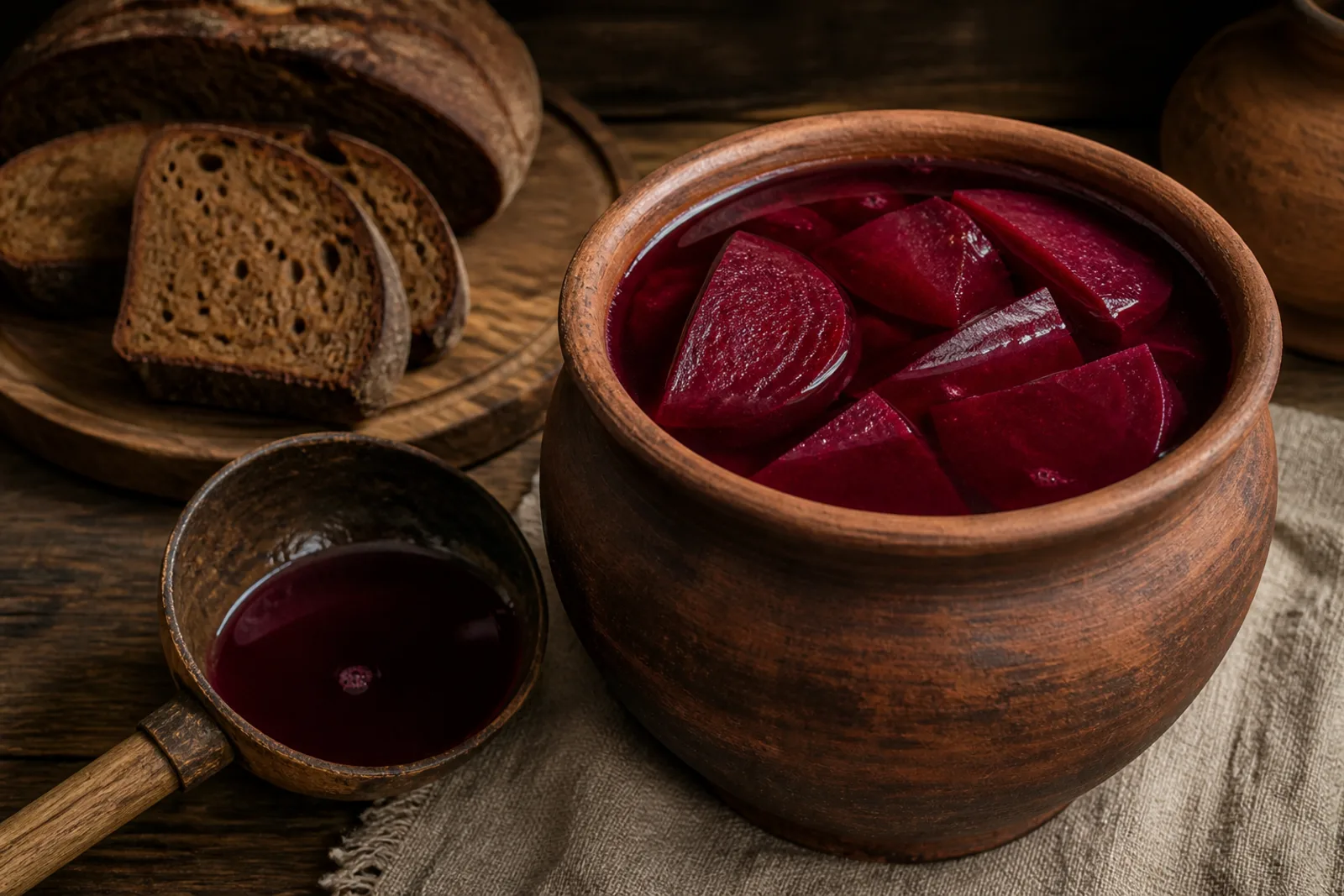
Beet rasalas can be used for beet soup, šaltibarščiai, salads, or as a sour addition.
Rasalas
Rasalas is the liquid from fermented beets. It should be red, sour, and fresh.
If kept too warm or in unclean conditions, rasalas can spoil, so hygiene matters.
Raw or cooked
Raw beets give a firmer texture and a clearer fermentation process. Briefly cooked beets may ferment more gently.
Both methods are used, but cleanliness and proper brine must be maintained.
Serving
Fermented beets suit beet soups, mixed salads, potatoes, herring, or as a sour winter side.
Rasalas can provide the sour note in soup instead of vinegar.
Recipe
How to ferment beets
Beets can be fermented raw or briefly parboiled. The rasalas should be pleasantly sour, not slimy and without a bad smell.
Ingredients
Method
- Wash, peel, and cut the beets into slices or sticks.
- Place them in a clean vessel with garlic.
- Dissolve the salt in water and pour over the beets.
- If using bread, place it briefly on top and remove it later so it does not mold.
- Keep at room temperature until sour, then move to the cold.
Notes
The beets must be covered by liquid.
A slimy, bad-smelling, or moldy ferment is not suitable for eating.


Rauginti burokėliai: frequently asked questions
Are raw or cooked beets better for fermenting?
Both work. Raw beets stay firmer, while cooked or parboiled beets ferment more gently.
Do beets need to be peeled?
Usually yes, especially if you want cleaner rasalas and a softer texture.
How much salt should be used when fermenting beetroot?
Follow a tested recipe; about 20-30 g salt per liter of water is common.
Why add rye bread?
It can encourage fermentation, but it must be removed in time so it does not mold.
How long do beets ferment?
Usually 5-7 days at room temperature, then they are stored cold.
How is beet rasalas used?
Use it for beet soup, šaltibarščiai, salads, or as a sour addition instead of vinegar.
When should the ferment be discarded?
If there is mold, a bad smell, sliminess, or an unusual taste.