
Lithuanian traditional foods
Avižinis kisielius
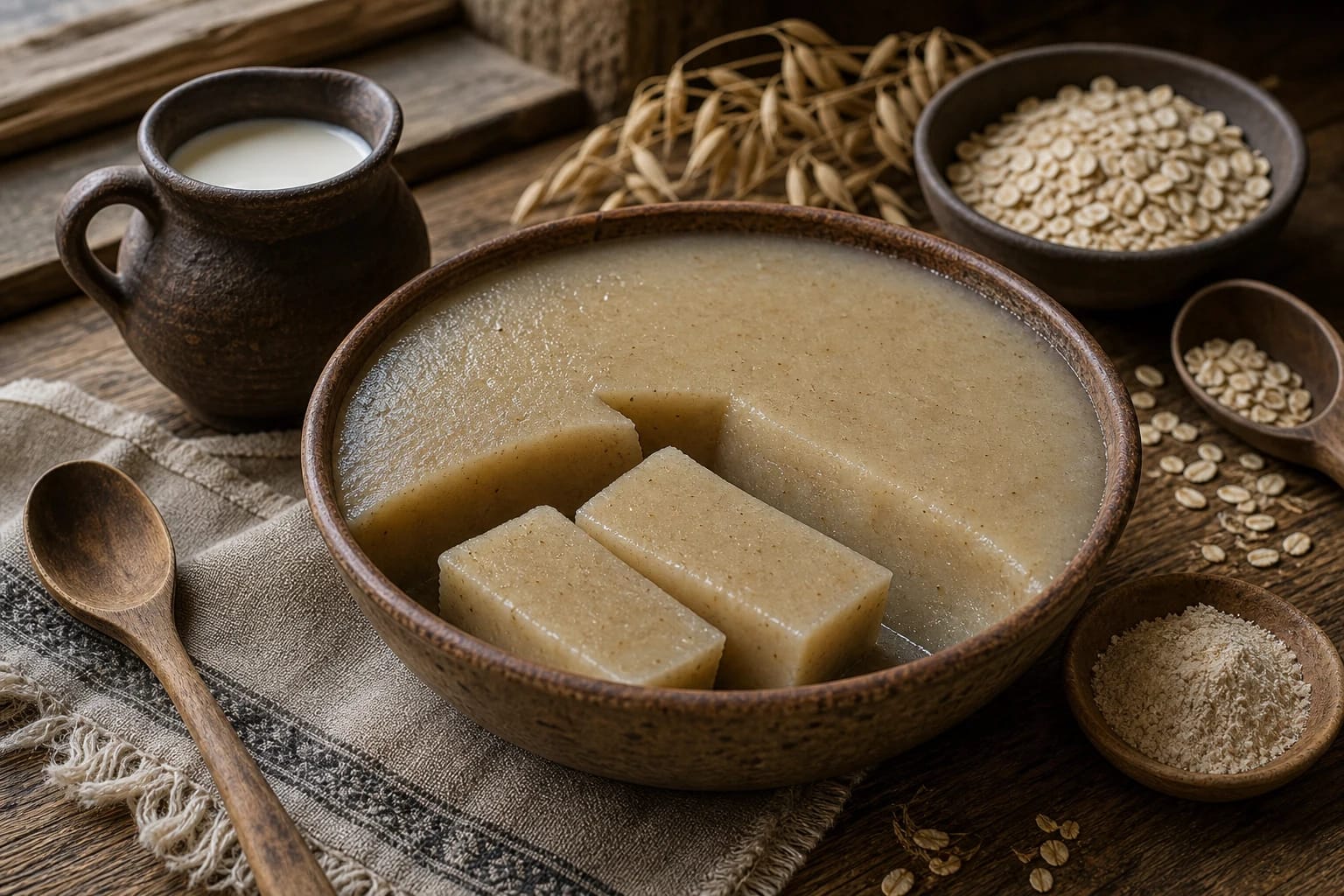
Avižinis kisielius is Lithuania's oldest kisielius: a sour, unsweetened dish made from oat flour fermented for two to three days. Until the early 20th century it was a common peasant fasting and Christmas Eve food, the opposite of the later sweet berry kisielius.
Food and heritage context
- Category
- Drinks and desserts
- Type
- fermented oat-flour food and fasting dessert
- Heritage status
- well attested
- Context
- Oats, oat flour, souring, fasting, Lent, Kūčios, sacred food, ancestral spirits
Names and variants
Oat kisielius, Fermented kisielius
What is avižinis kisielius?
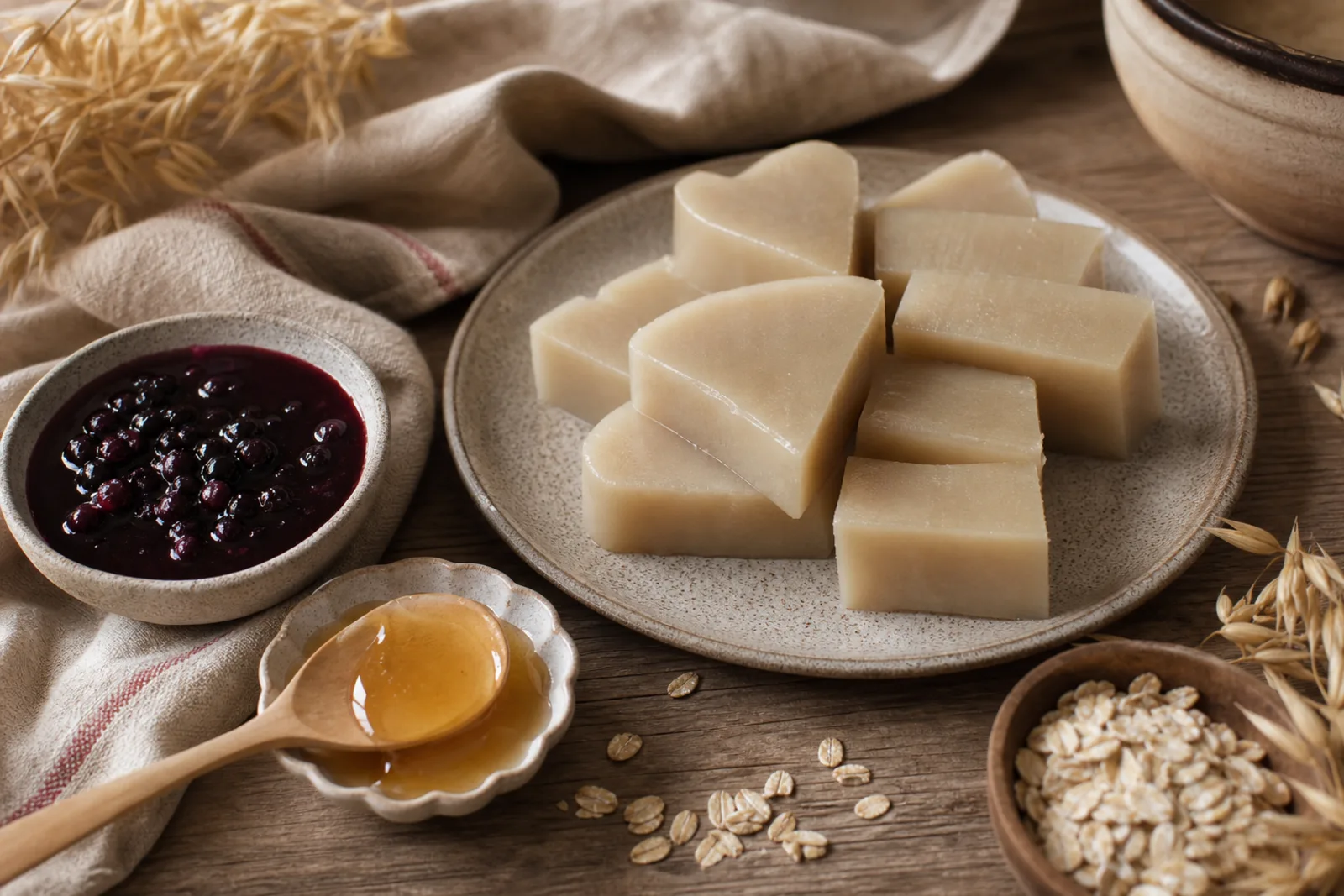
Avižinis kisielius is a sour, unsweetened food cooked from fermented oat flour. Once set, it is cut into pieces and eaten with milk, honey, or berry sauce, which makes it much closer to a grain dish than to today's sweet drink.
According to the Universal Lithuanian Encyclopedia, kisielius in general is a food cooked from oat flour, fruit, or berries, and starch began to be used as a thickener only from the mid-20th century. Oat kisielius is therefore the earlier, primary form of kisielius, not a variant of the sweet berry dessert.
Lithuanian Wikipedia directly calls avižinis kisielius the oldest kisielius in Lithuania and a characteristic Kūčios table dish. It belongs to the same layer of old fasting foods as aguonpienis and prėskučiai.
Lithuania's Oldest Kisielius
Until the beginning of the 20th century, Lithuanian peasants usually cooked precisely oat kisielius, not the sweet berry drink imagined today. The Universal Lithuanian Encyclopedia notes that the sweet starch-thickened kisielius spread later, so the oat version reflects an older, pre-industrial cuisine.
Oats were used less often than rye and barley in Lithuanian peasant food. The Universal Lithuanian Encyclopedia's overview of Lithuanian foods states that oats were used mainly for oat kisielius, and oat flour was mixed into bėralinė bread. This shows that oats had a narrow but steady place at the table, and kisielius was their most important use.
Because of its fermentation-based technique and ritual meaning, oat kisielius is considered one of the most archaic Lithuanian foods. It survived not as an everyday fashion but as a fasting and festive-table tradition.
Oats and Flour Fermentation
The basic ingredients are oat flour and water. Unlike sweet kisielius, there are no berries, no sugar, and no added starch here; thickness and flavor are formed by the fermented oat flour itself.
According to the Universal Lithuanian Encyclopedia, oat flour was soured for two or three days in a warm room, covered and stirred daily. Pieces of bread and charcoal were added to draw out bitterness. This shows that fermentation was managed, not simply left to chance.
This souring is natural fermentation: over two or three days the mass turns sour and gains its characteristic flavor and smell. That sourness is the essential feature of avižinis kisielius and the reason it differs so strongly from sweet berry kisielius.
Cooking Technique
The fermented mass had to be strained and only then boiled. The Universal Lithuanian Encyclopedia states precisely that it was boiled after straining and adding salt. That means the finished food was salty-sour rather than sweet, another boundary separating it from the modern dessert.
As it cooks, the mass thickens until it becomes stretchy and able to set. Once cooled, the kisielius was firm enough to cut into pieces. In the household, setting properly was a sign of successful kisielius.
A beautiful Suvalkija custom is tied to setting: according to an old practice, women told children to run around the house so the kisielius would set better and faster. This magical action shows how much importance cooks gave to the correct texture.
Fasting and Kūčios Food
Avižinis kisielius was eaten during Lent and at Kūčios. Because it is made without meat, milk, or animal fat, it suited fasting perfectly and joined the sour, grain-based fasting table beside prėskučiai and aguonpienis.
In the Universal Lithuanian Encyclopedia's overview of Lithuanian foods, oat kisielius is listed among surviving sacred foods of the Christmas Eve table, next to cranberry kisielius, prėskučiai, and aguonpienis. This shows that its place on the winter holiday table was not accidental but continuous and meaningful.
The fasting meaning also explains the dish's sourness: this tradition called for simple, modest foods made without richness. Avižinis kisielius was exactly that: filling, but ascetic.
Ritual and Mythic Meaning
Avižinis kisielius had not only nutritional but also ritual value. According to the Universal Lithuanian Encyclopedia, kisielius was offered to gods and natural forces, and ancestral spirits were treated with it. In this way a simple grain food became a means of connection with the dead and the forces of nature.
Treating ancestral spirits with kisielius places it among old customs of honoring forebears, especially alive during winter holidays and Kūčios. Food here was not only nourishment but a way of speaking with the otherworld.
Because of this ritual depth, oat kisielius is often seen as one of the foods in which traces of the pre-Christian Lithuanian worldview are most visible: sacredness woven into everyday grain cooking.
How It Is Eaten and Served
Set avižinis kisielius is cut into pieces and eaten with a liquid accompaniment that adds moisture and flavor. Traditionally milk, honey, or berry sauce suited it; these balance the kisielius's sourness and simplicity.
This way of eating makes clear that oat kisielius is not a drink but a food: it is not poured from a glass, but placed on a plate and eaten with a spoon. In this it differs sharply from liquid, drinkable cranberry kisielius.
During fasting, milk was often omitted, so kisielius was eaten with honey or berries. This flexibility allowed the same dish to fit both everyday and fasting tables.
Oat and Cranberry Kisielius: The Difference
Although both are called kisielius, oat and cranberry kisielius are almost opposites. Cranberry kisielius is a sweet, bright red, starch-thickened berry drink or dessert; oat kisielius is a sour, pale, fermented grain food.
Their age differs too: oat kisielius is the older, primary form, while the berry version with starch, as the Universal Lithuanian Encyclopedia notes, spread only from the mid-20th century. Cranberry kisielius is therefore a kind of modern successor to oat kisielius on the same Kūčios table.
To recognize the true old kisielius, look not at color or sweetness but at the base: if the mass is fermented from oat flour, salty-sour, and cut into pieces, it is avižinis kisielius.
Recipe
How is avižinis kisielius prepared?
This is a reconstruction of the old sourdough-based oat kisielius described in ethnographic sources. The point is not starch, but the fermentation of the oat flour itself: it gives the characteristic sourness and lets the mass set. Once cooled, the kisielius is cut into pieces and eaten with milk, honey, or berry sauce.
Ingredients
Method
- Put the oat flour into a clay or glass vessel, cover with lukewarm water, and mix well so no lumps remain.
- Add the rye bread crust and, if using, the piece of charcoal. Cover the vessel with cloth and leave in a warm room for 2-3 days.
- Stir the mass once or twice each day. During this time it begins to ferment and develops its characteristic sour smell and taste.
- Strain the fermented mass through a fine sieve or cloth into a pot; discard the bread crust and charcoal.
- Add salt and bring to a boil over medium heat, stirring constantly. Cook for 20-30 minutes, until it thickens into a stretchy, gluey mass.
- Pour the hot kisielius into a damp bowl or plates and leave in a cool place to set.
- Cut the set kisielius into pieces and serve with milk, honey, or berry sauce.
Notes
Avižinis kisielius is sour and unsweetened; sweetness and richness come not from the mass itself but from what it is eaten with: milk, honey, or berries.
The charcoal and bread crust are an old way to soften excessive fermentation bitterness; you may omit them, but then manage the fermentation time carefully.
Traditionally the thick mass should set firmly enough to be cut; thickness depends on oat-flour quantity and cooking time, not on added starch.
Avižinis kisielius in Lithuanian traditions
Explore the celebrations and customs associated with this food.


Related pages about Avižinis kisielius
Cranberry kisielius
Sweet berry-and-starch kisielius is the later opposite of oat kisielius.
Kūčios dinner dishes
Avižinis kisielius belongs to the wider fasting Christmas Eve table.
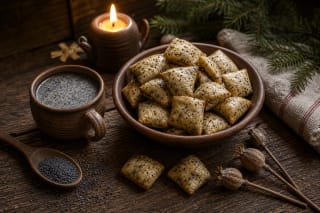
Kūčiukai
Kūčiukai and kisielius stood on the same winter festive table.
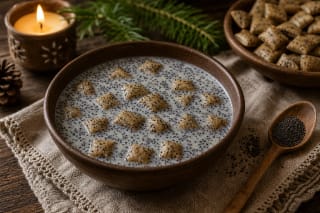
Aguonpienis
Aguonpienis is another old Christmas Eve food made without animal fat.
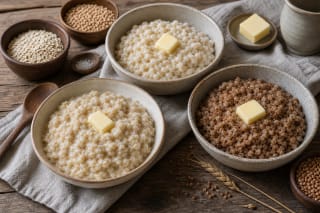
Porridges
The grain base of kisielius is closely related to the old porridge tradition.
Avižinis kisielius: frequently asked questions
How is avižinis kisielius different from cranberry kisielius?
Avižinis kisielius is a sour, unsweetened food made from fermented oat flour and cut into pieces once set. Cranberry kisielius is a sweet, red, starch-thickened berry drink or dessert. The oat version is older, while the berry version with starch spread only from the mid-20th century.
Why is avižinis kisielius considered the oldest kisielius?
Until the early 20th century, Lithuanian peasants most often cooked oat kisielius, while the sweet starch-thickened version spread later. Lithuanian Wikipedia directly calls avižinis kisielius Lithuania's oldest kisielius and a characteristic Kūčios dish.
Is avižinis kisielius sweet?
No. It is a sour and slightly salty food: according to the Universal Lithuanian Encyclopedia, it is boiled after straining and adding salt. Sweetness or richness comes from accompaniments such as milk, honey, or berry sauce.
Why were bread crusts and charcoal added?
According to the Universal Lithuanian Encyclopedia, pieces of bread and charcoal were added to the fermented oat flour to draw out bitterness. This old method softened the bitter note of too-long or too-strong fermentation and gave a cleaner-tasting kisielius.
How long should oat flour be fermented?
Traditionally oat flour was soured for two or three days in a warm room, covered and stirred daily. During that time the mass turns sour and gains the flavor and smell needed for true oat kisielius.
Why is avižinis kisielius important at Kūčios and Lent?
It is made without meat, milk, or animal fat, so it suited fasting. The Universal Lithuanian Encyclopedia lists it among surviving sacred Christmas Eve foods beside cranberry kisielius, prėskučiai, and aguonpienis, and it was also eaten during Lent.
What does the custom of children running around the house mean?
In Suvalkija, according to an old custom, women told children to run around the house so the kisielius would set better and faster. It was a magical action tied to the belief that a well-set kisielius showed successful cooking.
Did avižinis kisielius have ritual meaning?
Yes. According to the Universal Lithuanian Encyclopedia, kisielius was offered to gods and natural forces, and ancestral spirits were treated with it. For that reason oat kisielius is considered one of the foods where traces of the pre-Christian Lithuanian worldview are visible.
What is avižinis kisielius eaten with?
Once set, it is cut into pieces and eaten with milk, honey, or berry sauce. During fasting, milk was often omitted, so people ate it with honey or berries.