
Lithuanian traditional foods
Bėralinė duona
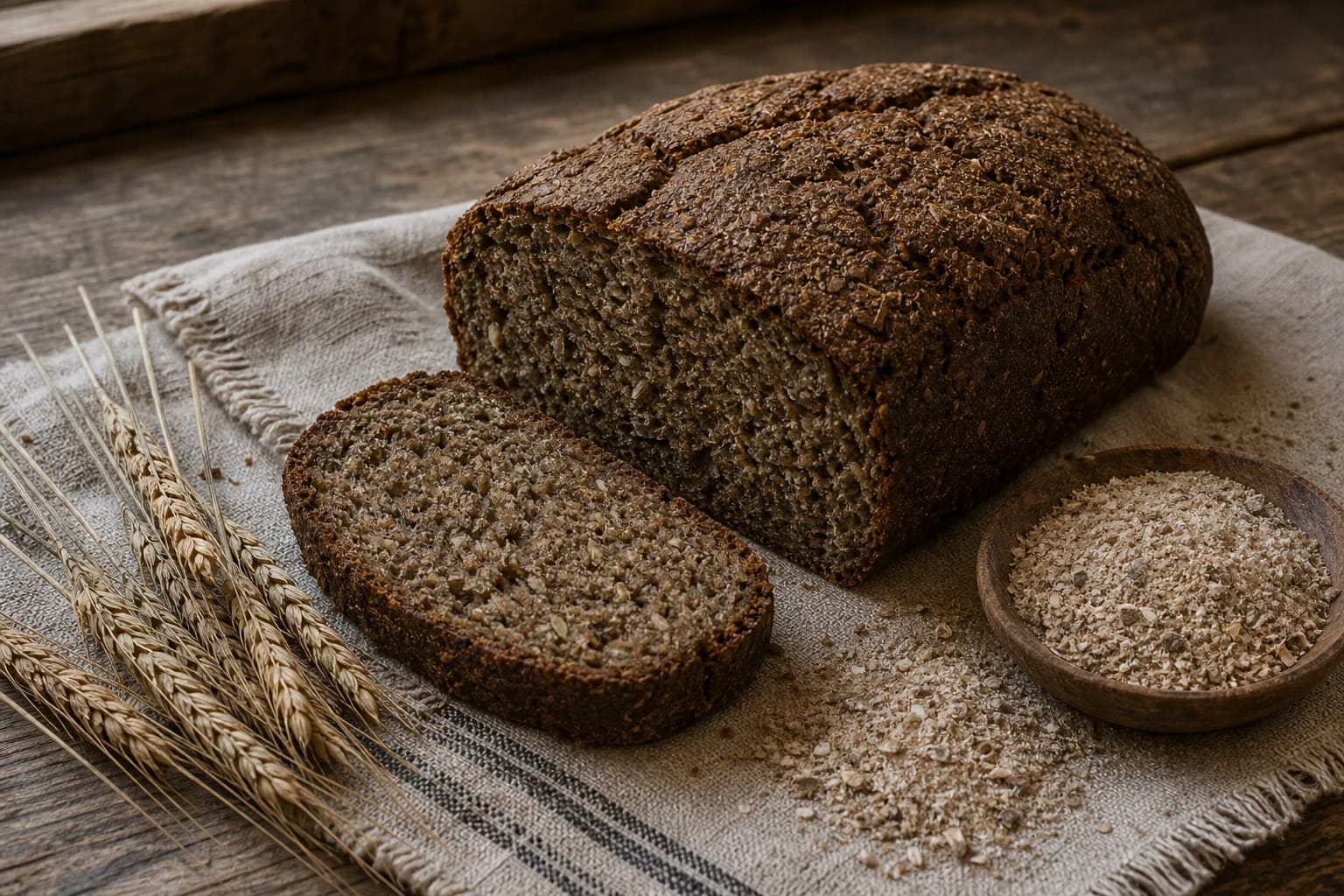
Bėralinė duona was the everyday rye bread of Lithuanian peasants in the serfdom era, baked from flour ground from unwinnowed grain with chaff (bėralas). It was greyer, rougher, and poorer than festive pure-rye bread and gradually disappeared from peasant life after the abolition of serfdom in 1861.
Food and heritage context
- Category
- Bread and grain dishes
- Type
- serfdom-era rye bread made from flour of unwinnowed grain
- Heritage status
- well attested
- Context
- Rye, bėralas, unwinnowed grain, serfdom, sourdough, dough trough, everyday peasant bread
Names and variants
Bėralas bread, Bread from unwinnowed grain
What is bėralinė duona?
Bėralinė duona was the everyday rye bread of Lithuanian peasants during the serfdom era, baked from flour made of unwinnowed grain. Such grain was ground uncleaned, with chaff and other admixtures; the flour was called bėralas, and the bread baked from it was bėralinė. It was not a separate recipe so much as an entire social category of food: the bread of poverty and everyday life, accompanying a peasant's life between holidays.
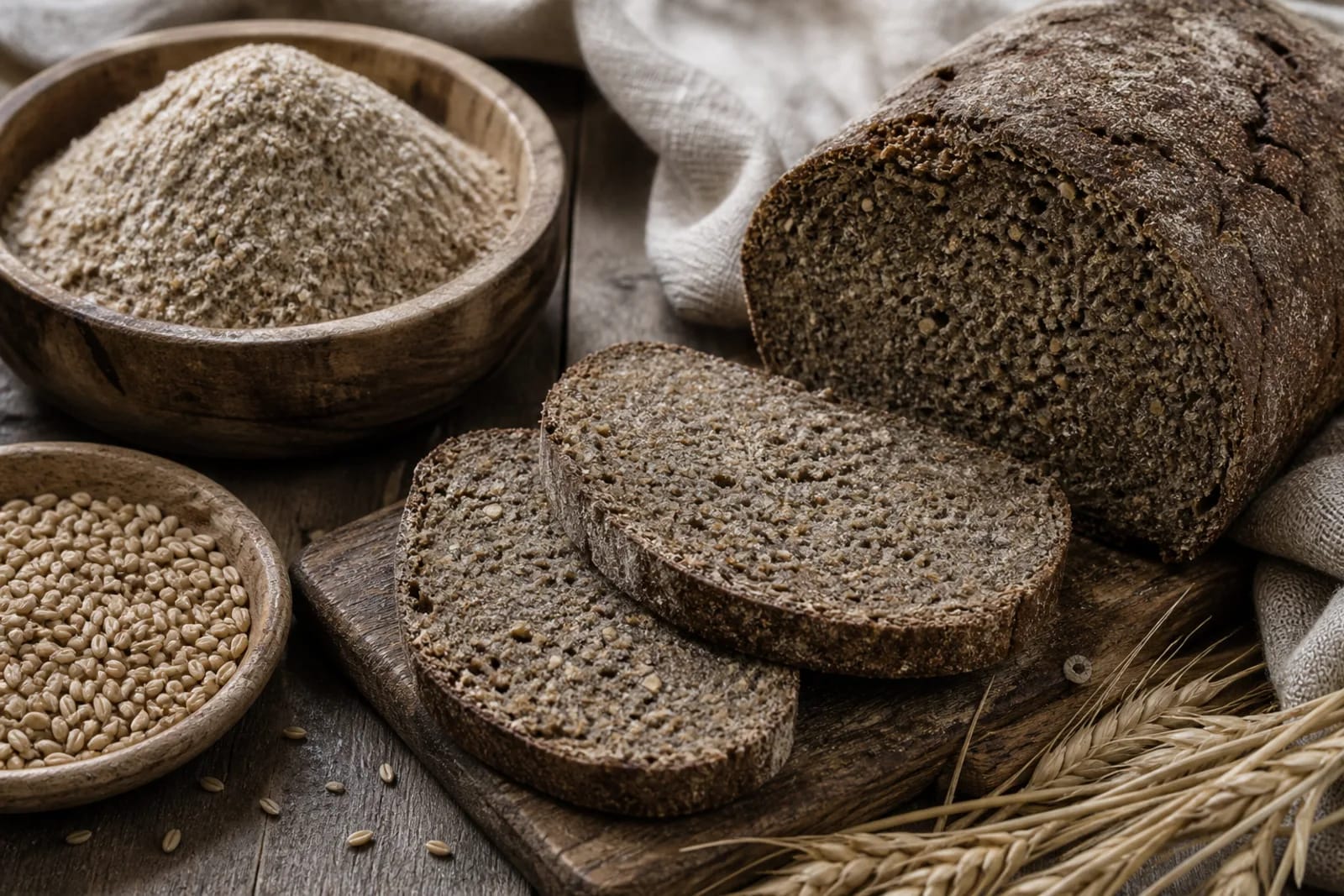
According to the Universal Lithuanian Encyclopedia, in serfdom times peasants ate bėralinė bread daily, while pure rye bread was baked only for holidays. Bėralinė was therefore not an accidental inferior loaf, but the normal form of everyday peasant nutrition, reflecting the living conditions of the time.
Today bėralinė bread no longer exists as a living dish; it is known from historical and ethnographic sources. It is best understood first as a layer of Lithuanian bread history that helps reveal how varied and socially stratified village bread culture was.
Why Is It Called Bėralinė?
The name comes from bėralas, the word for unwinnowed, uncleaned grain or flour ground from it. Winnowing, the cleaning of grain by wind from chaff and debris, required extra labor and lost grain, so under serfdom peasants often ground grain as it was. The Universal Lithuanian Encyclopedia's overview of Lithuanian foods states directly that bėralinė bread was baked from grain ground with chaff.
The nature of the bread follows from this: it was coarser, greyer, and poorer in flavor than clean pure-rye bread. Chaff and admixtures made it rougher, but also more filling and cheaper, suitable for everyday heavy labor.
It is important to distinguish bėralas from the baking method itself: bėralinė, pure rye, and scalded bread could all be fermented in similar ways. The difference was primarily the raw material, not the dough technique: whether the grain was cleaned before milling.
Bėralinė Bread and Serfdom
The history of bėralinė bread is closely tied to serfdom, the period of dependent peasant life in Lithuania. Limited grain, obligations to the manor, and thrift meant that everyday bread used the grain without costly extra cleaning. Bėralinė bread therefore became a kind of sign of the peasant diet of that time.
The Universal Lithuanian Encyclopedia notes a significant break: after serfdom was abolished, bėralinė bread disappeared from peasant life. Serfdom was abolished in the part of Lithuania ruled by the Russian Empire in 1861, and this changed not only legal status but also everyday food: peasants could gradually afford to winnow grain and bake cleaner bread.
This link between bread change and social change makes bėralinė bread special: it is not so much a recipe as evidence of the serfdom period. Its appearance and disappearance draw a clear line between coerced and freer peasant life.
Raw Material: Unwinnowed Grain and Coarse Flour
The main raw material for bėralinė bread was rye, the most important bread grain in Lithuanian villages. The Universal Lithuanian Encyclopedia states that bread in Lithuania was mostly baked from rye flour, and rye bread remained the main food in villages until the mid-20th century. Bėralinė bread was the everyday, humbler variant of this rye foundation.
The difference was milling: grain was ground with chaff, producing coarse flour with bran. Such bread was denser, heavier, and richer in fiber, but also rougher to swallow. The overview of Lithuanian foods notes that in hard times, especially in the second half of the 19th century and during the First World War, other grain or plant flours, including oat flour, were mixed into the dough; this brings bėralinė close to hardship bread.
Salt and caraway were usual additions, as in other Lithuanian rye bread. But the essence of bėralinė lay not in seasoning but in the uncleaned grain: it was bread that saved every part of the grain.
How It Was Baked
Bėralinė bread was baked by the same home methods as other village rye bread. Bread flour was mixed in a stave-built duonkubilis in Aukštaitija or in a hollowed and later board-joined trough in Žemaitija. Flour was mixed into lukewarm water, fermented overnight, and the next day, after more flour was added, the dough was worked and baked.
The dough fermented from a piece left from the previous baking, so sourdough traveled from bake to bake. Loaves were made large, oblong or round, placed on a peel lined with maple, horseradish, or sweet flag leaves, or sprinkled with flour, and baked in ember-heated ovens. This is the same old custom that survived in later Lithuanian bread baking.
Besides the simple method, a scalded method also existed: part of the flour was poured over with hot water, and the dough was fermented for up to three days. This bread had a sweet-sour flavor and did not stale as quickly. Scalded baking spread more widely only in the first decades of the 20th century, so the classic serfdom-era bėralinė was usually the simpler, unscalded type.
Bėralinė and Festive Pure Rye Bread
Bėralinė bread is most meaningfully understood through its contrast with festive bread. In the same village there were two breads: everyday bėralinė from unwinnowed grain and the ceremonial pure rye bread baked only for holidays. The difference between them was not only taste but social rhythm: it marked the boundary between an ordinary day and a feast.
Pure rye bread was a loaf made from clean, winnowed rye flour: lighter, smoother, and gentler in flavor. Even more luxurious was pikliuota bread made from finely sifted flour, baked only for major holidays. In this hierarchy bėralinė stood lowest as everyday bread, while pikliuota stood highest as a rare ceremonial bake.
In this context, the separate black rye bread page describes pure rye black bread. Bėralinė differs from it not in baking logic, but in raw material and purpose: the same rye tradition, but its humbler everyday face.
The Place and Disappearance of Bėralinė Bread
Bėralinė bread was the foundation of the everyday peasant table: dairy, meat, and vegetable foods were eaten with it, and it was taken to field work. In Lithuanian folk speech and songs, the word duona, bread, could also mean food in general, so bėralinė, as everyday bread, was simply the basis of sustaining life.
After serfdom was abolished, bėralinė bread gradually disappeared from peasant life: it was too closely tied to poverty conditions to survive when life changed. Later hard times, wars and famines, temporarily brought back similar bread with admixtures, but that was no longer the same social category; it was a forced return backward.
For that reason bėralinė bread today is historical rather than a living bread type. It can be reconstructed at home from coarse rye flour with bran, but the exact taste of the serfdom era cannot be recreated: grain milling, millstones, and conditions were different.
How to Recognize and Recreate It Today
Three traits help identify historical bėralinė bread: coarse milling, bran, and uncleaned grain. It should be a dark, dense, rough, greyish bread without modern softness, the opposite of smooth, light pikliuota bread. Its character comes from the grain, not from additions.
In modern reconstruction, use coarsely ground whole-grain rye flour with bran, rye sourdough, and slow fermentation. Such bread will not be perfect or smooth, and that is exactly what brings it closer to the historical original. It is worth understanding that 'poorness' here is a sign of authenticity, not a baking mistake.
Finally, bėralinė bread is best treated as a learning and memory loaf: it reminds us that Lithuanian bread had more than one face, and that the peasant's everyday bread was long much humbler than the festive bread we most often imagine.
Recipe
How is bėralinė bread baked?
True serfdom-era bėralinė bread cannot be reproduced exactly today: grain was ground with chaff, and flour coarseness depended on the millstones. This version reconstructs the historical bread with coarsely ground rye flour, bran, rye sourdough, and slow fermentation, recalling the grey, rough bread of peasants. It is denser and plainer than festive pure-rye bread; that was the essence of bėralinė bread.
Ingredients
Method
- Mix the sourdough starter with lukewarm water until it dissolves. Traditionally the dough fermented from a piece of dough left from the previous baking.
- Mix in the coarse rye flour and bran. The dough should be thick, sticky, and coarse; bėralinė bread was never smooth or kneaded like wheat dough.
- Cover and leave warm to ferment overnight, about 12-16 hours, until the dough smells sour and the surface begins to bubble.
- Add salt and caraway, mix in any remaining flour if needed, and shape a wet, dense loaf by hand.
- Press a small cross into the surface with a finger: an old sign of respect for bread before putting it into the oven.
- Place the loaf on cabbage or maple leaves, or on a floured hearth. Bake in a well-heated bread oven, or in a 250 °C oven for 15 minutes, then reduce to 200 °C and bake another 45-60 minutes.
- Wrap the baked bread in a linen towel and let it cool completely before slicing.
Notes
Bran and coarse milling are the essence of this bread: they give the rough texture and grey color that distinguished bėralinė from clean festive bread.
For a sweet-sour flavor, scald part of the flour with hot water and ferment the dough longer; this scalded style kept from staling as quickly.
Bėralinė duona in Lithuanian traditions
Explore the celebrations and customs associated with this food.
Related pages about Bėralinė duona
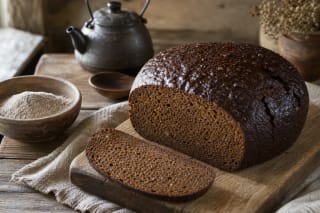
Black rye bread
Pure rye black bread was the festive counterpart to bėralinė bread, baked from clean, winnowed rye.
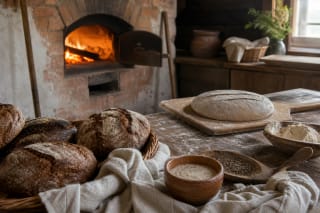
Bread baking
The dough trough, peel, and ember-heated oven explain how dough was fermented and bread was baked at home.
Scalded bread
Scalding, where flour is poured over with hot water, was a sweet-sour variant of bėralinė bread.
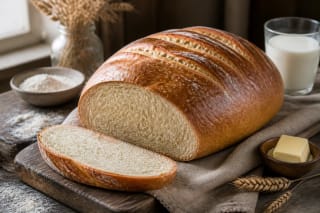
Ragaišis
Ragaišis is a coarser wheat bake made more often than festive pure-rye bread.
Bėralinė duona: frequently asked questions
How is bėralinė bread different from pure rye black bread?
Bėralinė was baked from flour ground from unwinnowed grain with chaff, or bėralas, so it was coarser, greyer, and poorer in flavor. Pure rye bread was baked from clean, winnowed rye and was the festive counterpart to everyday bėralinė.
What does the word bėralas mean?
Bėralas means unwinnowed, uncleaned grain, or flour ground from it with chaff and admixtures. Bread baked from bėralas was called bėralinė.
Why did bėralinė bread disappear?
According to the Universal Lithuanian Encyclopedia, after the abolition of serfdom in 1861, bėralinė bread disappeared from peasant life. As conditions improved, peasants could winnow grain and bake cleaner bread.
Was bėralinė bread worse than festive bread?
In terms of raw material, yes: it was rough, grey, and coarse. But it was filling, cheap, and suitable for hard work, which is why it became the everyday bread of serfdom-era peasants.
What grain was it made from?
Mostly rye, because rye was the most important bread grain in Lithuanian villages. In hard times, especially in the second half of the 19th century and during the First World War, other grain or plant flours, such as oat flour, were mixed into the dough.
Was bėralinė bread scalded?
It could be baked both ways. Simple bėralinė was older and more widespread, while the scalded method, where part of the flour was poured over with hot water and the dough fermented for up to three days, spread more widely in the early 20th century.
Where was the dough fermented and how was it baked?
The dough was mixed in a duonkubilis in Aukštaitija or a hollowed trough in Žemaitija, fermented overnight from a piece left from the previous baking, and the loaves were baked in ember-heated ovens on maple, horseradish, or sweet flag leaves.
Can bėralinė bread be baked today?
It can only be reconstructed: use coarsely ground whole-grain rye flour with bran and rye sourdough. The exact taste of the serfdom era cannot be recreated because the grain, millstones, and baking conditions were different.
Is bėralinė bread the same as hardship or wartime bread?
Not exactly. Bėralinė was the normal everyday bread of the serfdom era. Later war and famine breads with various admixtures were forced returns to similar raw materials under different circumstances.