
Lithuanian traditional foods
Duonos kepimas
Duonos kepimas in Lithuania is not only kitchen work: rye sourdough, scald, bread oven, bread peel, and respect for the loaf connect everyday food with home, farming, and festive-table tradition.
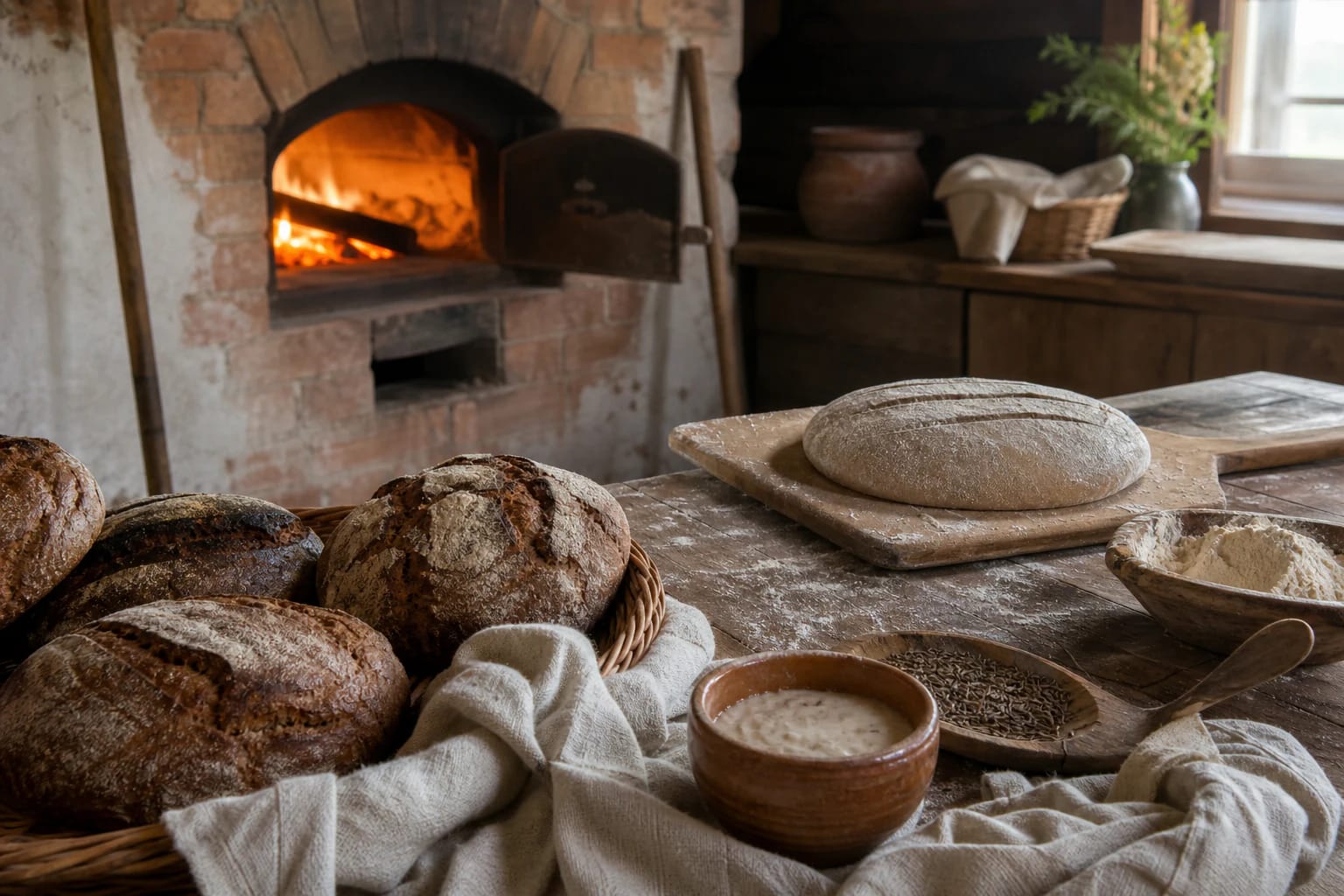
Food and heritage context
- Category
- Bread and grain dishes
- Type
- rye bread baking tradition and home recipe
- Heritage status
- living tradition
- Context
- Rye, sourdough, scald, dough trough, bread peel, bread oven, caraway, malt, respect for bread
Names and variants
Rye bread baking, Homemade bread baking, Breadmaking
Bread as Household Work
Traditional bread baking begins before the dough: with rye, milling, keeping the sourdough, and preparing the oven. For that reason, in Lithuanian cooking bread long remained not an addition but the main food. According to the Universal Lithuanian Encyclopedia, rye bread remained the main food in villages until the mid-20th century; in serfdom times peasants ate bėralinė bread daily, made from unwinnowed grain ground with chaff, while clean rye bread was baked only for holidays.
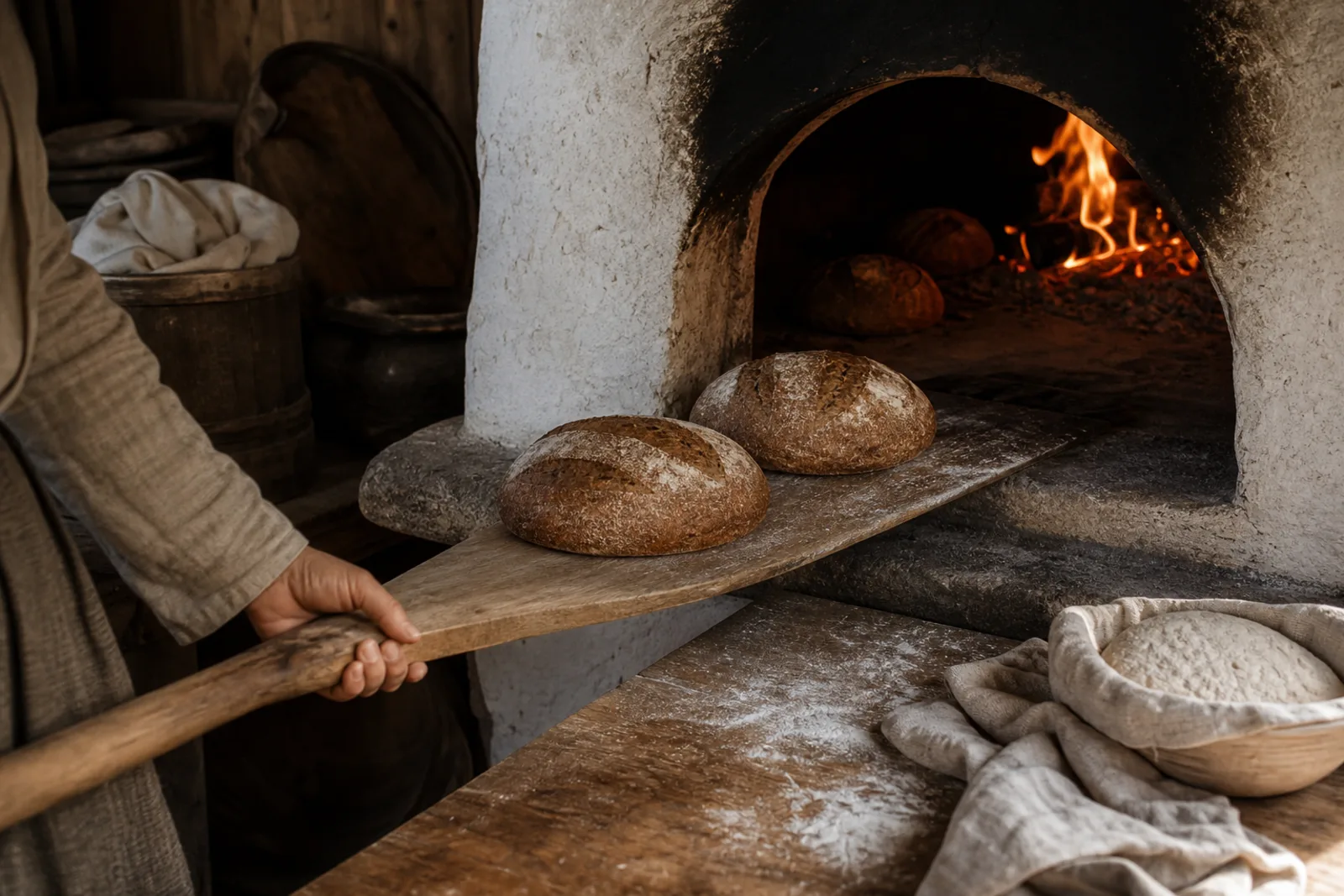
The bread baker had to feel the dough's fermentation, the oven's heat, and the loaf's firmness. This knowledge was passed through household practice, not only through written recipes.
Sourdough, Scald, and Caraway
Sourdough gives bread acidity, aroma, and longer keeping quality. Rye dough without sourdough is often flat, because rye behaves differently from wheat.
A scald, where part of the flour is poured over with hot water, gives a sweeter taste and moister crumb. Caraway is not required, but it became one of the most recognizable aromas of Lithuanian bread.
Bread Oven and Peel
Village bread was baked with stored oven heat. A swept bread oven had to be hot enough but not scorching, and the loaves were pushed in with a wooden peel. Dough was mixed in a duonkubilis in Aukštaitija or in a hollowed-out trough in Žemaitija; these customs were described in detail by ethnologist Pranė Dundulienė in Duona Lietuvių buityje ir papročiuose (Kaunas, 1989).
A modern oven cannot reproduce the whole oven experience, but at home it can preserve the key principle: slow sourdough, moist rye dough, a good crust, and respectful handling of the loaf.
Respect for Bread in Lithuania
Bread was treated with respect: a fallen piece was picked up, a cross was made on the loaf, it was not wasted, and it was shared with guests. This speaks of the bond between food, labor, and home.
Today that respect can be understood practically: bake only what will be eaten, value the starter, remember the grain's path, and teach children not to throw bread away but to share it.
Recipe
How to bake homemade rye bread
Sourdough rye bread with caraway
This recipe is adapted for an oven, but it keeps the traditional logic: active rye sourdough, warm fermentation, caraway, dense dough, and patient cooling.
Ingredients
Method
- Mix the starter with water, malt or honey, salt, and caraway.
- Add the rye flour and mix with a spoon into a sticky, heavy dough. Rye dough does not need kneading like wheat dough.
- Put into a greased tin, smooth the surface with wet hands, and leave warm until the dough rises and the top begins to crack finely.
- Bake at 230 °C for 10 minutes, then reduce to 190 °C and bake for another 50-60 minutes.
- Wrap the baked bread in a linen towel and cut only once completely cool.
Notes
If the starter is weak, the loaf will be heavy and damp. It is better to bake when the starter is actively bubbling.
Rye bread tastes best the next day, when the crumb has stabilized.
Duonos kepimas: frequently asked questions
How is traditional bread baking different from quick yeast bread?
Traditional Lithuanian rye bread relies on sourdough, slow fermentation, dense rye dough structure, and often a scald, while quick yeast bread usually rises for less time and tastes different.
Is a bread oven necessary?
Historically it is very important, but bread can be baked at home in an oven. Then the key is sourdough, moist dough, a high starting temperature, and long cooling.
Why is rye dough sticky?
Rye flour does not have the same gluten structure as wheat, so the dough is sticky, heavy, and mixed rather than kneaded like wheat dough.
What is a scald in rye-bread baking?
It is a portion of flour poured over with hot water. A scald gives bread sweetness, moisture, a richer crumb, and better keeping quality.
Why should baked rye bread cool before it is sliced?
Only when cool. Hot rye crumb is still stabilizing, so bread cut too early can seem sticky.
Why was a cross made on bread?
It could be both a practical cut and a sign of blessing. In custom it showed respect for the loaf and household food.
How long does homemade rye bread keep?
Properly baked rye bread keeps for several days or longer. It is best stored in cloth or paper, not in a damp plastic bag.