
Lithuanian traditional foods
Plikyta duona
Plikyta duona is a type of rye bread in which part of the flour is scalded with hot water. The scald gives a sweeter flavor, moister crumb, and richness that make this bread especially valued in Lithuania's home baking tradition.
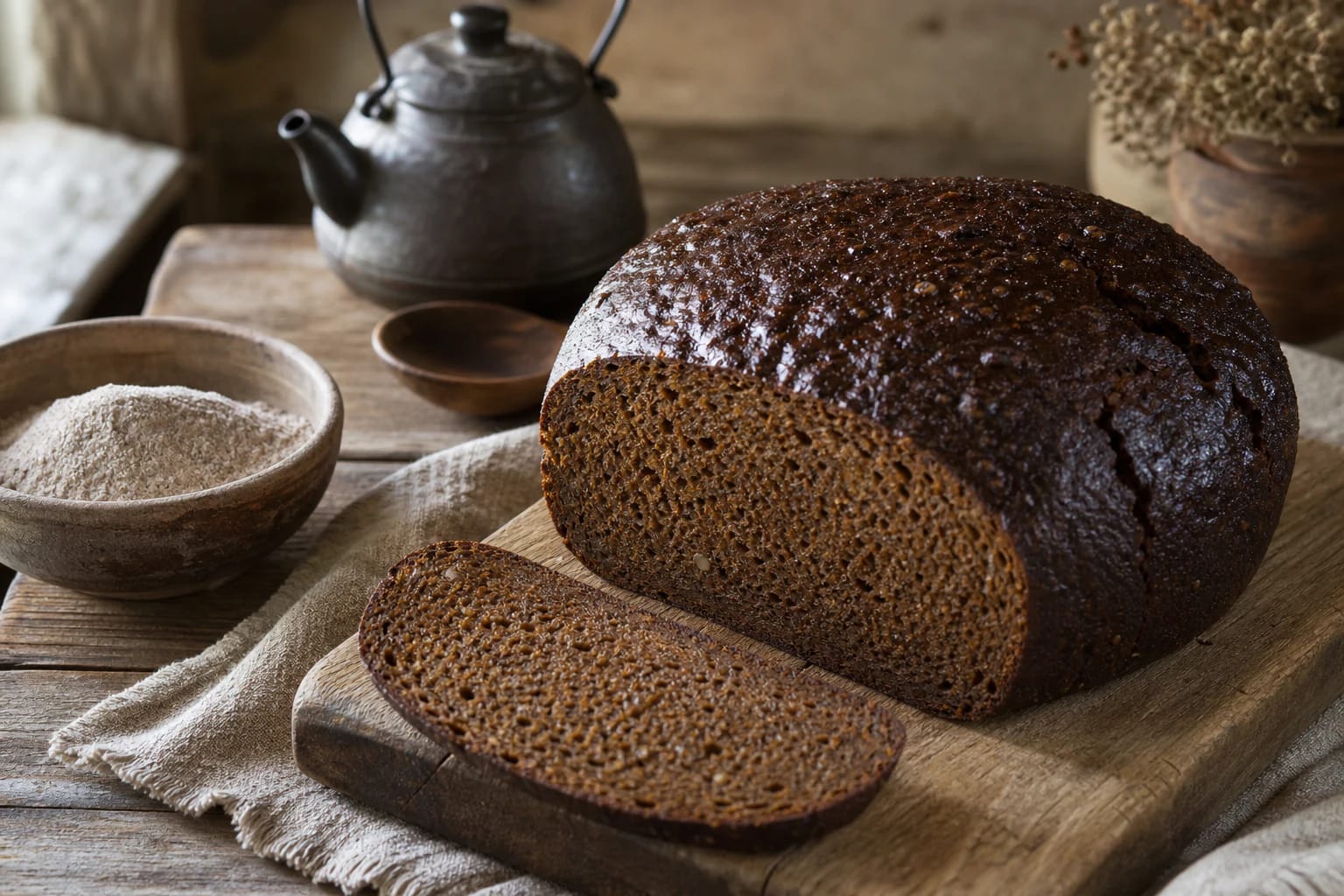
Food and heritage context
- Category
- Bread and grain dishes
- Type
- rye bread made with a flour scald prepared with hot water
- Heritage status
- living tradition
- Context
- Rye flour, scald, sourdough starter, malt, caraway, moist crumb, dark crust
Names and variants
Scalded rye bread, Malt scalded bread
What is plikyta duona?
Plikyta duona is rye bread in which part of the flour is scalded with hot water. This preparation is called a plikinys, or scald, and is one of the important technological methods in Lithuanian rye bread.
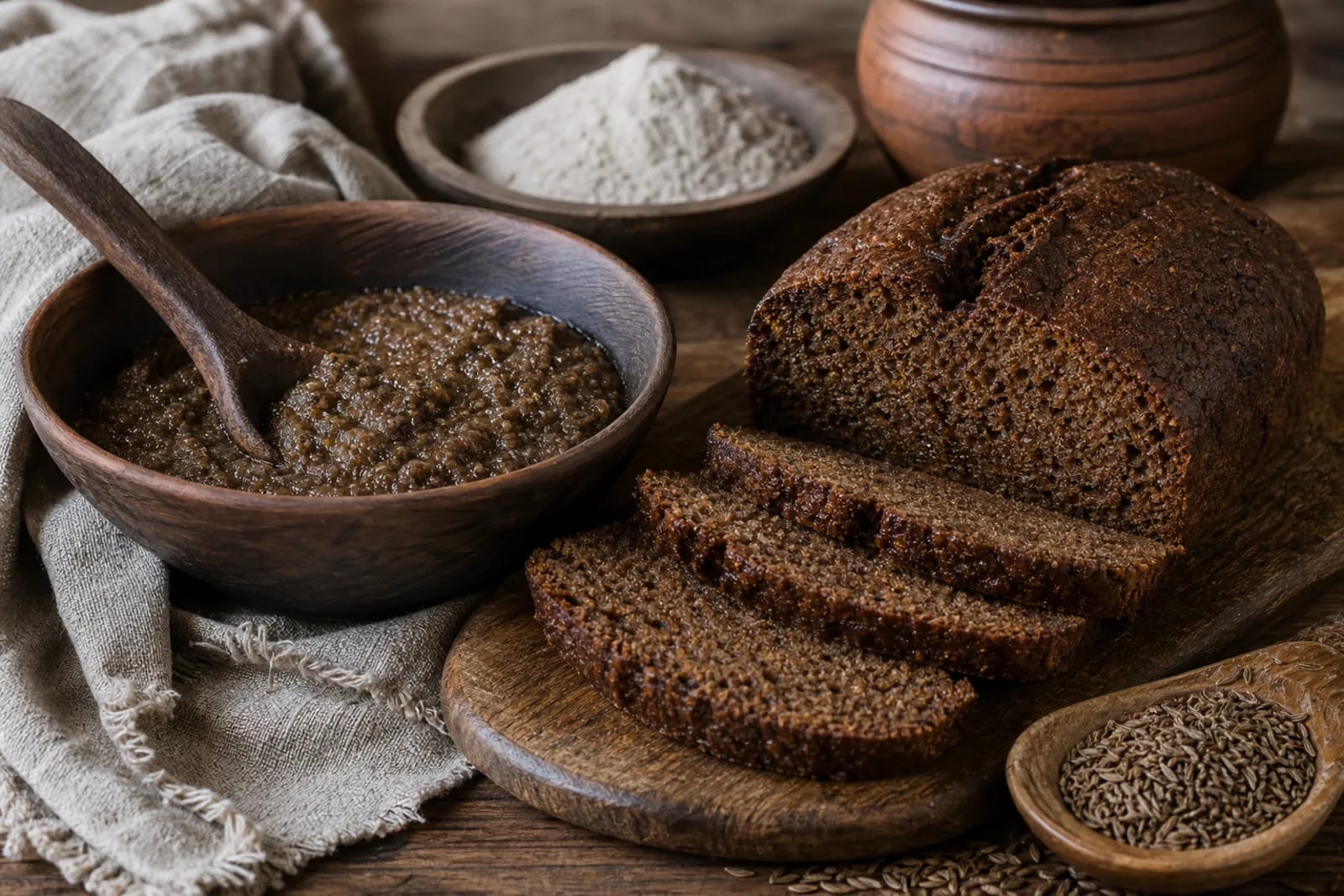
The scald changes the flour's flavor and texture: the bread becomes richer, gently sweeter, stays moist longer, and slices more neatly.
The flavor of the scald
Hot water and malt bring out the sweetness of rye flour. Plikyta duona should not be sweet like cake, but its sourness is softer.
Caraway pairs especially well in this bread because its aroma balances the malty richness and rye sourdough tang.
Historical and regional context
Plikyta duona is mentioned when discussing Lithuanian bread traditions and protected examples of rye bread. The specification for Daujėnų naminė duona also shows that the scald is not a modern fashion but part of traditional technology. The Universal Lithuanian Encyclopedia notes that scalded bread dough used to be fermented for up to three days, giving it a sweet-sour flavor and making it stale more slowly than ordinary rye.
Still, not all Lithuanian rye bread is scalded. It is a distinct baking method that complements the broader culture of sourdough rye bread.
Common mistakes
The first mistake is mixing starter into a still-hot scald. Sourdough is alive, so excessive heat weakens it.
The second mistake is adding too much flour because the dough looks sticky. Rye scalded dough should be moist; if it is too dry, the bread becomes hard and crumbly.
Recipe
How to bake scalded rye bread
The essence of plikyta duona is the hot scald prepared in advance. It must cool until only warm before it is mixed with starter, so it does not damage the life of the sourdough.
Ingredients
Method
- For the scald, pour boiling water over the rye flour and malt, mix well, cover, and leave until warm.
- Mix in the starter, salt, caraway, and remaining flour. The dough should be thick, sticky, and moist.
- Place in a tin, smooth with wet hands, and ferment in a warm place until risen and the surface begins to crack.
- Bake at 230 °C for 10 minutes, then at 190 °C for about 50 minutes more.
- Cool wrapped in a towel and cut the next day.
Notes
A too-hot scald can ruin the starter. Make sure it is only warm before mixing.
Scalded rye bread is often moister and sweeter than ordinary rye bread.
Plikyta duona: frequently asked questions
How is scalded bread different from ordinary rye?
For scalded bread, part of the flour is scalded with hot water. This gives a sweeter flavor, moister crumb, and richer texture.
Does the scald need malt?
Malt is not the only way, but it is very typical: it gives color, sweetness, and rye richness.
When should starter be added to the scald?
Only when the scald has cooled to warm. A hot scald can damage the sourdough microorganisms.
Why is scalded bread sticky?
Rye and scalded dough are naturally sticky. That is not necessarily a fault; the important thing is not to dry it out with extra flour.
Is plikyta duona always made with caraway?
No, but caraway is a very common Lithuanian spice and pairs well with rye sourness and malt.
How long should scalded bread ferment?
Usually several hours after mixing, but exact time depends on starter strength and room warmth.
Why is scalded bread best the next day?
The rye crumb continues to stabilize after baking, so cooled and matured bread slices more cleanly and tastes deeper.