- Category
- Roofs and Decoration
- Type
- Gable-end and ridge ornaments
- Context
- Lėkiai, roof horse heads, ragovikai, apūkai, little birds, wind boards, openwork carving, Dzūkija, Lithuania Minor
- Source status
- well attested
Roof horse heads, Ragovikai, Apūkai, Little birds
Lėkiai and Roof Horse Heads: types and elements
Wind-board lėkiai: Ornaments formed by crossing wind boards above the roof ridge.
Openwork roof horse heads: Lace-like cut details at the roof ends.
Figural lėkiai: Forms based on birds, horns, horses, plants, or geometry.
What are lėkiai?
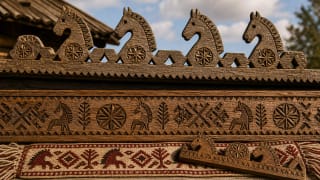
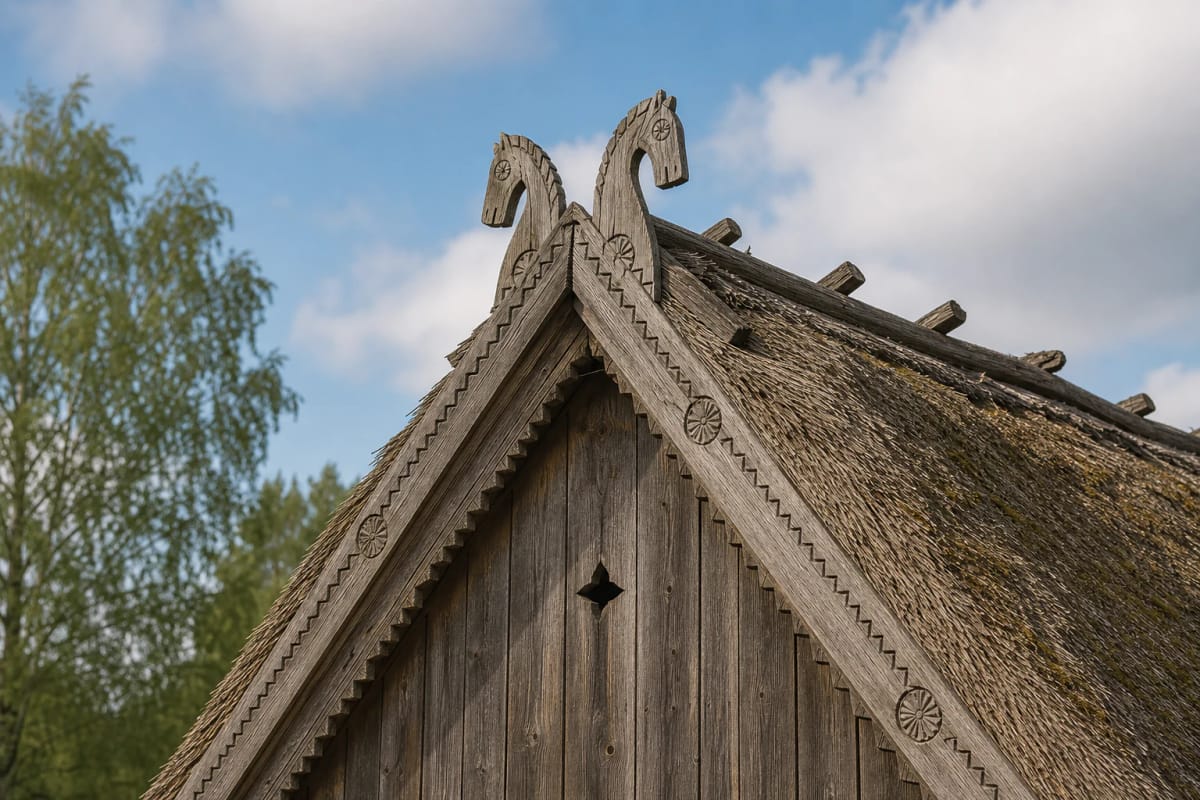
Lėkiai are roof-end ornaments, often seen at the ridge. They can be formed from the ends of wind boards or made as separately cut details.
Roof horse heads are one of the best-known lėkiai motifs, but lėkiai may also take horn, bird, plant, or geometric forms. According to VLE, people believed that lėkiai shaped like little horses or birds protected the home from evil.
Structure and decoration
Lėkiai join construction and decor. Wind boards protect roof edges from wind and rain, while their ends can become silhouette ornaments.
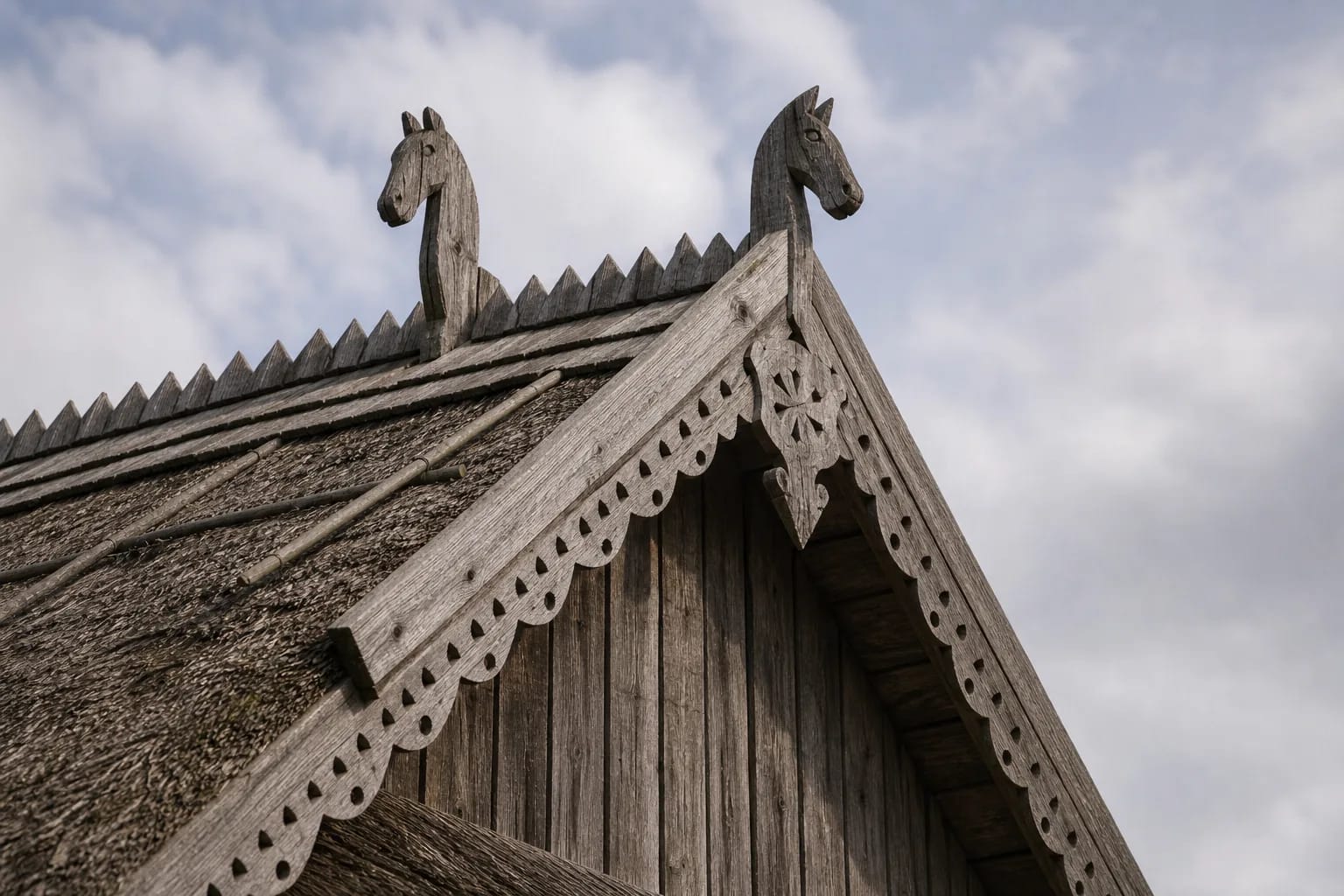
Openwork carving makes light, lace-like forms possible. Such details stand out strongly against the sky. According to VLE, lėkiai can be paired, single, or mixed by construction: the earliest paired examples consist of two symmetrically crossed boards shaped as horns, horse heads, or birds. The most complex lėkiai were made in Lithuania Minor and along the Baltic coast, and the term was first used by Simonas Daukantas in Būdas senovės Lietuvių, kalnėnų ir Žemaičių (1845).
Regional names
In southern Lithuania names such as ragovikai or apūkai were used; in the east, paukščiukai, or little birds. In Lithuania Minor, reed-covered smoke-vent roofs were known for elaborate roof horse heads.
The variety of names shows that lėkiai were not only a technical detail but also part of local imagination.
Heritage care
Lėkiai often disappear when a roof or wind boards are replaced. Even if they seem small, losing them removes the building's silhouette.
Restoration should document the form, cut motif, board thickness, and relationship to the ridge.