- Category
- Dwelling Houses
- Type
- Traditional dwelling house of Suvalkija and Lithuania Minor
- Context
- Suvalkija, Sūduva, Lithuania Minor, stuba, ertikis, gabled roof, stove, symmetrical plan
- Source status
- well attested
Suvalkija stuba, Sūduva stuba, Šeimynstubė, Stubelė
Stuba: types and elements
Single-ended stuba: A simpler house variant with living spaces concentrated at one end.
Two-ended stuba: A more developed and common type with several living and utility rooms.
Stuba with ertikis: A building with a raised attic or intermediate roof zone characteristic of Suvalkija architecture.
What is a stuba?
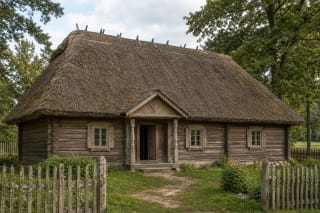
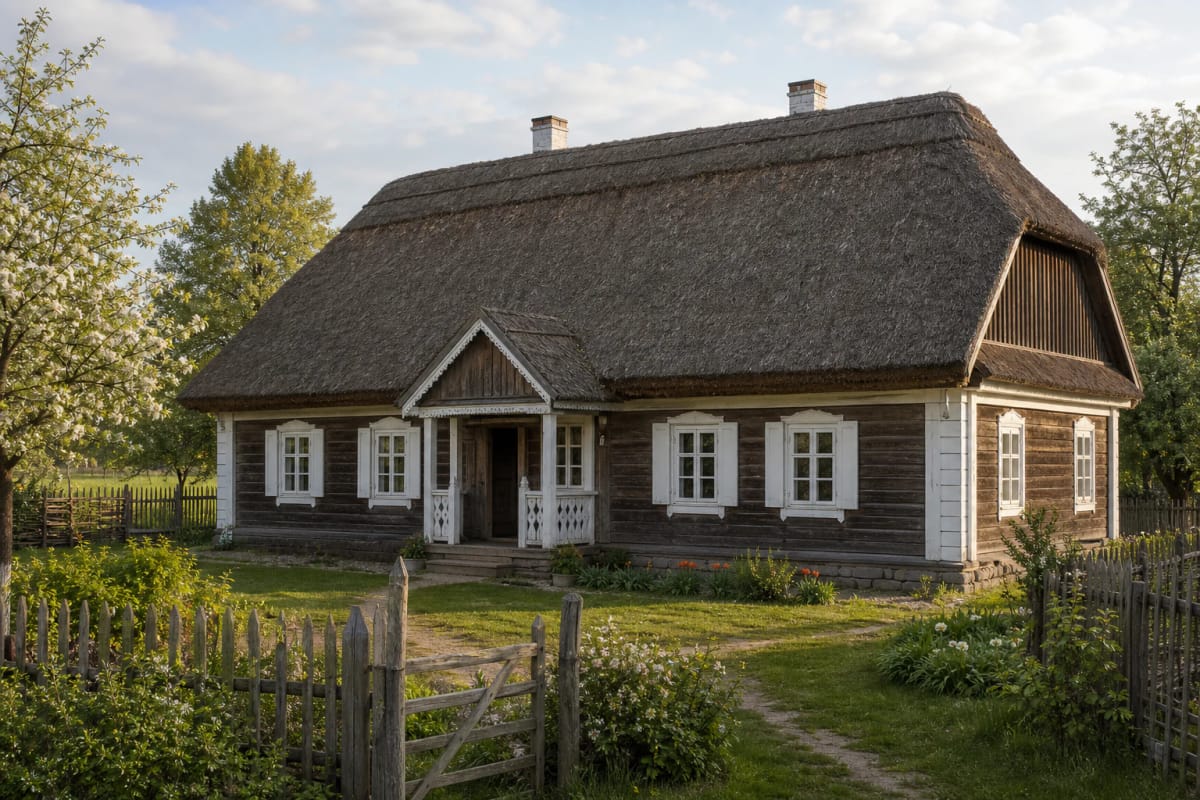
A stuba is the traditional dwelling house of Suvalkija, Sūduva, and Lithuania Minor. The name itself is linked with western, German-derived vocabulary, and the building often shows more orderly symmetry, a gabled roof, and clearer facade composition.
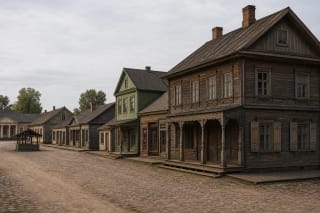
The stuba belongs to the same field of Lithuanian dwelling houses as the pirkia and troba, but its regional character differs: Suvalkija farms were more strongly shaped by earlier land reform, dispersed farmsteads, and rational farm order.
History and region
In Suvalkija, smoky domestic life declined earlier than in some other Lithuanian regions. For that reason the stuba is more often connected with a stove, kitchen, and chimney system than with a long-lasting smoky pirkia.
In Lithuania Minor and Suvalkija, building forms were influenced by neighboring construction practice, tile roofing, more orderly facades, and a more planned homestead structure. This does not mean the stuba copied professional architecture, but its folk form was more open to western influences.
Form and construction
The stuba was usually log-built, with smooth or neatly worked corner joints. The roof was most often gabled, and from the mid-19th century tile roofing spread in some places. The ertikis gave the building a higher attic zone and distinctive proportion. According to VLE, a single-ended stuba was 5-7 m wide and 5-12 m long, while a wealthier peasant's two-ended stuba could be up to 7 m wide and 16-20 m long; the word stuba itself comes from German Stube, meaning a heated room.
Two-ended stubos had several rooms, often 4-8. The stove was fired from the kitchen, and nearby could be zelikiai or kakaliai, heating and household elements important to regional terminology.
Facade and yard order
Symmetry matters in the stuba facade: the placement of doors, rhythm of windows, trim, and roof edges create an orderly view. Decoration is not overloaded, but it is precise and visible in shutters, trim, or the porch.
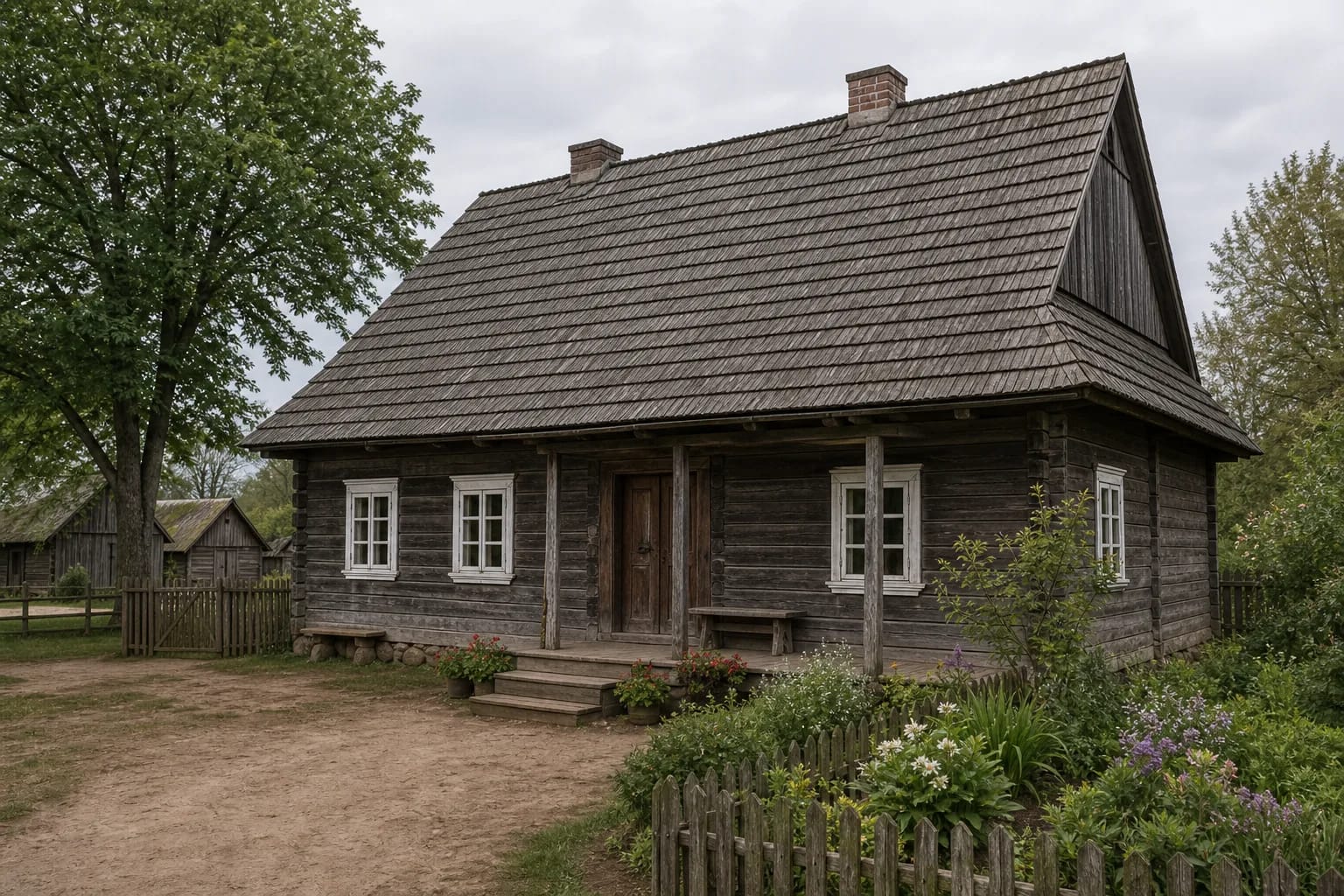
In a dispersed Suvalkija homestead, the stuba often stands as the clear center of the family home, while farm buildings are arranged more rationally and spaciously than in dense street-and-strip villages.
How to recognize a stuba
A stuba is often recognized by its gabled roof, orderly facade composition, ertikis, clear room plan, and Suvalkija context. It looks less like a smoky pirkia and more like a modernizing but still traditional village house.
It is important not to judge by one detail alone. Region, homestead plan, roof form, facade rhythm, and local room names all help identify a stuba.