- Category
- Roofs and Structures
- Type
- Archaic post-supported roof system
- Context
- Pėdinė construction, pėdžios, permetė, ožiukas, Eastern Aukštaitija, kluonas, barn, roof support
- Source status
- well attested
Pėdinė construction, Permetinė construction, Pėdžios
Pėdinė Roof Structure: types and elements
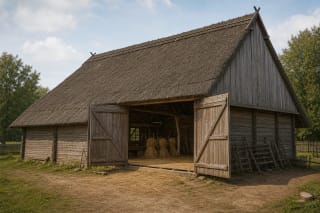
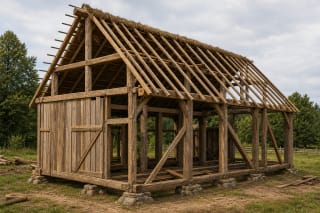
Kluonas with two pairs of pėdžios: A barn whose roof is held by two main pairs of support posts.
Kluonas with three pairs of pėdžios: A larger variant of the pėdinė construction.
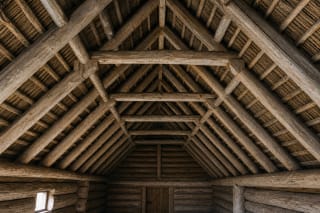
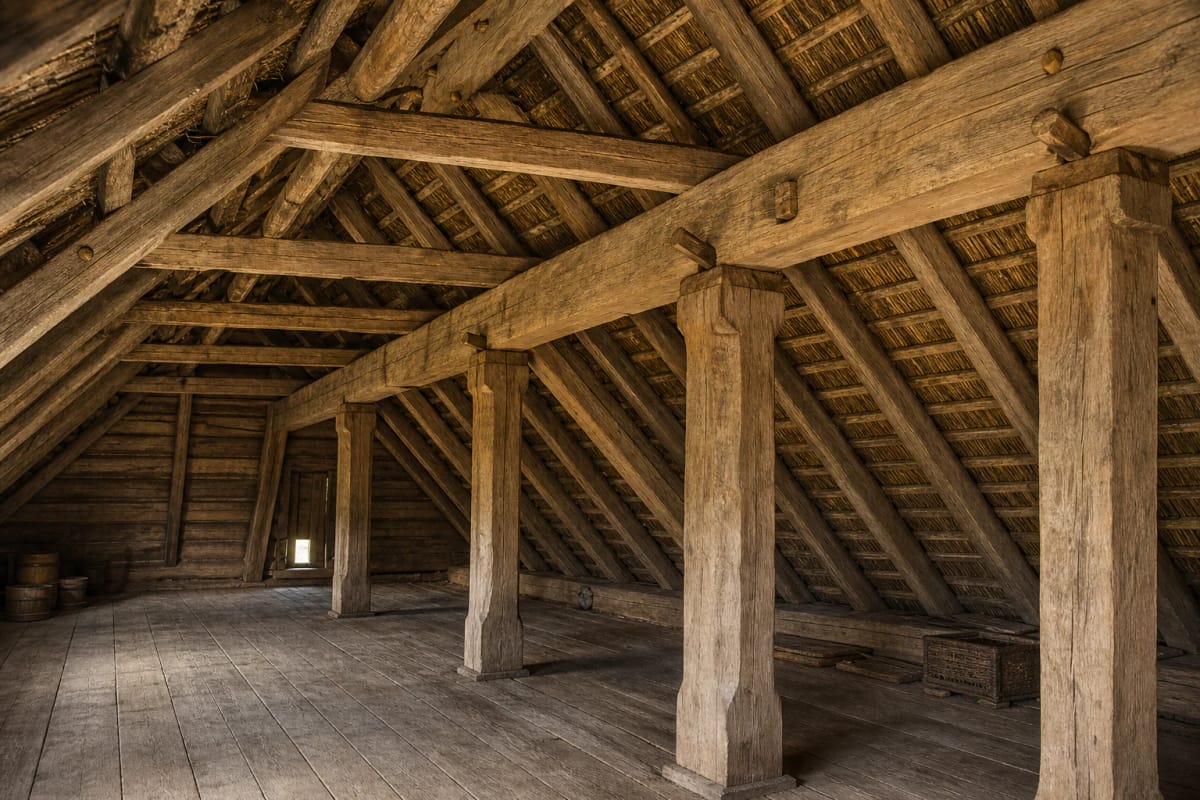
Pėdžios with an ožiukas: A structural joint helping support the upper roof system.
What is pėdinė construction?
The pėdinė roof structure is a system in which the roof is held by vertical posts called pėdžios. They take roof loads and allow the building walls to be lighter.
It is considered archaic and is especially associated with Eastern Aukštaitian kluonai. According to VLE, the pėdinė, or permetinė, construction consists of a vertical pėdžia, sometimes called an ožys, a supported permetė, and rafters; the pėdžia rests on ceiling beams or on a log laid over them. Such construction appeared already in primitive dwellings and spread most widely in Aukštaitija and central Lithuania.
Kluonas construction
Pėdiniai kluonai could have two or three pairs of pėdžios. In the middle, the ožiukas, permetės, and other roof-supporting elements are important.
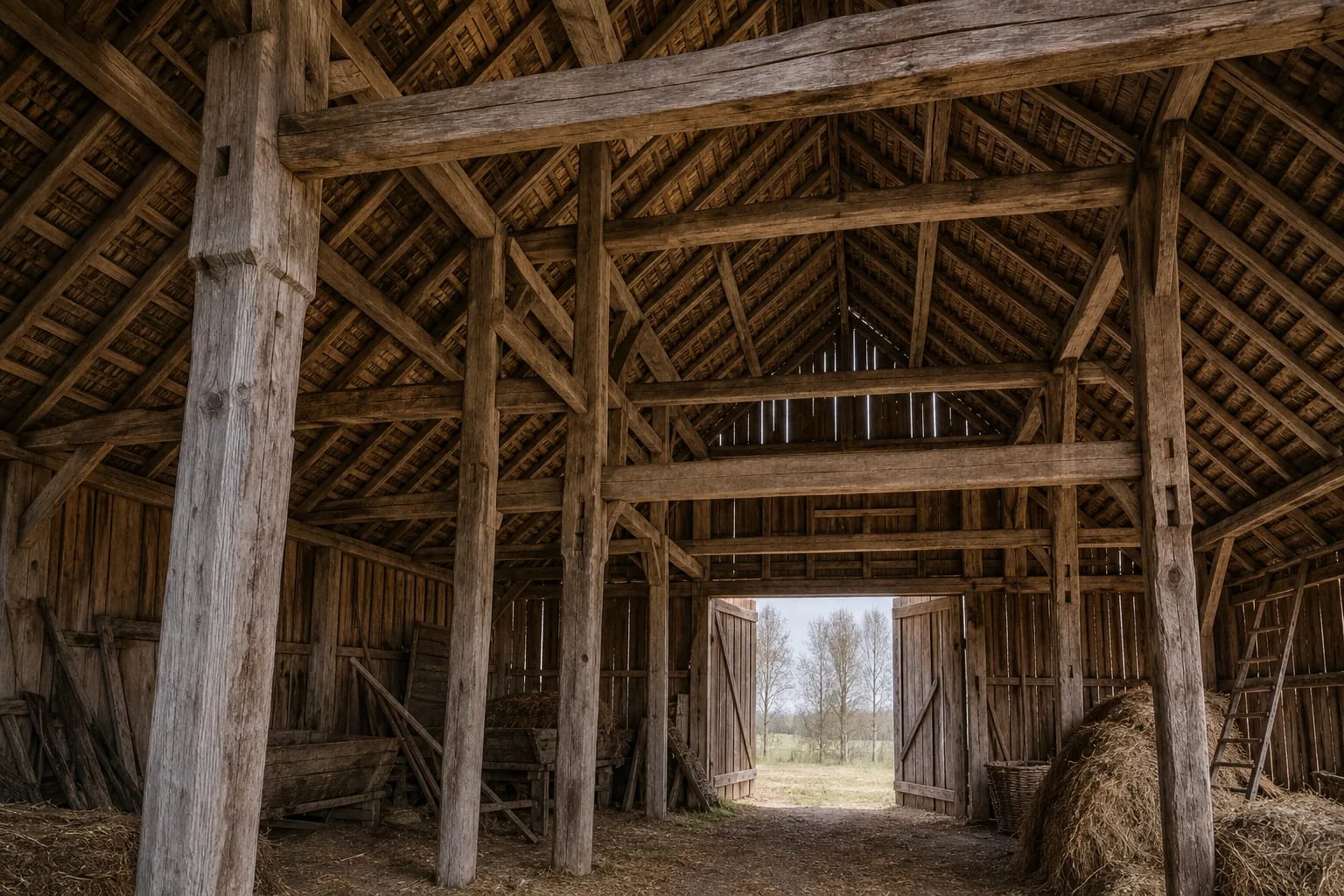
Such barns had high, broad hipped or half-hipped roofs that visually recall stacks of grain.
Timber protection
Pėdžios set into the ground were vulnerable to rot. In some places their ends were charred or otherwise protected so they would decay more slowly.
When restoring a pėdinė structure, it is important to understand which parts carry the roof. Replacing boards alone is not enough.
Why it matters
The pėdinė structure shows an old way of thinking about building, in which the roof is an independent load-bearing system rather than only a set of rafter pairs.
It helps identify a regional kluonas type and explains why Eastern Aukštaitian farm buildings have such distinctive silhouettes.