- Category
- Work and Craft Buildings
- Type
- Metalworking workshop
- Context
- Kalvė, forge hearth, bellows, anvil, blacksmith, village road, fire risk, artisan workshop
- Source status
- well attested
Village smithy, Blacksmith's workshop
Kalvė: types and elements
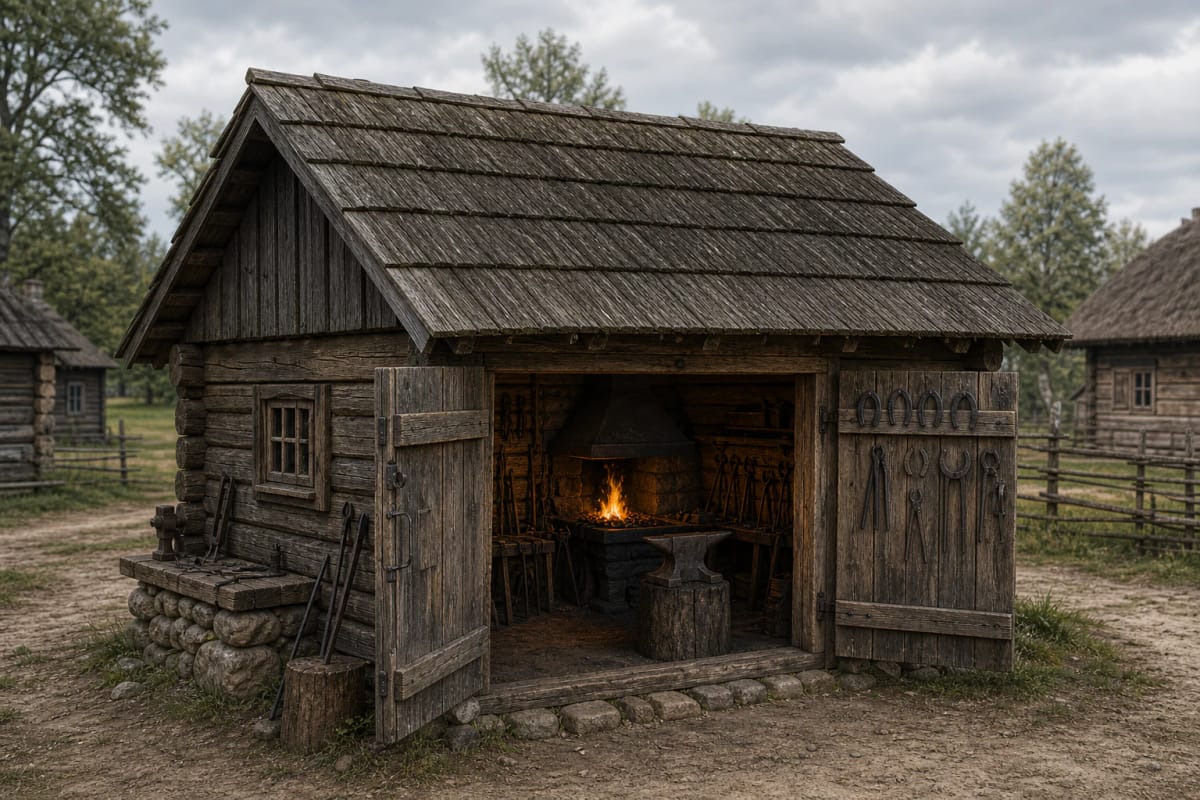
One-room kalvė: A simple workshop with forge hearth, anvil, bellows, and tools.
Roadside kalvė: A common placement that allowed the smith to serve travelers, farmers, and the village community.
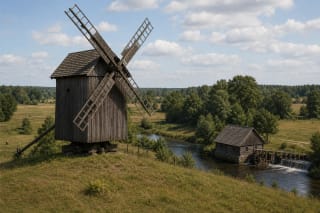
Kalvė by a mill: In some places smithies operated near mills or other technical structures, where energy and movement were concentrated.
What is a kalvė?
A kalvė is a blacksmith's work building. In it iron was heated, implements, horseshoes, nails, fittings, locks, and gate details were forged, and farm tools were repaired.
The kalvė often served not one farm but a broader community. In village life the blacksmith was essential, because without metal repair, agricultural implements, carts, and horses would not function.
Location and safety
Smithies were often built by roads for easy access. But because of the forge hearth and sparks, they were kept away from dense village building.
Fire risk shaped a simpler, well-ventilated construction and careful arrangement of roof and hearth. The kalvė was a fire building, so its location could not be accidental. According to VLE, village smithies began to be built in the sixteenth century and were usually one-room buildings without ceilings; the forge hearth with ox-hide bellows stood at the end of the building, and near it was an oak block set about 1 m into the ground with a metal anvil, sometimes weighing up to 100 kg.
Equipment
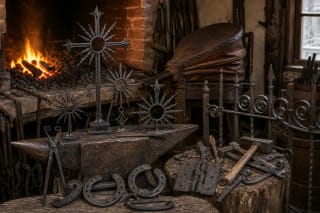
The most important elements of the kalvė were the forge hearth, bellows, anvil, water vessel, hammers, tongs, and other tools. The interior had to be arranged for work around hot metal.
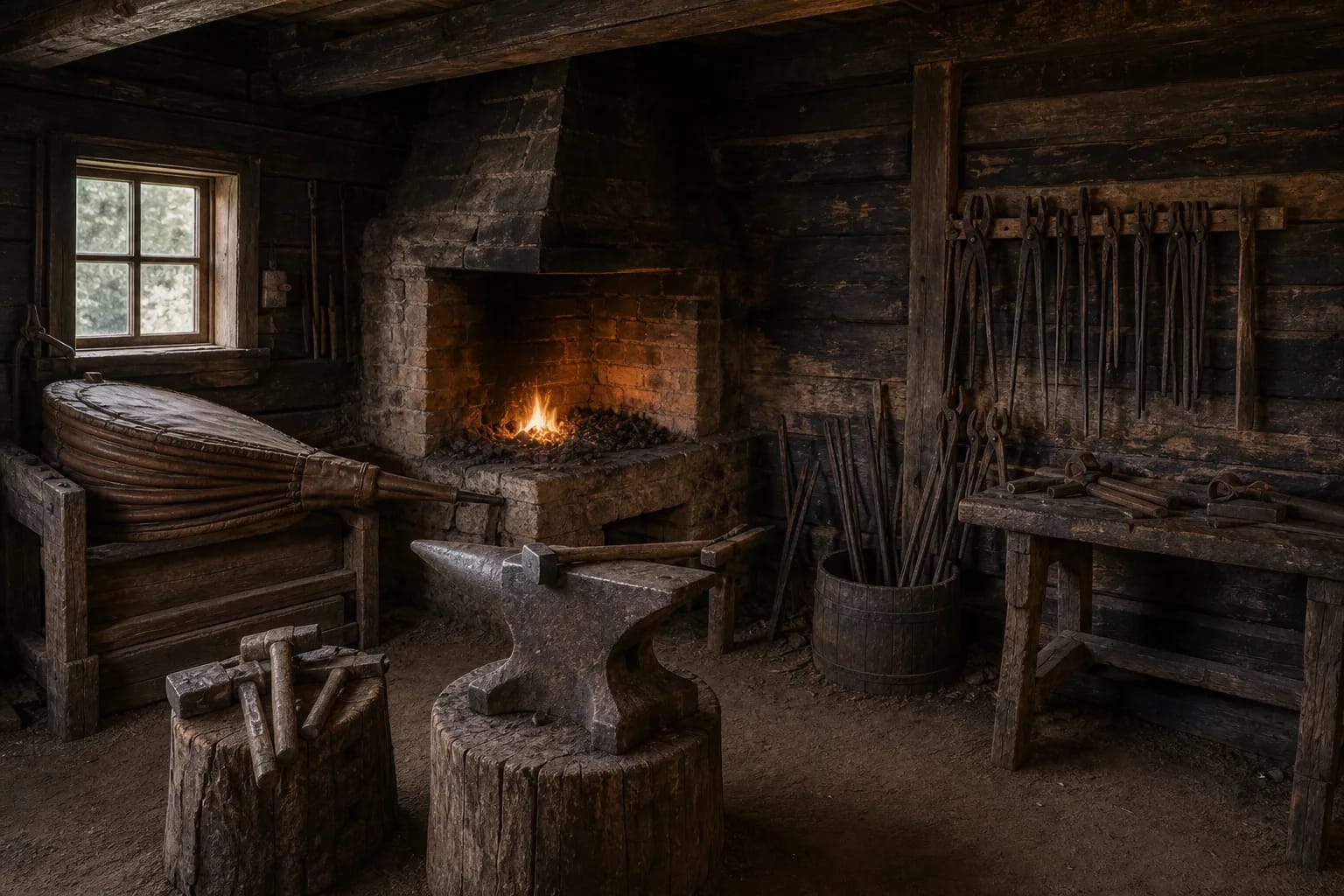
Some smithies had connections with water or other technical installations, but most village smithies were manual workshops.
Architectural character
Smithies were often one-room buildings without ornate interiors, with wooden, clay, or other simple walls. Their beauty lies in the clarity of work: doors, hearth, anvil, ventilation, and road.
From a heritage perspective, it is important to preserve not only the building walls but also traces of equipment. Without hearth and anvil, a kalvė becomes merely a storehouse.