- Place
- Marcinkonys eldership, Varėna District Municipality
- Region
- Dzūkija National Park
- Type
- Dzūkija National Park village and singing-tradition place
- Coordinates
- 54.14500, 24.40200
Žiūrai
Žiūrai: a singing sandy-forest Dzūkian village
Žiūrai is a village in Dzūkija National Park, Varėna District, Marcinkonys eldership, on the edge of Dainava Forest. Its value lies not in infrastructure but in the living southern, or sandy-forest, Dzūkian singing tradition, so a slow stop is more appropriate than a quick tourist sweep. This page presents Žiūrai as one of the important points of Dzūkija village song.
The southern sandy-forest Dzūkian singing tradition is tied to life in forest villages, where much revolved around season, family memory, work, mushrooms, berries, and community gatherings. The name Žiūrai matters here as a sign of place, not as a tourist stage: song is a living or memory-held practice belonging to the people who knew it, passed it on, and connected it with a specific village.
Žiūrai folklore ensemble since 1971
In its article on folklore ensembles, VLE names Žiūrai among Lithuania's first village folklore ensembles. VLE states that the Žiūrai, Marcinkonys, and Kriokšlys village folklore ensembles were founded in 1971 in Varėna District Municipality, part of the folklore movement that arose in the early 1970s through local-history expeditions and strengthening national identity.
The origins of the Žiūrai ensemble are linked with a 1970 expedition in the village organized by folklorist Jonas Trinkūnas, when local songs were recorded together with students; the ensemble formed soon after. Its long-time song leader and director from 1974 was librarian Marcelė Paulauskienė. These facts are cultural history; live events or performances should be sought through official park or culture-institution information.
The cultural field of Dzūkija National Park
VLE describes Dzūkija National Park as Lithuania's largest national park, 58,519 ha, protecting natural and cultural monuments, villages that preserve old wooden architecture traditions, and Dzūkian cultural traditions, customs, and old crafts. VLE notes that about 90.7 percent of the park is covered by the forests of Dainava Forest, some of Lithuania's richest mushroom grounds.
In this context, Žiūrai matters not as a separate monument but as one point of southern Dzūkija village culture. Such a village helps explain that the national park protects not only rivers, pinewoods, and mires, but also human voice, dialect, song, and community memory. Žiūrai is strongest as part of this ethnocultural landscape.
What is distinctive about sandy-forest Dzūkian singing
Southern sandy-forest Dzūkian singing is a distinctive monodic or near-heterophonic manner of singing, where sound is shaped by varied voice timbres and improvisation. It is not the sutartinės tradition typical of Aukštaitija, but a monodic Dzūkian song tradition in which dialect word, long sustained tone, and the combined voices of village women and men matter.
Recorded songs with characteristic dialect and refrains help sense the Dzūkian sound. When visiting such places, avoid romanticizing: song is not a decoration for a homestead photograph, but a living or memory-held practice. Speak about specific singers' repertoires and biographies cautiously, only on verified information.
What to see on site
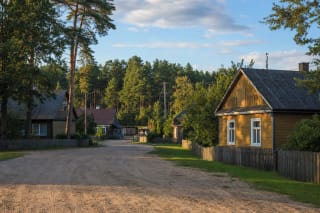
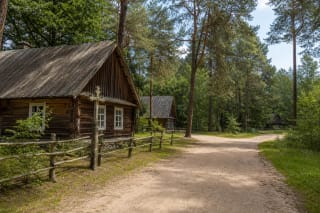
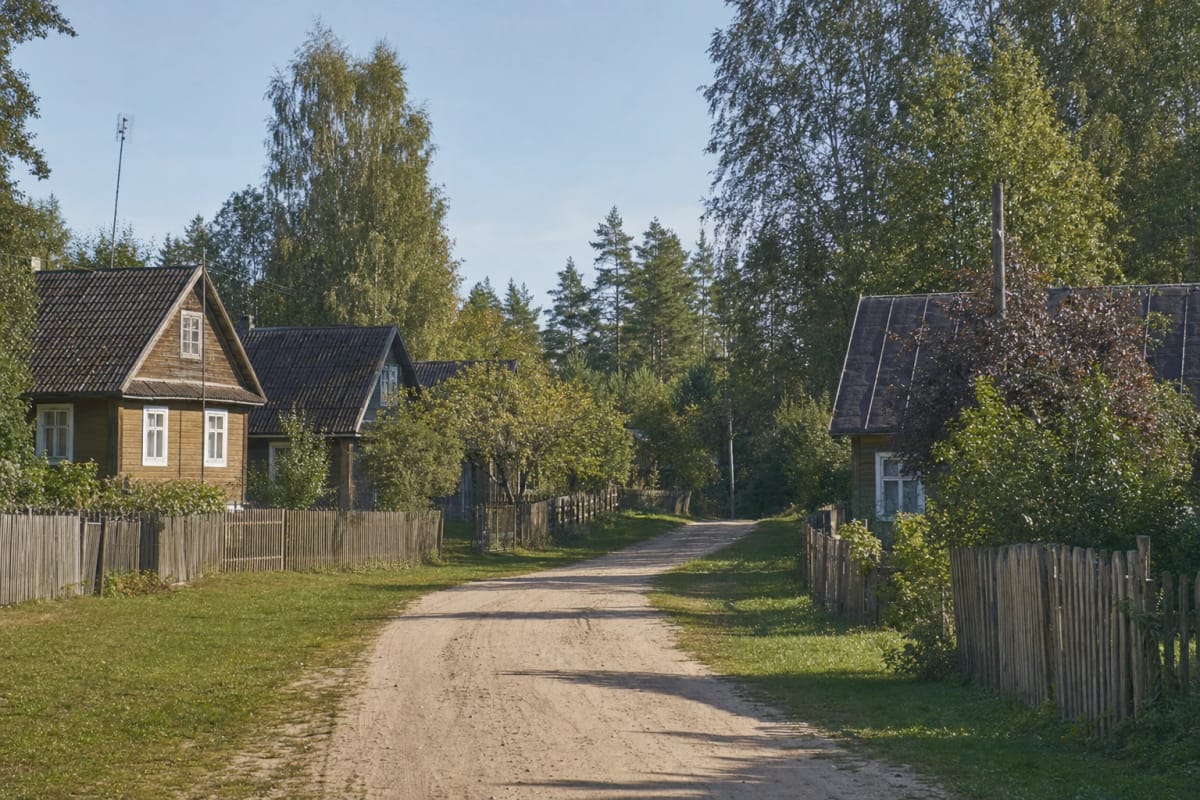
In Žiūrai, the most important things to observe are village scale, sandy roads, forest edges, traces of older wooden building, and the settlement's relationship with surrounding Dzūkija nature. If you expect a museum exhibition, the place may seem too quiet, but that quiet is exactly the right mode of visiting. No separate museum or permanent exhibition in the village was identified.
Park so you do not disturb locals, and when photographing choose general views of public spaces. The village's value is not close inspection of yards, so do not walk into private property or look for the legendary real houses of singers. Respect for residents is the main visiting rule here.
How to plan a route
Žiūrai is easiest to combine with Marcinkonys, Zervynos, Margionys, or other Dzūkija National Park villages. Then a wider theme appears: wooden villages, forest life, singing and storytelling traditions, nature trails, and protected landscape. Check current visitor objects and events on the official park page.
No separate opening hours or ticket are listed for Žiūrai village. It is a living settlement, so the rules are simple: respect residents, do not drive onto private land, do not make noise, and leave no litter. If travelling through the whole park, check Dzūkija National Park visitor ticket or support arrangements.