- Place
- Žiegždriai, Kaunas District Municipality
- Region
- Kaunas District
- Type
- Geological educational trail
- Coordinates
- 54.88600, 24.07000
Žiegždrių geologinis takas
A Short but Dense Geological Route
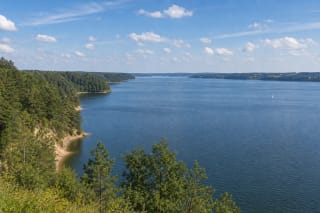
Žiegždriai Geological Trail is one of the best routes in Kauno Marios Regional Park if you want to see geology not from a distance but as a sequence of paths, stairs, and outcrops. Its length is about 1.6 km one way, so the return is along the same route.
The short distance is misleading: because of stairs, slopes, and stops at information boards, plan at least 1-1.5 hours. This is not a promenade but a linear educational route through reservoir-shore relief.
Kalniškiai Conglomerates
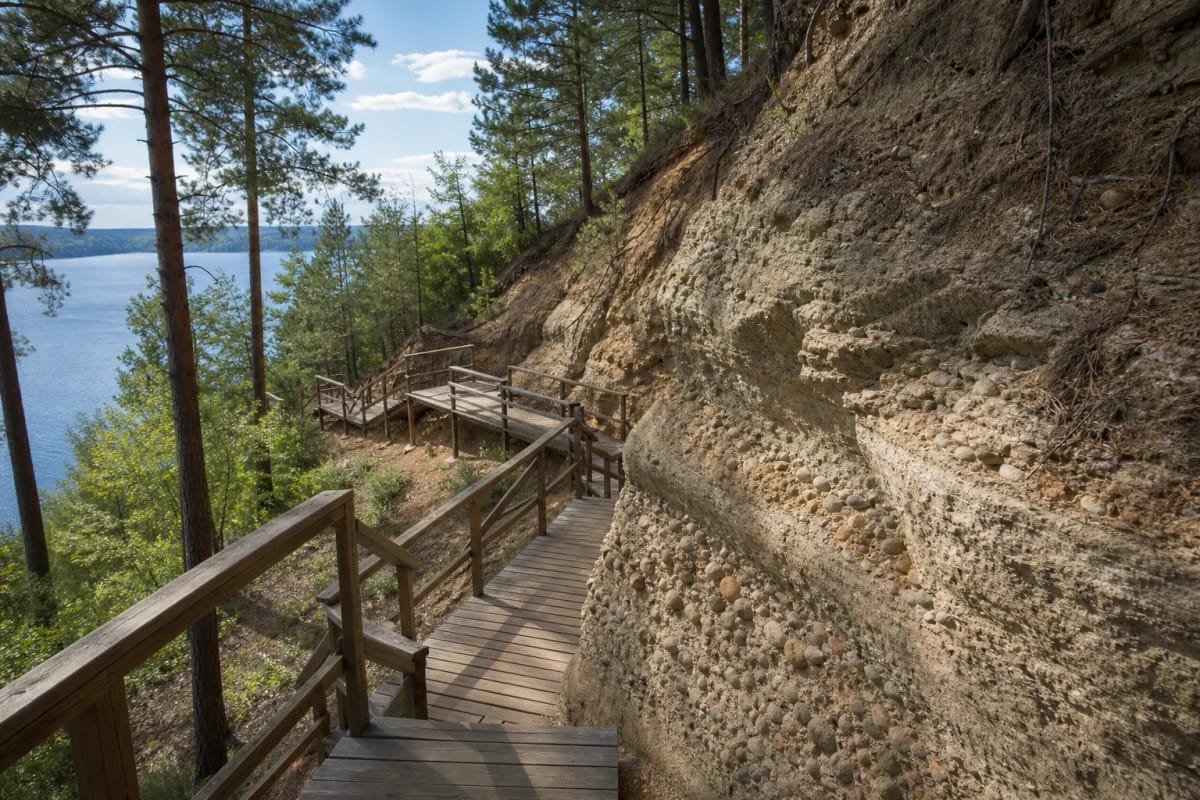
One starting direction of the trail is linked with the Kalniškiai conglomerates. Here you can see how sand, gravel, and small stones naturally cemented by carbonate materials become harder rock.
For visitors, the conglomerates explain why some slope layers retreat as they erode while others remain as more distinct forms. Saugoma.lt recommends that visitors arriving by car start from the Kalniškiai side.
Žiegždriai Outcrop
Žiegždriai outcrop is described as about 400 m long and 22 m high. Its layers help read the story of the last glacier and the post-glacial period: clays, sand, gravel, and water-shaped structures.
Kauno Marios makes this landscape especially dynamic. Water, frost, and precipitation affect the shores, so the outcrops are beautiful because they constantly change, but for the same reason they are vulnerable.
Stairs, Boards, and Atmosphere
The trail has many stairs and is not adapted for people with mobility impairments or strollers. Information boards are at both ends, so you can begin from the more convenient side.
Wind chimes have given the trail a distinctive sound, but they should not overshadow the main theme. At Žiegždriai, the key subject is the geology of the reservoir slopes, ravines, and outcrop layers.
How to Protect the Outcrops
Do not climb on outcrops, damage conglomerates, or go beyond barriers. Even small ground damage on a steep slope can accelerate erosion.
After rain, stairs and earth paths can be slippery. Dry weather, good shoes, and a slow pace are the best way to see the trail safely and without harming geological objects.