- Place
- Šereitlaukis, Pagėgiai Municipality
- Region
- Rambynas Regional Park
- Type
- manor-estate complex, park, and heritage area
- Address
- Šereitlaukis village, Vilkyškiai ward, Pagėgiai Municipality
- Coordinates
- 55.05400, 22.12000
Šereiklaukis Manor, Šereitlaukis Manor, Šereiklaukis Manor Site
Šereitlaukis Manor Estate in Rambynas Regional Park
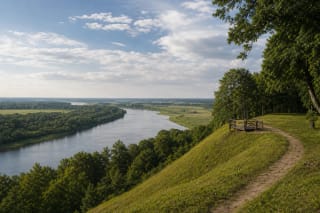
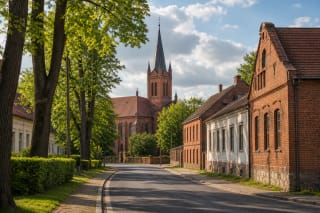
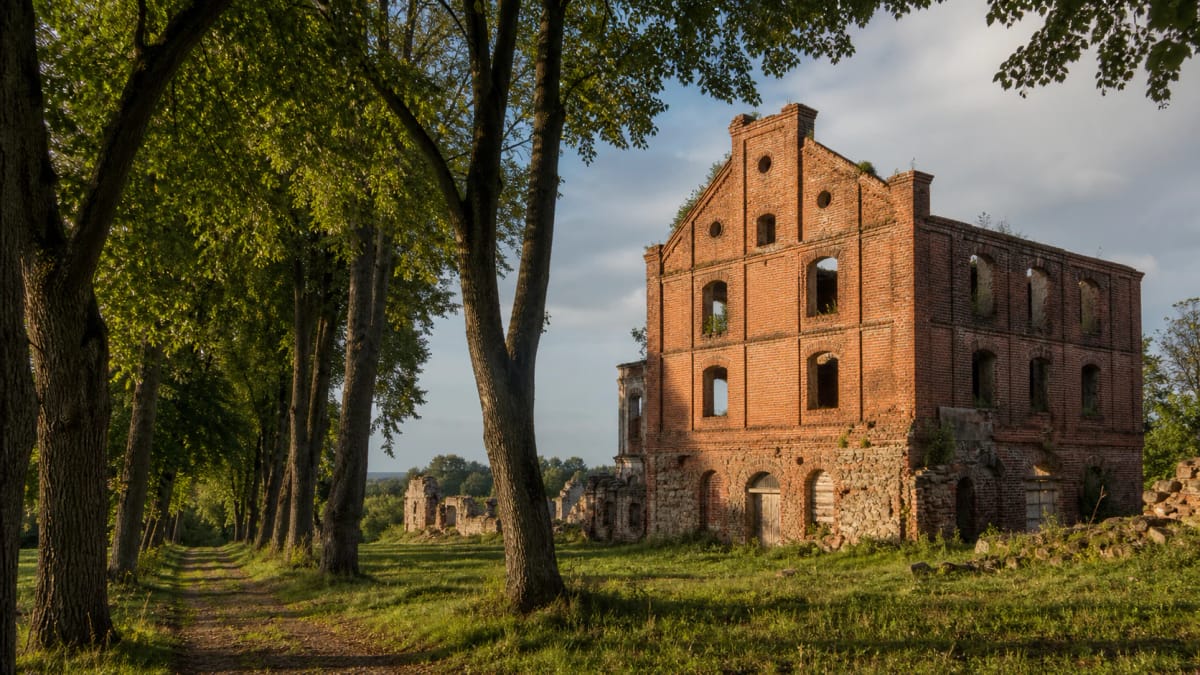
Šereitlaukis Manor Estate is one of the strongest heritage stops in Rambynas Regional Park. There is no reconstructed representative palace ensemble here, but the surviving buildings, park fragments, and alleys still convey the scale of the former manor.
In the Register of Cultural Property this is a state-protected complex of regional significance (code 661): it consists of seven manor-period buildings, park fragments, and remains of water and road systems. The building complex covered about 4 ha, and the adjacent park with ponds another 5 ha or so.
From a sixteenth-century state manor to its 1812 privatisation
The Šereitlaukis locality is mentioned in sources as early as the thirteenth century, and the manor established here in the mid-sixteenth century later became the region's largest landholding. For a long time it was a state (sovereign's) manor with a sheep farm and a mill.
After the former sovereign's manor was privatised in 1812, a thorough reconstruction began: the holdings were expanded, the estate and its surroundings were rearranged, new masonry buildings were raised, and new tree-lined roads - alleys - were laid. It is from this period that the estate's historicist "brick style" and "Prussian" architecture derives.
Von Schön, the Dresslers, and the manor's owners
The managers of Šereitlaukis held important posts. In 1773 Heinrich Theodor von Schön (1773-1856) was born here - one of the leading reformers of the Prussian state, who contributed to the abolition of serfdom and later became governor (Oberpräsident) of West Prussia (1816) and finally of the whole Province of Prussia.
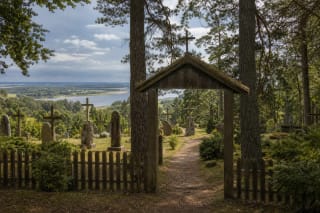
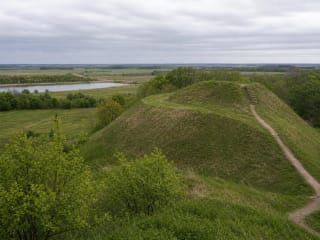
The Dressler family (L. F. Dressler) is also linked with the estate. On their initiative, in the early nineteenth century, a round barrow was formed on a natural rise about 2 km west of the estate, with a chapel on top (no longer standing); a tree-lined road led to it, and the manor cemetery was laid out on the lower terrace of Koplyčkalnis (Chapel Hill).
The estate's buildings, economy, and losses
The Register complex lists a granary, a distillery, two labourers' houses, two cowsheds, a tower, and park fragments. In the early twentieth century the estate had a distillery, a dairy, a working watermill, a sawmill, and an apiary, but it was best known for breeding horses and sheep - as many as about 1,000 were kept.
The Russian army invasion of 1914 and a 1914 fire that destroyed the manor palace, followed by the Soviet occupation that began in the autumn of 1944, destroyed most of the heritage. Perhaps the oldest surviving building is the nineteenth-century two-storey masonry granary, so a visit means accepting the site's fragmentary character and reading the surviving parts.
The distillery museum, the park, and the alley
The distillery building houses a community Šereiklaukis history museum telling the story of the manor and the region. An impressively old and large linden grows at the centre of the estate, and several valuable groups of trees survive in the surroundings.
An approximately 1.5 km tree alley of maples, lindens, and poplars leads toward the manor cemetery and chapel site (Koplyčkalnis). It matters because it connects the manor-estate landscape with the wider space of Rambynas Regional Park rather than enclosing it within a courtyard.
Visiting and the Šereiklaukis Forest Trail
The manor's remains and surroundings are managed as a distinctive archaeological and historical heritage object in Rambynas Regional Park. It is best to visit in dry weather, wear comfortable footwear, and plan not only to view the buildings but also to walk.
The looping Šereiklaukis Forest Trail begins near the manor - in fact three routes of different lengths (yellow 1.5 km, green 5.5 km, and blue 9 km). The longest passes an impressive Ice Age ravine, so it is easy to combine the manor visit with a nature hike.