- Place
- Šiauliai City Municipality
- Region
- Samogitia
- Type
- sound and image technology museum, a branch of the Aušra Museum
- Address
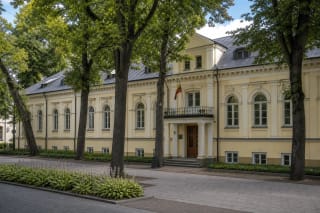
- Vilniaus g. 174, Šiauliai
- Coordinates
- 55.93400, 23.31090
Šiauliai Radio and Television Museum, RTV Museum
Radio and Television Museum: Sound and Image History
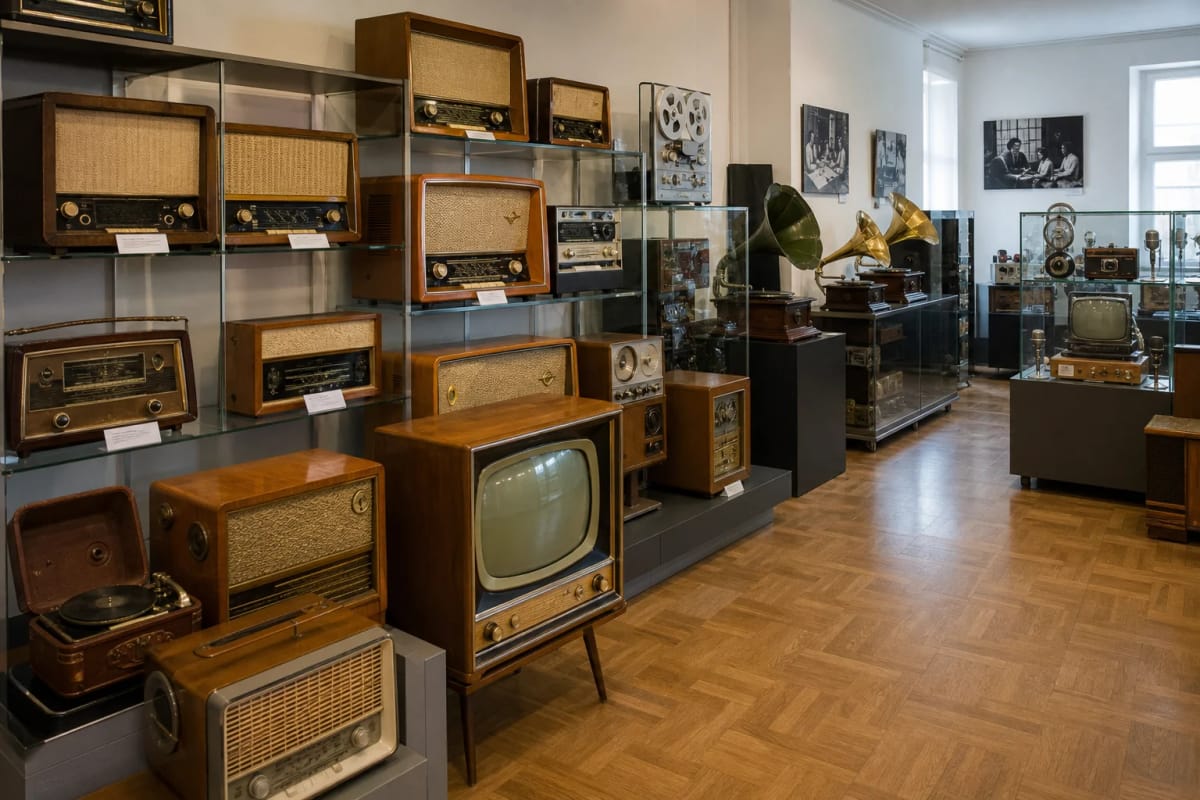
The Radio and Television Museum in Šiauliai tells how people learned to record and reproduce sound and image. About 5,000 exhibits - music boxes, phonographs, gramophones, radio receivers, and television sets from the late nineteenth century to the present - form a coherent story of technological change.
The location matters because the museum operates in Šiauliai, the city that had Lithuania's only television factory. Some exhibits were made here. It is a branch of the Šiauliai Aušra Museum, so it combines easily with other museum spaces in the city.
From Music Boxes to Television Sets
The exhibition is arranged around several groups: radio receivers, televisions, mechanical sound devices, telegraph equipment, and amateur radio. Some exhibits can be heard or tried, such as turning a mechanical gramophone or pressing a telegraph key.
One of the most valuable exhibits is the 1925 Banga radio receiver, considered the first Lithuanian receiver and made in Stasys Brašiškis's radio laboratory. It shows that radio-making in Lithuania began already in the interwar period.
Šiauliai, the Television City
In 1961 the only television factory in Lithuania was established in Šiauliai, and from 1968 it produced the distinctive larger-screen Tauras television sets. The museum collection therefore also preserves the memory of the city's vanished electronics industry.
It is worth being precise: the famous portable Šilelis televisions were made in Kaunas, while Šiauliai was known especially for Tauras-brand televisions. The museum's founder, engineer Jonas Rimkevičius, worked at the Šiauliai television factory himself.
Museum History
The museum was founded in 1982 through the initiative of engineer and local-history researcher Jonas Rimkevičius and prewar radio amateurs; the first exhibition opened in May 1982. At first it was a public, volunteer-based museum.
Soon the Soviet authorities, worried about radio amateurs gathering under the museum's banner, removed its public-museum status and nationalized the collection. Since 1994 the museum has been a branch of the Šiauliai Aušra Museum and is one of its eight branches.
Visiting
The museum is open Tuesday to Sunday and closed on Monday. At the time of research, a ticket cost about 2 EUR, reduced 1 EUR, and a guided tour cost an additional roughly 10 EUR; payment was in cash. Check the official page for exact current hours and prices.
Allow about 45-60 minutes. A Šiauliai museum route can combine it with other Aušra Museum branches, especially the Bicycle Museum, Photography Museum, and Chaim Frenkel Villa.