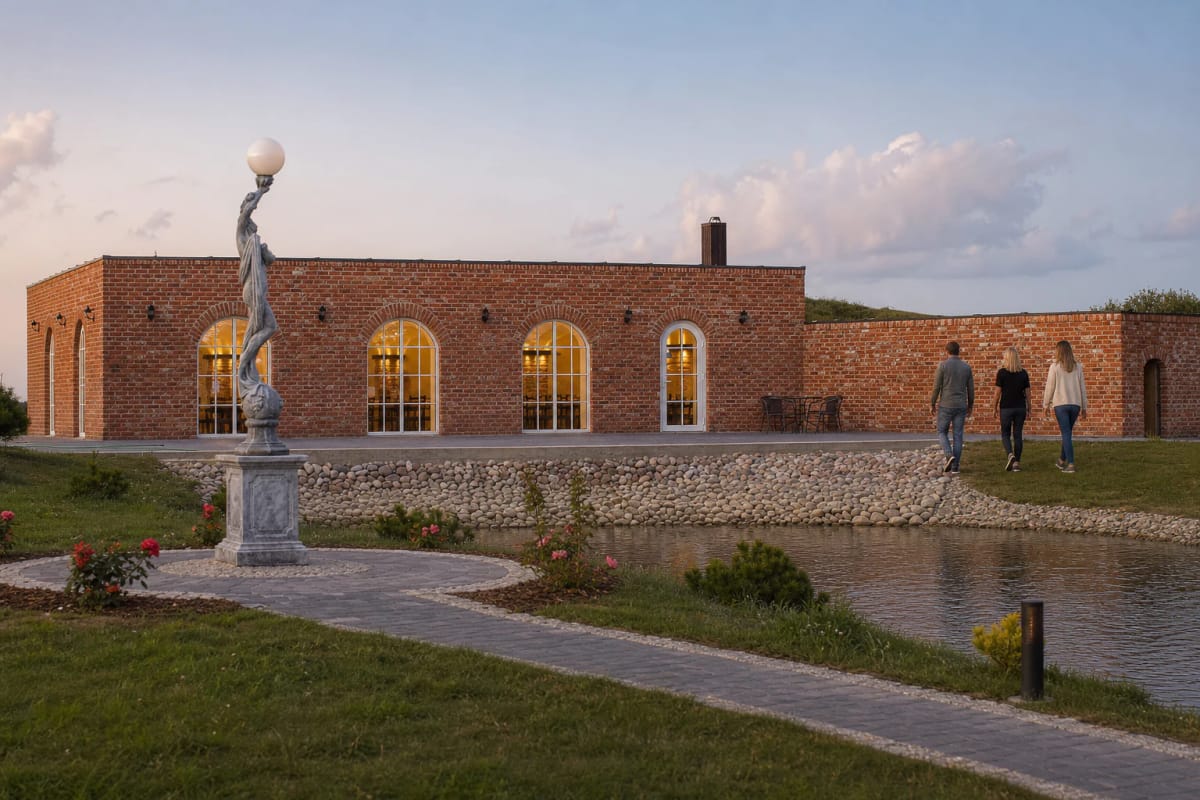
- Place
- Klaipėda District Municipality
- Region
- Lithuania Minor
- Type
- family fruit-and-berry winery visited by advance booking for an introductory tour and tasting
- Address
- Pjaulių g. 16, Pangesai village, Klaipėda District
- Coordinates
- 55.53655, 21.29657
Memel Wine, Memelio vynas
An arranged experience, not a shop to drop into
Mėmelio Vynas receives visitors through an introductory tasting booked in advance. Its official page says registration is compulsory but does not publish regular visiting hours, so do not simply stop on the way to Dreverna expecting a tour. Confirm the date, start time, participant count, and price directly with the winery.
The programme lasts between 1 and 3 hours and can accommodate up to 50 guests. That broad duration makes it important to clarify the exact format: how much time covers production, how many wines are currently served, which accompaniments are included, and whether the group has a private session.
The winery stands in Pangesai village between Priekulė and Dreverna rather than in an urban pedestrian area. Treat it as a central part of the day rather than a brief stop, and decide before booking who will drive afterwards or how the group will return by other transport.
Family winemaking and a winery begun in 2013
Winemaker Vytautas Dabašinskas describes watching winemaking within his family: his grandfather made rowan, apple, raspberry, and currant wines, while Vytautas's own first wine after university was apple. This personal continuity is the well-grounded part of the family story and explains the focus on local fruit and berries rather than imitation of imported grape styles.
According to the founder's published account, realising the idea took three years and foundations for the future winery were poured in June 2013. The company was registered that October, while the current Drug, Tobacco and Alcohol Control Department list records a fruit-wine production licence issued on 17 August 2015 at Pjaulių g. 16.
Scale and working method distinguish it from a large industrial plant. The winery describes itself as a small boutique producer using manual work, local ingredients, and limited batches, so a visit resembles meeting a particular craft and its maker more than touring an automated production line.
What the Memel name means, and where documented history ends
The Memel brand name deliberately refers to Klaipėda's historical name. The Universal Lithuanian Encyclopedia records that the town developing beside the castle in the mid-13th century was called Memel in German, linking the wine to the identity of the wider Klaipėda region rather than to the Pangesai place name.
The winery says it uses a recipe inherited from the grandparents, and this family line is central to the tour. It is consistent with the winemaker's own memories of his grandfather's fruit and berry wines and can reasonably be understood as oral family tradition.
The website also says the recipe's origins supposedly reach back to the Crusader era, but the wording itself introduces this as something that is said, without archival or technical evidence. Treat that detail as the winery's legend, not as documented continuous use of one recipe since the 13th century.
Lithuanian berries rather than grapes alone
Mėmelio Vynas primarily introduces fruit and berry winemaking. Its present official range shows gooseberry, blackcurrant, raspberry, yellow-raspberry, and quince wines alongside a dry red berry wine, a dry rosé fruit-and-berry wine, and sparkling rosé. Sweetness ranges from dry to semi-sweet as well as the raw material changing.
This is not an exercise in imitating grape-wine aromas. Blackcurrants can produce stronger acidity, tannic structure, and dark-berry notes, gooseberries a lighter balance of sweetness and acidity, and quince a fresh fruit character. The value of the tasting lies in comparing glasses and noticing how the ingredient alters colour, aroma, texture, and finish.
The range and individual vintages can change, so the promise to taste all wines made at the winery means the selection offered on the day, not a guarantee that every bottle mentioned on an older page remains available. If a particular type matters, such as gooseberry or honeysuckle wine, ask about it when booking.
Cheese pairing and the latest awards
The official programme begins by meeting the winemaker and hearing the family story, then continues through the winery and a discussion of Lithuanian winemaking. Wines currently in production are paired with house-aged cheese, and visitors can buy a favourite bottle or winery souvenir afterwards.
Tastings are offered in Lithuanian or English. For a bilingual or international group, agree on one language or ask whether both can be used, because repeating the full account changes the programme's duration and pace.
In the Ministry of Agriculture's published results for the 2025 Rinkis prekę lietuvišką exhibition, Mėmelio red berry and honeysuckle wines received gold medals, while its rosé fruit-and-berry wine received silver. These are specific recent product awards, not a claim that every wine produced here is award-winning.
Price, age limit, and a safe journey
In July 2026, the winery's official tasting page did not publish a standard public price. Third-party gift and tour offers show different formats and amounts and should not be treated as the winery's direct tariff; obtain the final price, deposit, cancellation terms, and included food when booking.
Alcohol tasting in Lithuania is restricted to people aged 20 and above, so a young-looking visitor should carry proof of age. The winery does not publicly explain whether a younger family member or an adult who does not drink can join only the tour, or what price would apply; agree this before paying.
The address is Pjaulių g. 16, Pangesai village, coordinates 55.536547, 21.296574. Do not drive after tasting: designate a sober driver, arrange transport, or choose another safe return. Public-transport routes and frequency change, so rely on them only after checking the timetable for the day of travel.
Public information does not describe every step, threshold, accessible toilet, or wheelchair space. Visitors with limited mobility should ask the winery to confirm the complete route from the vehicle through production and tasting areas before booking, while food allergies and intolerances must be discussed because cheese is served.