- Place
- Kaunas City Municipality
- Region
- Kaunas
- Type
- museum of education, school, and pedagogy history
- Address
- Vytauto pr. 52, Kaunas
- Coordinates
- 54.89160, 23.92260
Lithuanian Education Museum, Museum of Education History
A museum about school as a cultural system
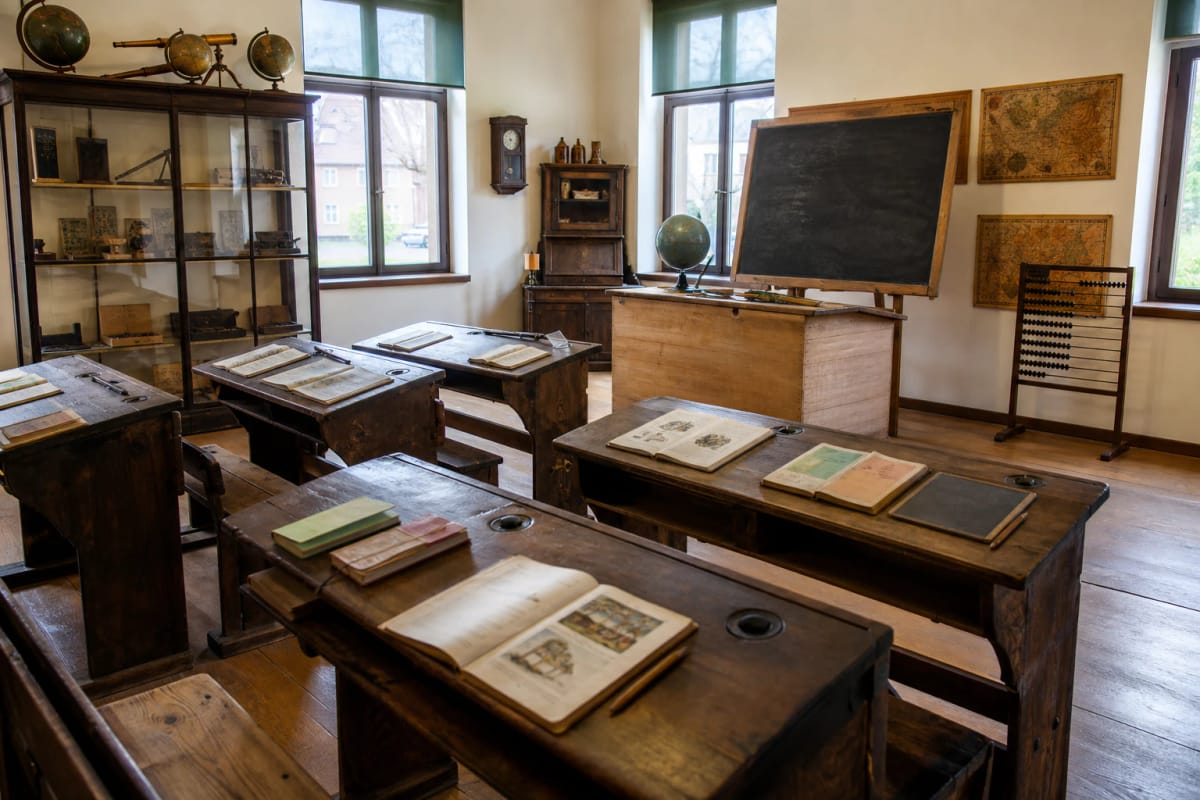
The Lithuanian Museum of Education History, called the Lithuanian Education Museum since 2023, is one of those places where ordinary objects begin to speak about the state. A desk, blackboard, exercise book, textbook, or grade book is not nostalgic decoration here; it shows how society understood the child, knowledge, discipline, language, and citizenship.
The museum is especially interesting for families travelling across generations. Grandparents, parents, and children often recognize different school experiences, so the exhibition becomes a conversation rather than only text reading.
From the 1922 pedagogical museum to today
The museum's history began with a teaching-aids exhibition held in Kaunas in January 1922. Its success led to the founding of the Pedagogical Museum on November 18, 1922; the first director was educator and public figure Vincas Ruzgas. Over the decades the institution changed names: in 1958-2002 it was the Republican Pedagogical Museum, in 2010-2023 the Lithuanian Museum of Education History, and since 2023 the Lithuanian Education Museum.
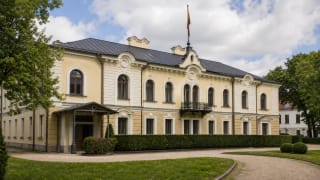
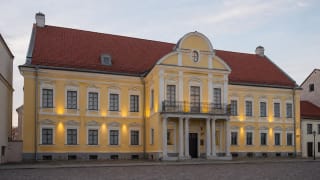
Since 2000 the museum has operated at Vytauto pr. 52 in Kaunas, where exhibition and education spaces have been arranged. Today it preserves more than 55,000 museum valuables: rare publications, periodicals, photographs, and documents connected with the history of Lithuanian education.
What the exhibitions explain
The official museum presents education history through themes related to school change, written culture, pedagogy, textbooks, teaching aids, and the learning environment. This shows that education was not merely a timetable of lessons, but a field of national identity, language, social mobility, and political control.
When visiting, pay attention to different periods: restrictions under the Russian Empire, the creation of Lithuanian-language schools, interwar modernization, Soviet ideological control, and education changes in independent Lithuania. Each stage changed not only curricula but also the atmosphere of the classroom.
Education programmes and living learning
This museum is especially suited to educational activities, because its subject is naturally connected with learning. Children understand history more easily when they can compare their own classroom with earlier teaching tools, writing methods, or school rules.
If you are planning a class or family visit, review the official education programmes in advance. They can change the rhythm of the visit: instead of a self-guided walk-through, you get a clear storyline and activity.
Practical information and visiting
The museum is at Vytauto pr. 52, near the Kaunas centre and the railway-station direction. At the time of research, the official page listed opening hours Tuesday-Friday 9:00-18:00 and Saturday 10:00-17:00, with Monday and Sunday closed. Adult tickets were 4 EUR, school pupils, students, and seniors 2 EUR, and a family ticket 6 EUR. Check current information before going.
A self-guided visit usually takes 1-1.5 hours. With an educational programme or group, plan more time and reserve in advance.