

- Genre
- Formula and tall tale
- Source status
- variant tradition
- Motifs
- impossible events, formula, tall tale, paradox, storyteller's game
A Tale Never Heard or Seen, Negirdėta neregėta pasaka
The tale
The storyteller begins by promising something no one has ever heard or seen. From the first sentences it is clear that the ordinary order of reality will not apply.
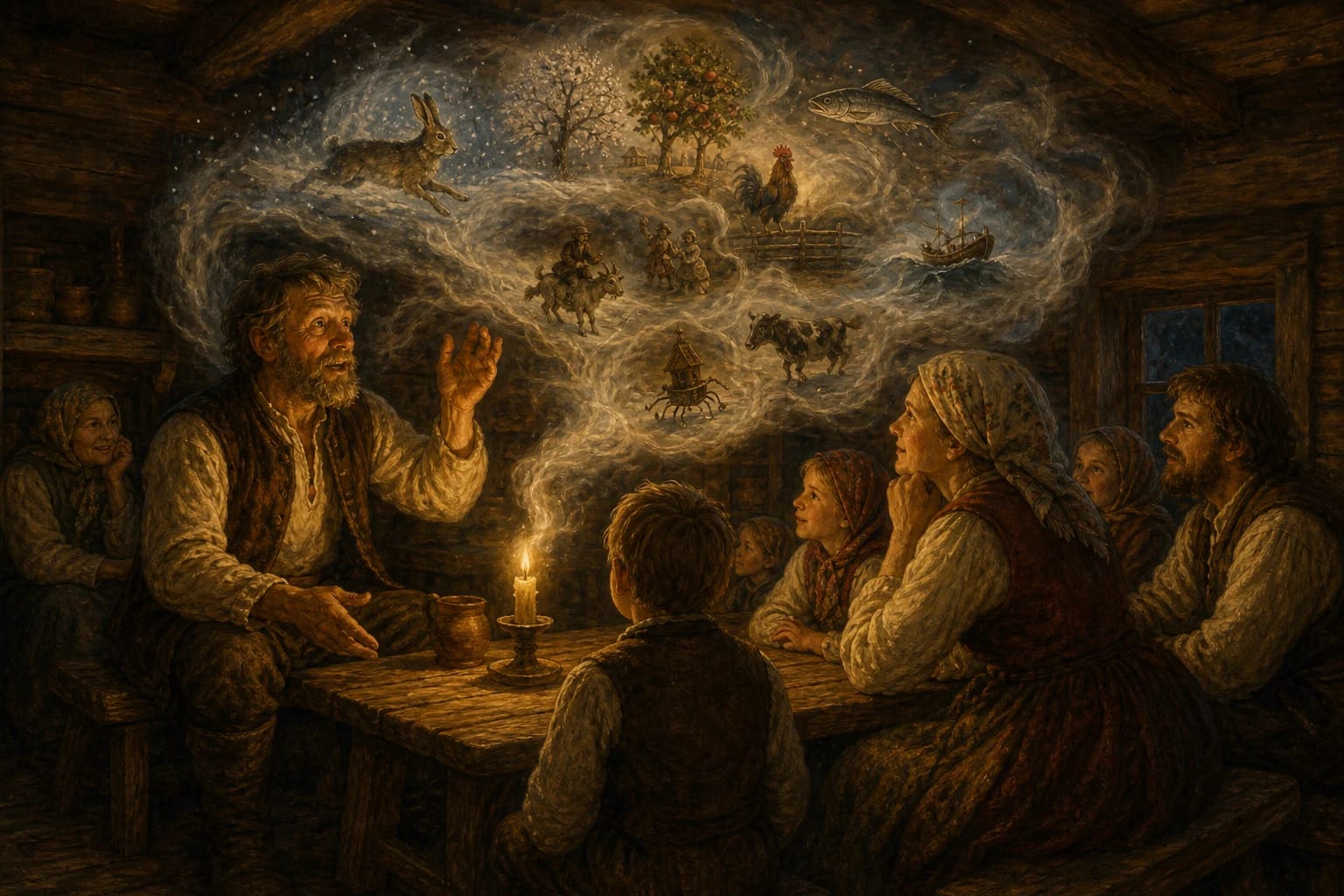
Impossible images then line up: small things become enormous, animals act contrary to their nature, time and space mix, and everyday tasks become paradoxes.
The tale ends not with a traditional happy resolution but with the closing of the game. The listener is left with laughter and the sense that language itself can create a world impossible to see.
Interpretation
A Tale Never Heard or Seen works as a deliberate game of impossibility. It wants not to convince but to astonish.
Formulaic repetition and absurd images help the storyteller keep rhythm. The more impossible the tale becomes, the better its logic works.
Such a tale teaches not a moral but the freedom of language: it shows that folklore can be pure creative play.
History and variants
Formula tales and tall tales lived as oral games, especially suited to children, evening gatherings, and demonstrations of storytelling skill.
There is no exact date of creation. Variants may change the sequence of impossible images, but the title's promise - never heard and never seen - remains the main key.
Visuotinė Lietuvių enciklopedija treats tall tales and formula tales as separate Lithuanian tale groups. In the international Aarne-Thompson-Uther system, such impossibility narratives belong to the anecdote and lying-tale section ATU 1875-1999, the so-called tall tales. Lithuanian variants are described in Bronislava Kerbelytė's catalogue of narrative folklore (1999-2002).
Language play and absurdity
This plot matters as an example of formula and tall tale: the storyteller deliberately crosses the boundaries of reality to create laughter, wonder, and a living rhythm of speech.