- Genre
- Mythological sakme
- Source status
- folkloric
- Motifs
- wounded element, wind as an old man, knife, pipe, careless power
The sakme
A man was winnowing rye in the barn. Wherever he stood, the wind blew the wrong way: it carried chaff back through the door or curled around from the other side and spoiled the work.
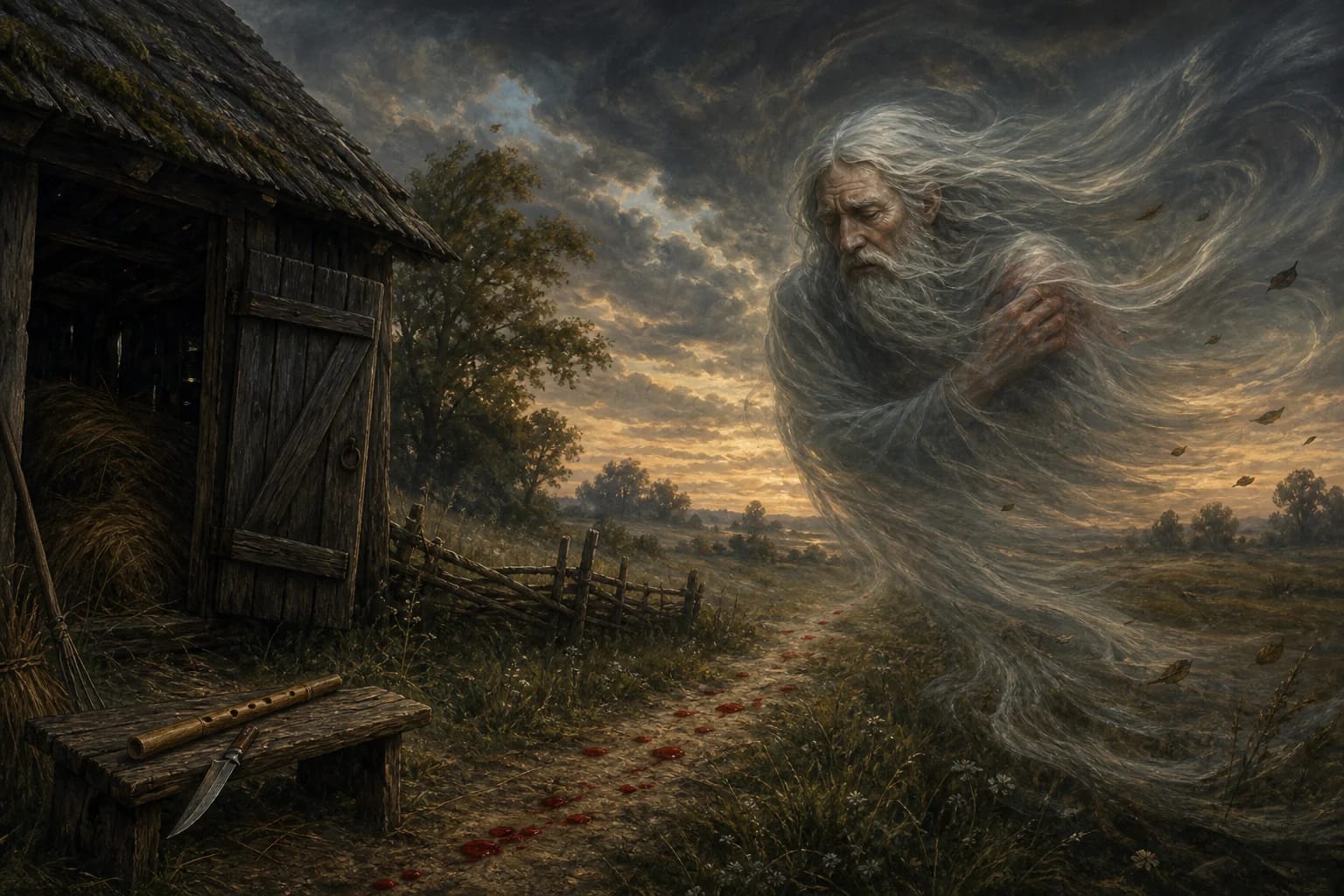
The man flew into a rage. He pulled out a folding knife and threw it through the door toward where he felt the wind coming from. Suddenly everything grew still. The rye winnowed easily, as if there had been no wind at all.
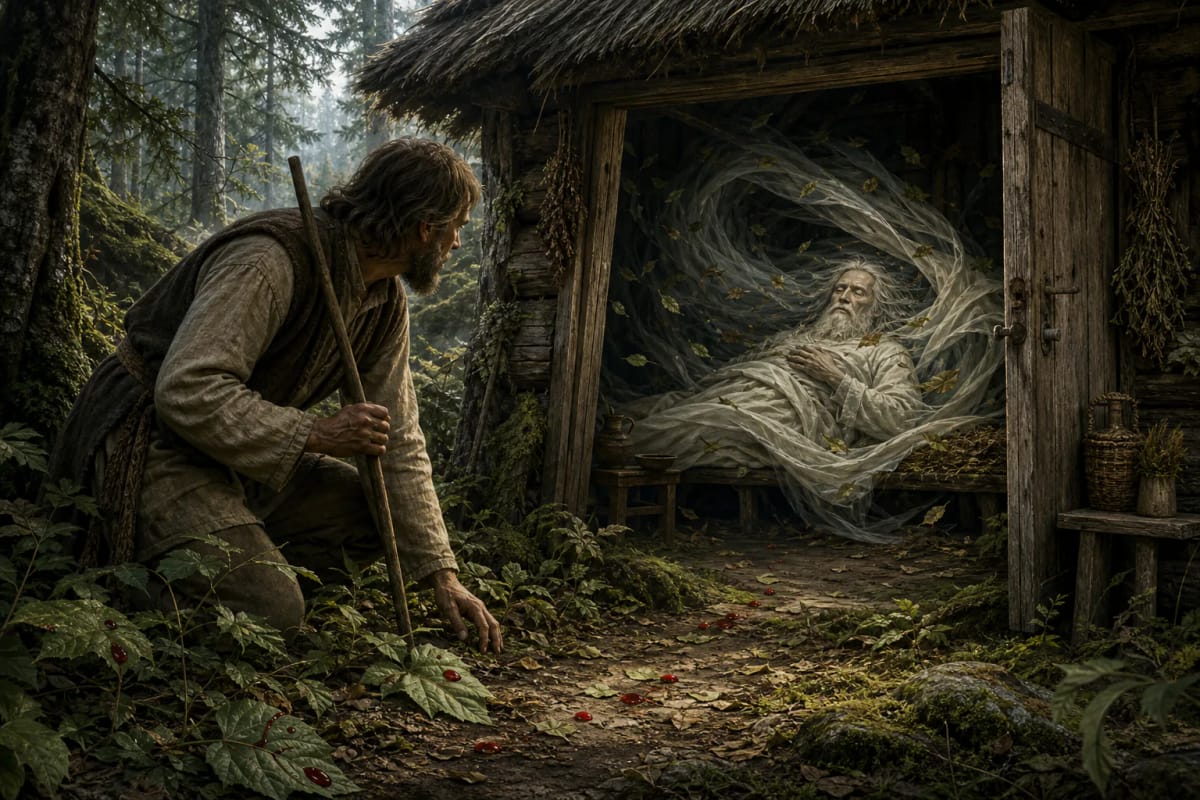
When he went out to look for the knife, he found not the knife but drops of blood. Following them, he came into the forest and saw a small, fine house. Inside lay an old man, his face pierced by the knife.
The old man promised to return the knife if the man blew into a pipe. The man blew, got his knife back, and left. But when he returned, he found not his home but only foundation stones. With one breath he himself had blown away his homestead.
Interpretation: what does the wounded wind mean?
The sakme teaches that an element can be alive and vulnerable, but that wounding it is dangerous for humans. Throwing a knife at the wind seems meaningless, yet in the sakme’s world even an invisible phenomenon has a body.
The pipe is a sign of authority. The man gets a chance to use the wind’s force, but he does not understand its scale. A single breath, which seems small, destroys his own home.
The story therefore speaks about anger and the irresponsible desire for power. The wish to force nature to obey can turn back against the human being.
The source variant
Lietuvių tautosaka, IV (1967), no. 611, p. 585–586: „Sužeistas vėjas“. An editorial retelling of the specific cited variant, checked against its complete source narrative. This is not a literal transcript.
Why is this sakme powerful?
The story is short but highly visual: barn, knife, blood trail, forest, old man, and the sudden return to an empty place.
It also lets modern readers speak about ecological limits: forces of nature are not merely tools for human convenience, and careless interference can destroy the very dwelling place.