- Genre
- Mythological sakme
- Source status
- folkloric
- Motifs
- four winds, stone in the sea, hollow tree, rooster’s call, waiting for the end of the world
The story
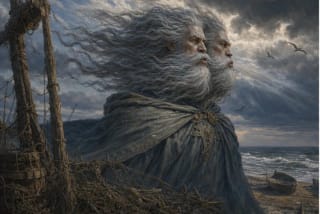
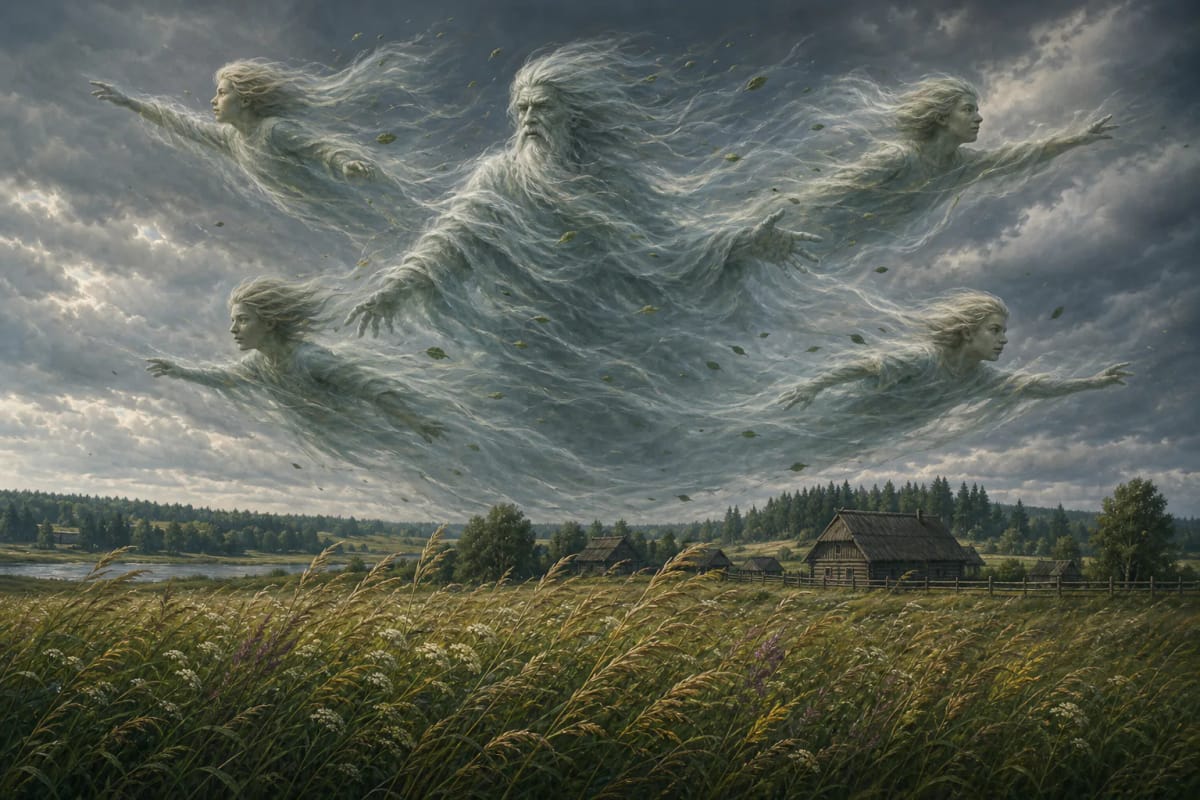
Long ago there were four winds: North, Morning, South and Evening. One was an old father; the other three were his children. They were so strong that they moved mountains. God disliked their wild behaviour and ordered them to lift a huge stone out of the sea.
They blew at it from every direction, but it would not move. All four took hold of it instead. They raised it, yet could not carry it through the water to shore. The father let go of his corner to help by blowing. The stone fell on his three children and pinned them to the seabed.
Having lost his children, the father hid inside a hollow tree and stopped blowing. Without wind the crops no longer grew, and people suffered. Three years passed. God sent animals and birds to find the missing wind, but he answered none of them.
At last a rooster began crowing beside the hollow. It kept on until the wind lost patience and told it to go away. His hiding place was discovered. God promised that the children would rise when the end of the world approached. The father came out and blew in every direction again, still hoping for their return.
Why did the world need wind?
This variant explains the wind’s disappearance and return, rather than assigning a different temperament to each direction. His strength is dangerous at first, but complete stillness also brings disaster. A father’s loss gives the natural force a recognisably human grief.
The rooster completes the search by provoking an answer. Its persistence is essential to this particular plot.
The source variant
Retold from the complete “Vėjas ir jo vaikai” text on Vaikams.lt. The stone, the three trapped children, the three years of silence, the rooster and the final promise are retained. This is an editorial retelling in modern language, not a literal transcript.