- Genre
- Mythological sakme
- Source status
- folkloric
- Motifs
- milk stealing, Joninės night, upturned broom, witches' gathering, chimney
The sakme
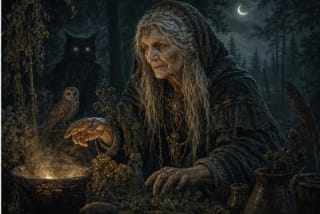
A woman lived on an estate, and neighbors spoke of her as a witch. People noticed that one day one household, the next day another, would find their cows left without milk.
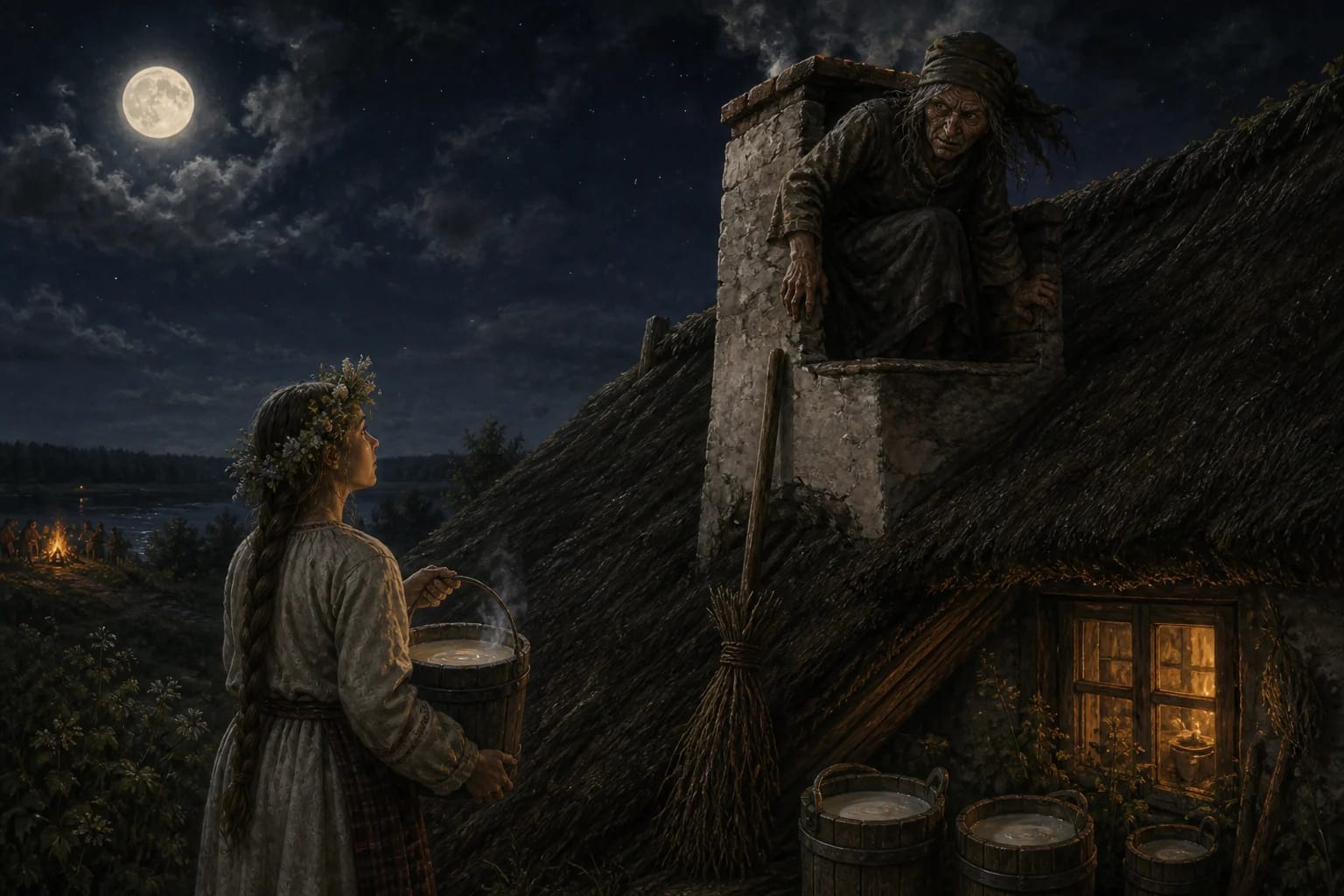
Watching her, they saw a strange thing: the witch was not milking a cow, but a dishcloth hanging by the door, and milk flowed from it. In this way she took milk from other people’s animals.
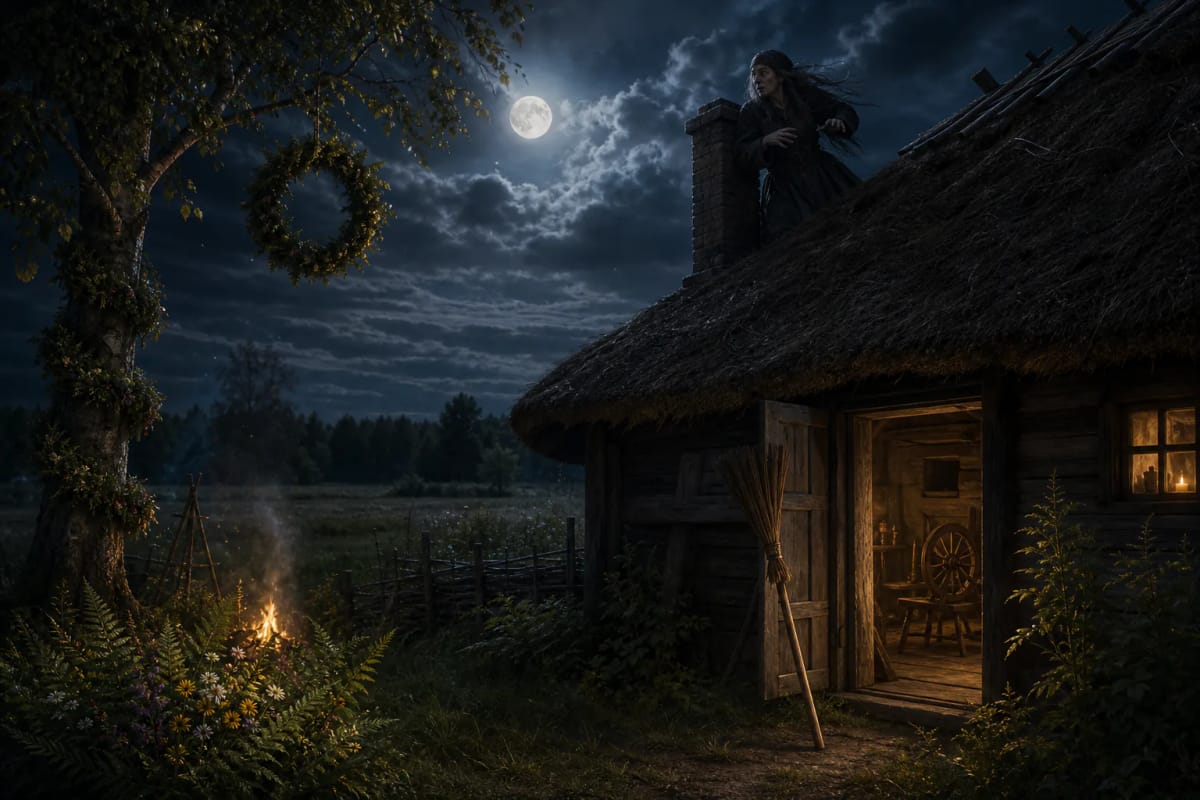
Joninės came. It was known that on Joninės night the witch flew to a witches' gathering. In the house there was a spinning wheel without its wheel and a broom standing upside down. Someone took the broom and set it the ordinary way.
At midnight the wind rose. The witch returned through the chimney, but because the broom had been changed she missed her way. She rolled down from the roof and was ill for a long time. After that she no longer milked through the dishcloth.
Interpretation: what does the tricked witch mean?
The sakme speaks about magical harm done to a farm. Milk was an important household wealth, so its disappearance was explained not only by illness or chance but also by a witch’s action.
The dishcloth replaces the cow: an ordinary object becomes a magical link to the animal. The story shows the belief that a real thing or living being can be affected through a substitute.
Moving the broom is simple but effective countermagic. The human helper does not fight the witch directly, but changes the sign that guides her return.
The source variant
Vaikams.lt: „Apgauta ragana“, complete legend text. An editorial retelling of the specific cited variant, checked against its complete source narrative. This is not a literal transcript.
Joninės and the magical night
In folklore Joninės night is tied to plants, fire, dew, and hidden powers. It is the time when one may search for the fern blossom, but also meet witches.
"The Tricked Witch" shows the darker side of that night: thresholds open, but a clever person can turn them against the one who harms others.