- Genre
- Mythological sakme
- Source status
- folkloric
- Motifs
- Velnias pursued by Perkūnas, rowan, bottle, hospitality, reward
The sakme
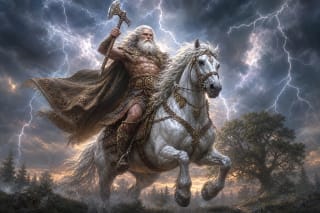
Once a fierce thunderstorm came. Lightning tore through the sky, rain poured down in sheets, and Perkūnas struck whatever came in his way.
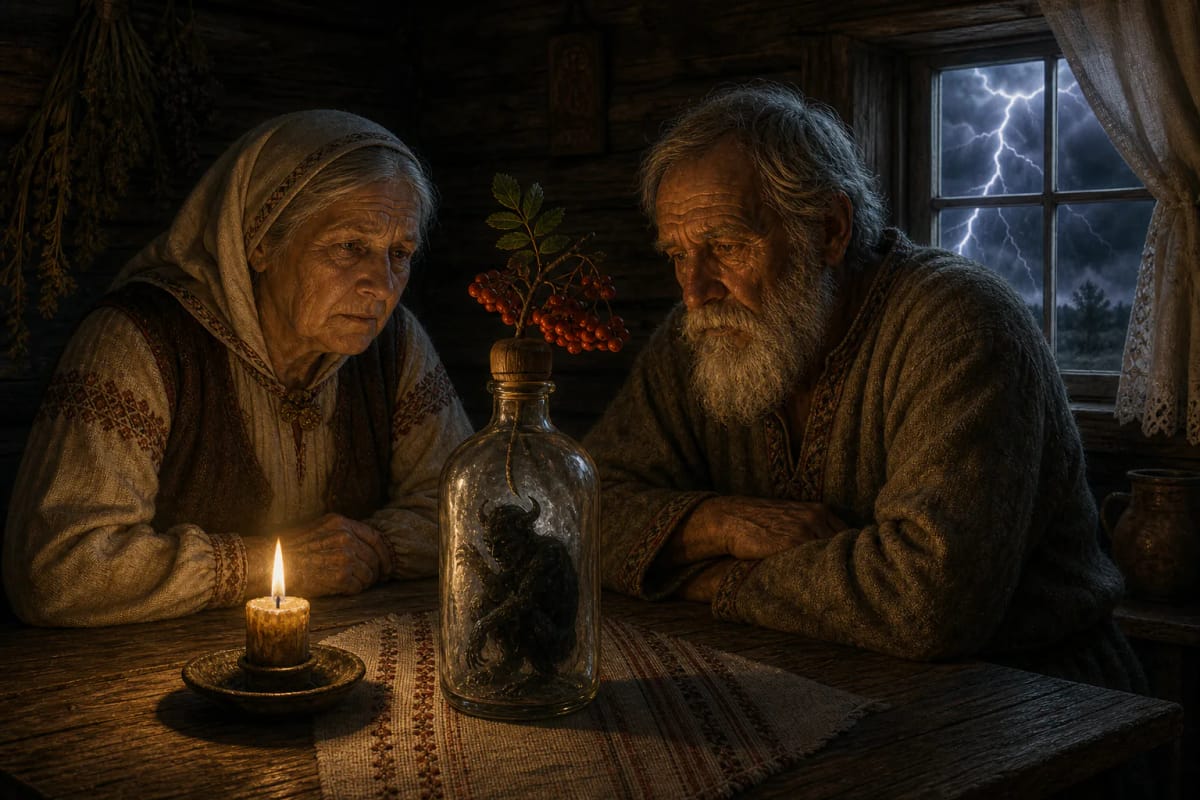
A soaked traveler knocked at an old couple’s cottage. Good people took him in, but soon realized he was Velnias: his feet were horse-like, and his nose had no nostrils.
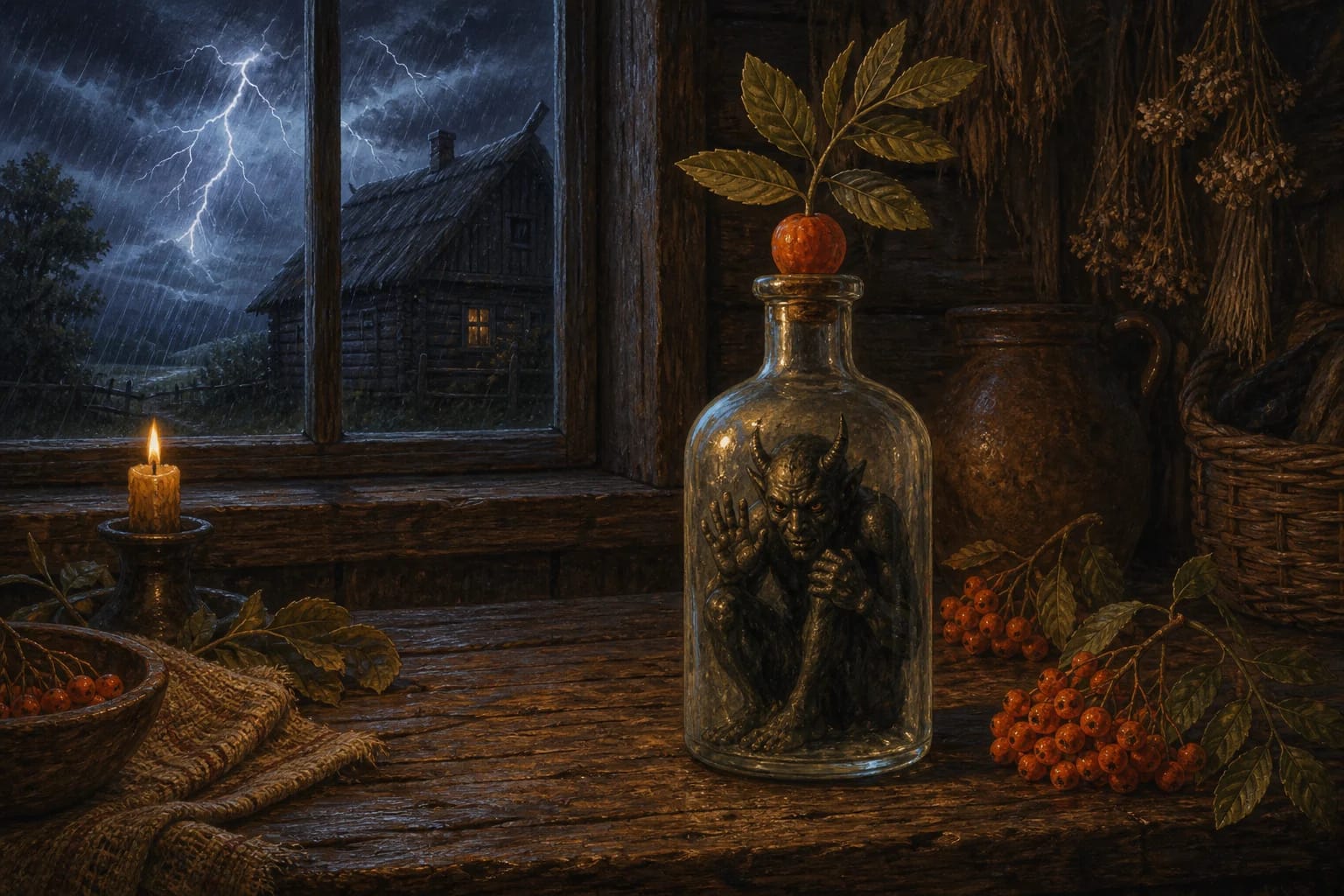
The old people were frightened and began sprinkling holy water. Velnias started squealing, begging for help, and promising a reward. He told them to shut him in a bottle with a rowan stopper so Perkūnas would not find him.
When the storm passed, the old people let Velnias out. As he had promised, he rewarded them and went away.
Interpretation: what does the rescued Velnias mean?
This sakme is unusual because the human helpers aid not Perkūnas but the being Perkūnas is pursuing. It shows that the folklore Velnias is not simply abstract evil; he can fear, plead, bargain, and repay.
In Lithuanian belief rowan was often considered a protective tree against harmful forces. Here, paradoxically, it becomes the means by which Velnias is enclosed and hidden.
Hospitality has a boundary in the sakme. The old couple helps, but also shuts Velnias in a bottle: they accept a strange force only in a controlled form.
The source variant
Šaltiniai.info, Lietuvių mitologinės sakmės II, PDF p. 2: „Išgelbėtas velnias“; from Sužeistas vėjas (1987). An editorial retelling of the specific cited variant, checked against its complete source narrative. This is not a literal transcript.
Can one help Velnias?
The sakme does not answer bluntly. It shows that helping a dangerous being may bring a reward, while risk remains.
The story is therefore not permission to befriend Velnias, but a complex text about fear, bargaining, and limited human cleverness.