- Genre
- Heavenly-body origin sakme
- Source status
- folkloric
- Motifs
- solar smith, shining iron, six years, creation of light
The sakme
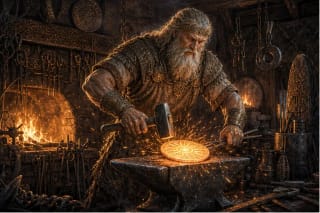
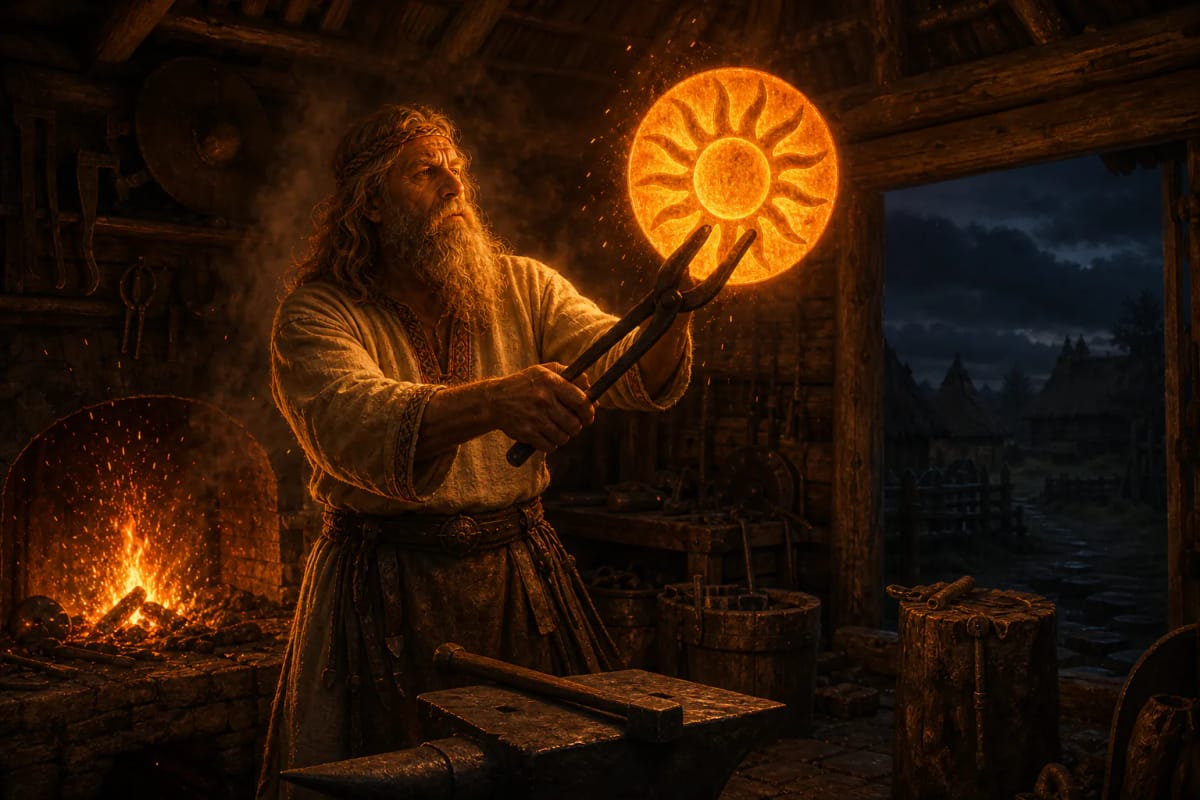
When the whole world was in darkness, a smith decided to forge the sun. He took shining iron and began to hammer it.
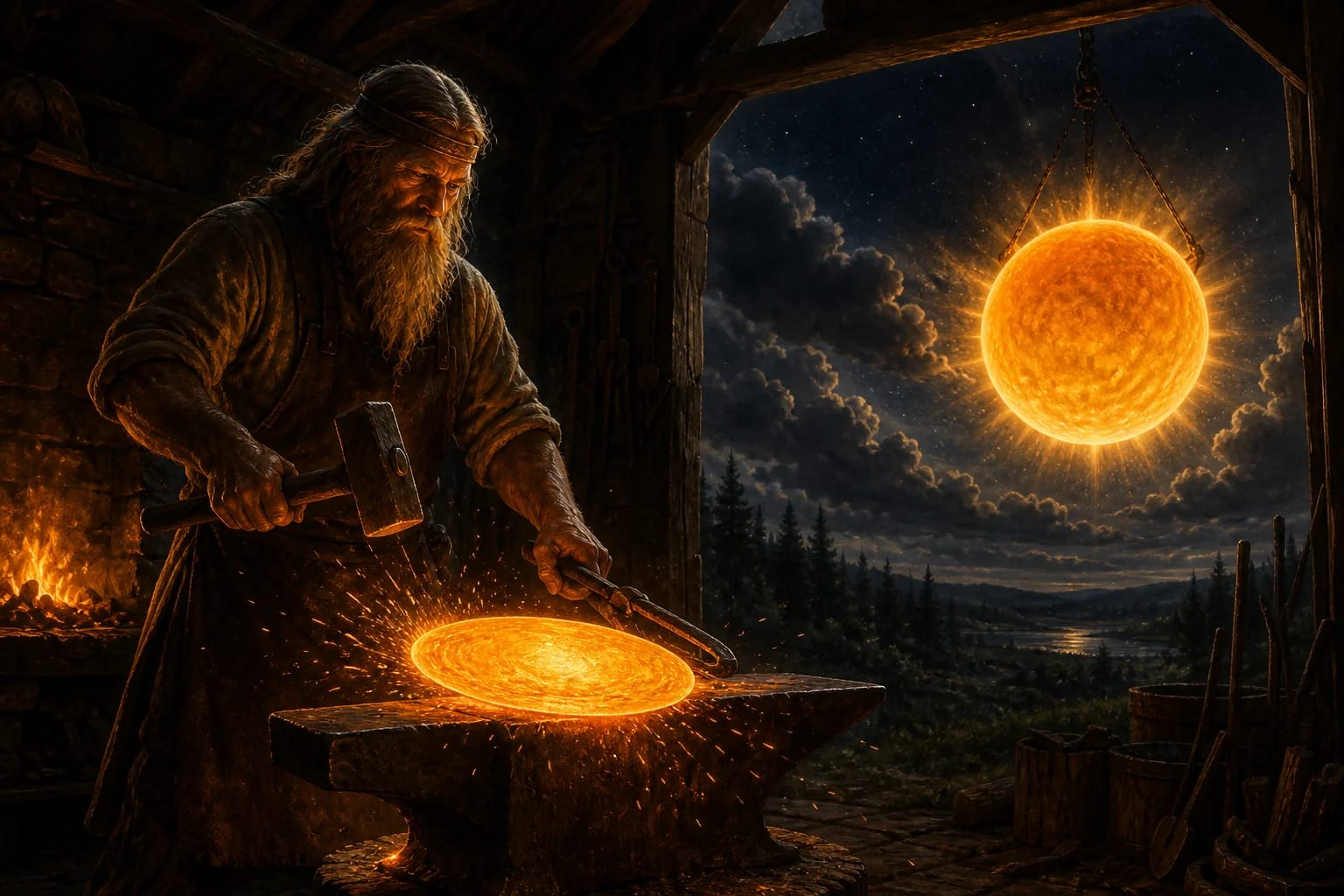
The work lasted six years. When it was finished, the smith climbed onto the highest roof and threw the sun into the sky. It has remained there shining to this day.
Interpretation: what does the forged Sun mean?
Light in this story comes through work. The smith’s long labour connects an earthly craft with the arrangement of the sky.
The smith is unnamed in this variant. Assigning him another mythological figure’s name would add something that the source does not say.
Six years emphasise the maker’s patience. The short story moves from complete darkness to an ending that explains the familiar world.
The source variant
Vaikams.lt: „Nukalta Saulė“, complete legend text. An editorial retelling of the specific cited variant, checked against its complete source narrative. This is not a literal transcript.
Iron and heavenly light
Shining iron becomes the material of the heavenly light. This can be read as an association between light and metal: an interpretation of the image, rather than an additional event.