- Genre
- Etiological sakme
- Source status
- folkloric
- Motifs
- origin of humans, water drop, Dievas washing, Adam and Eve, overcoming loneliness
The sakme
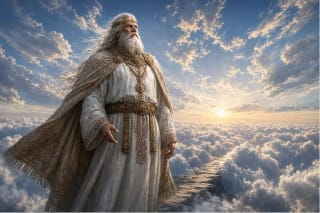
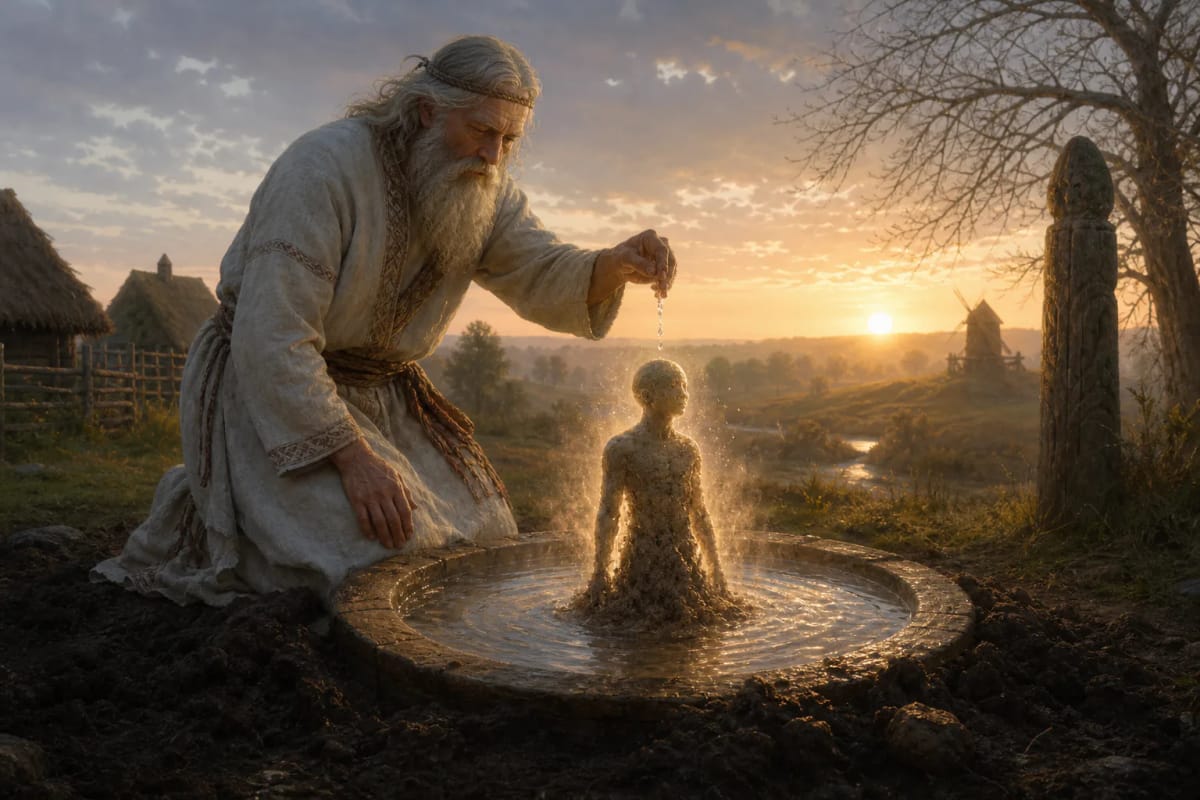
Before there were people, God tended a stove and became covered in soot. As he washed, a drop of water fell from his face onto the ground.
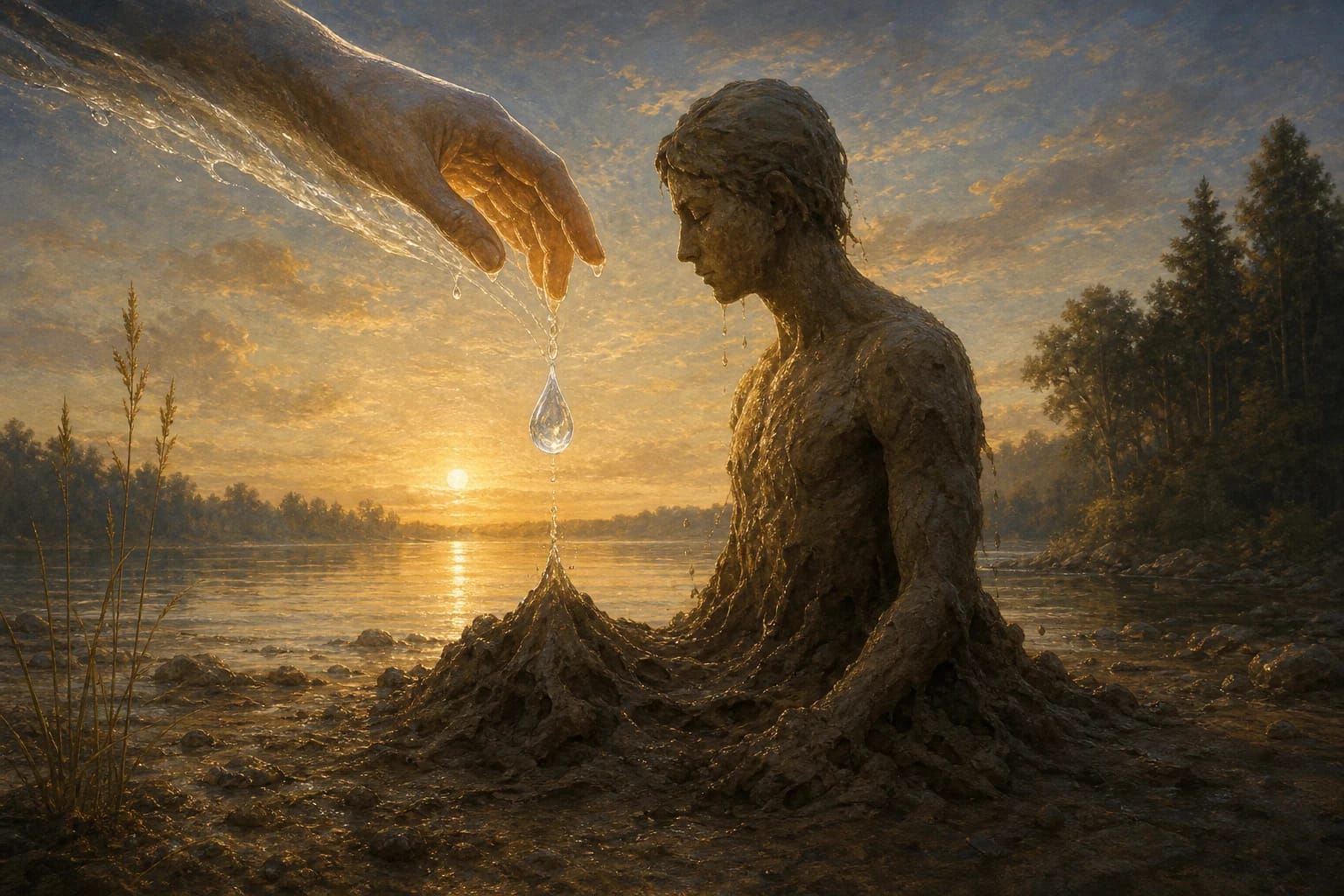
The drop became a human being. God saw that the man was lonely and created a woman for him. He named the first man Adam and the woman Eve.
Interpretation: what does the creation of humans mean?
The legend brings creation close to everyday life: God washes, and a falling drop becomes a person. The source does not explain how that transformation works.
Dievas here is not an abstract ruler. He works, washes, and notices human loneliness. Such a figure of Dievas is typical of Lithuanian sakmes: the highest power is brought close to the everyday village world.
The creation of woman explains not only sex difference but community. A human is not considered complete until there is relation with another human.
The source variant
Lietuvių tautosaka, IV (1967), no. 334, p. 425: „Žmogaus sutvėrimas“. An editorial retelling of the specific cited variant, checked against its complete source narrative. This is not a literal transcript.
How is this different from a fairy tale?
A fairy tale most often follows an adventure, while this sakme explains an origin. It answers where the human came from and why humans need one another.
The shortness of the story is its strength: a few images create a whole model of human origin: Dievas, water, earth, name, and fellowship.