- Genre
- Fate sakme
- Source status
- folkloric
- Motifs
- destined death, charred sticks, chest, hidden fate, fire
The sakme
When a child was born, the mother and midwife were tending the fire in the bathhouse. Suddenly they heard a voice: the child will live only until those charred sticks burn out.
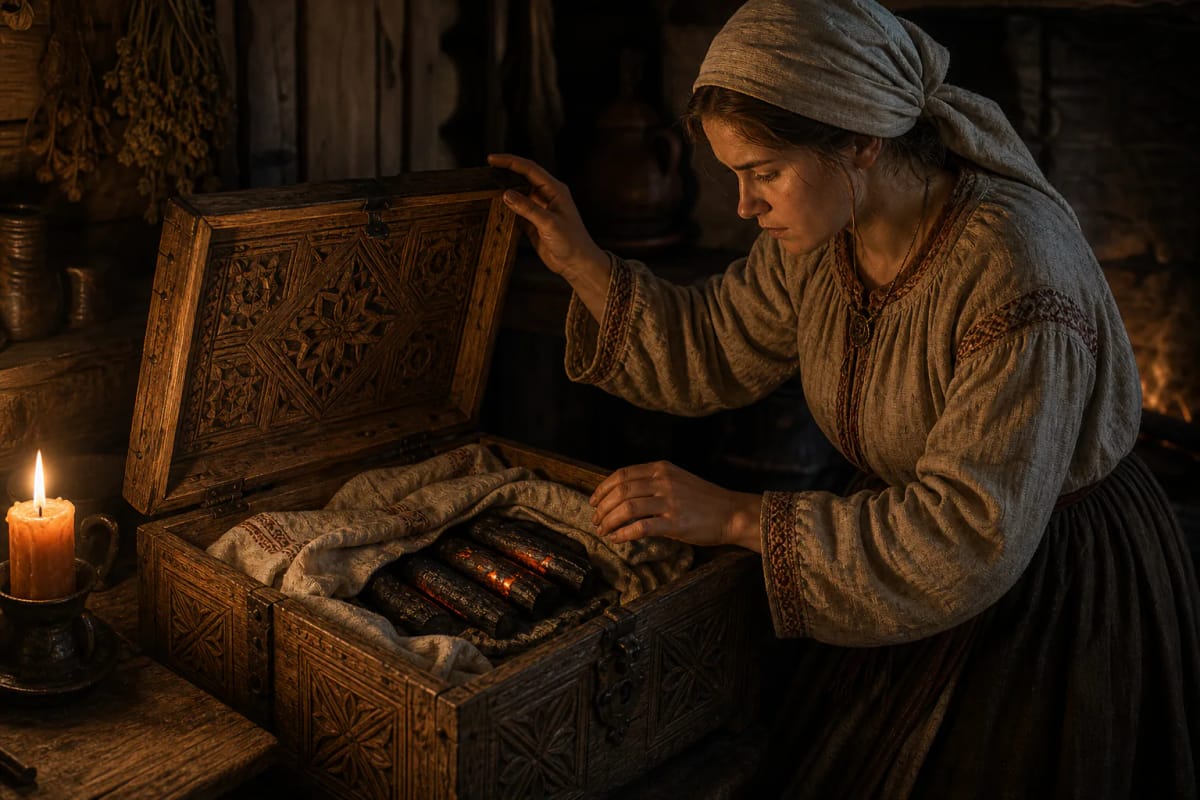
The mother understood that the voice meant the scorched pieces of wood in the fire. She immediately put them out, gathered them, and hid them at the bottom of a chest under clothes.
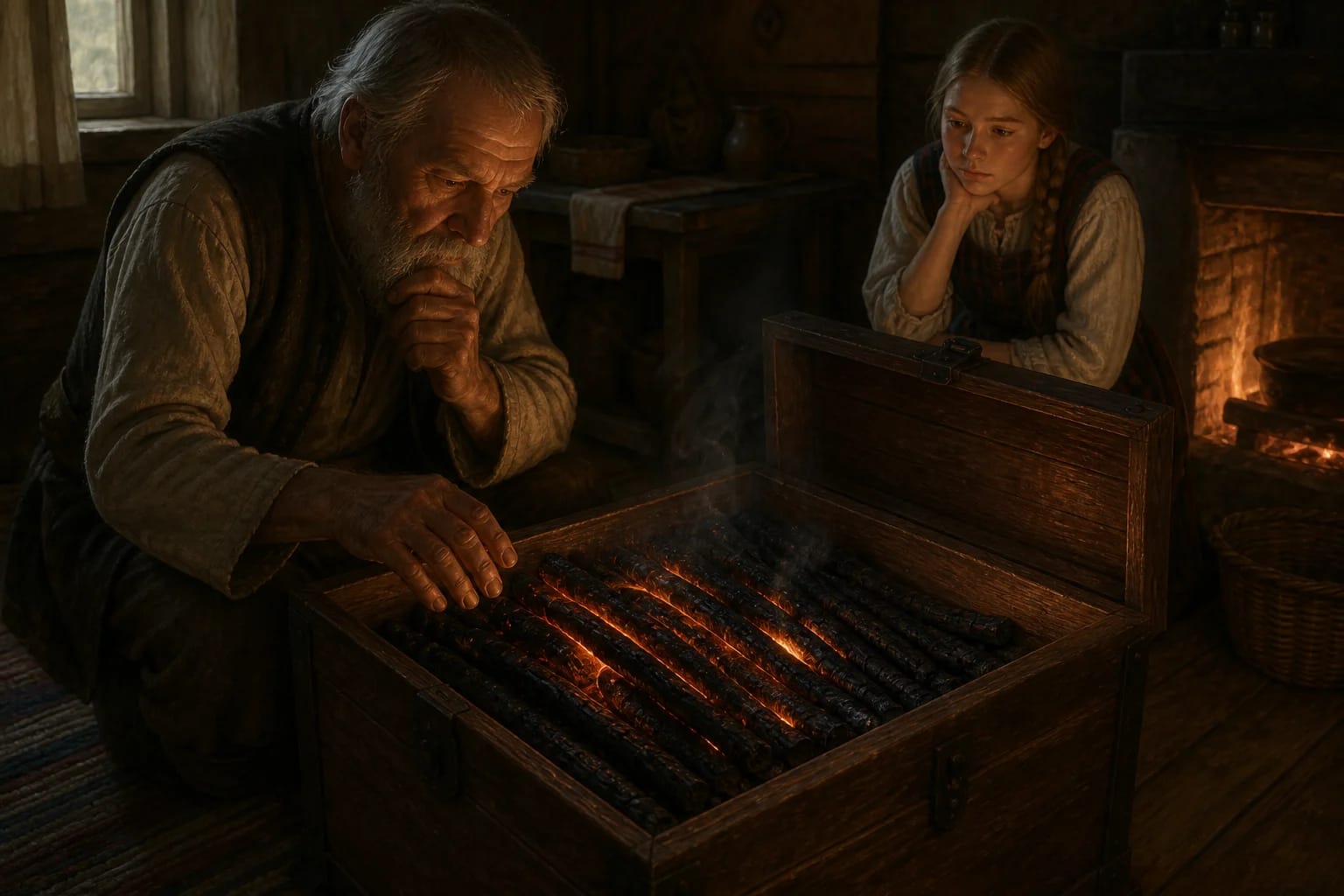
The son grew up, and his mother died, leaving him the chest. He married. One day his wife’s mother came to visit. Together the two women opened the chest, moved the clothes and found the charred sticks at the bottom. Not knowing why they had been kept, they put them into the fire.
As the sticks finished burning, the husband came home. The women asked why they had been in the chest. He explained and died.
Interpretation: what do the charred sticks mean?
This sakme shows materialized fate with great precision. A human life is tied to concrete objects: a few charred sticks hidden in a chest.
The mother seems to trick fate: she does not argue with the voice, but stops the fire. Yet fate is not abolished, only delayed.
The chest guards not wealth but the span of a life. When others do not understand the secret and burn the sticks, they accidentally release death.
The source variant
Lietuvių tautosaka, IV (1967), no. 561, pp. 557–558: „Kol meduogalėliai susikūrins“. An editorial retelling of the specific cited variant, checked against its complete source narrative. This is not a literal transcript.
Fire and the length of life
Fire in the sakme is a measure of life-time. While it is stopped, the person lives; when the fire devours the sticks again, life ends.
The story therefore works as a warning about the power of secrets and inherited things: not everything that seems small is worthless.