- Genre
- Amber-origin legend
- Source status
- literary and popular tradition
- Motifs
- Jūratė, tears, amber, Baltic Sea, mourning, Kastytis
Jūratė's amber tears, Amber tears, Jūratė's mourning legend
The legend
After Perkūnas shattered Jūratė's amber palace and separated her from Kastytis, the sea depths held not only fragments. It is told that Jūratė wept for lost love, and her tears turned into amber.
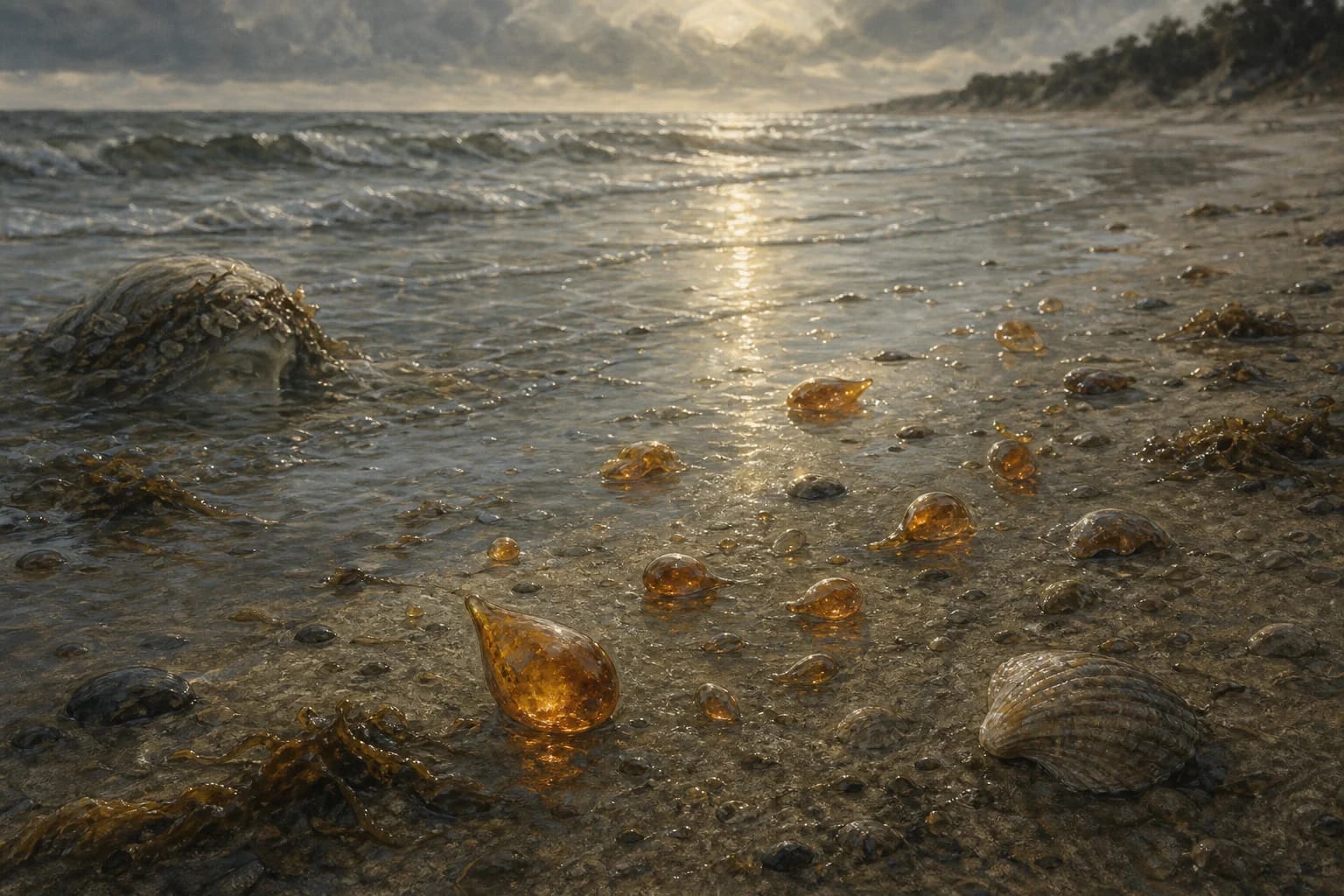
Waves carry those tears to the shore. They may be small, round, and warmly glowing like hardened drops. A person who finds amber can see it not only as a natural object but as a sign of the sea goddess's grief.
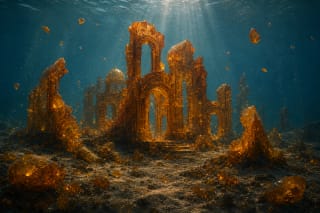
Thus Jūratė's tears complement the Amber Palace motif: palace shards speak about a shattered world, while tears speak about personal loss.
Interpretation: what do Jūratė's tears mean?
The tears make amber emotional. A small amber piece becomes not only beautiful but sorrowful, a frozen trace of feeling.
The motif is powerful because it is small and ordinary. A palace is grand, but a tear fits in the palm. The great mythic drama becomes something a beachcomber can find personally.
The image also joins water and hardening. A tear is brief and liquid, while amber is solid and long-lasting. The legend fixes grief in matter.
For the modern reader, this image helps explain why amber in Lithuanian culture is often understood as more than just an ornament. It can function as a sign of memory, loss, and coastal identity.
History and source status
The tears motif belongs to the broader Jūratė and Kastytis tradition. The popular form of this legend is strongly tied to Maironis' ballad Jūratė ir Kastytis, published in the collection Pavasario balsai, and to later cultural retellings.
In retellings for broad audiences, especially children, Jūratė's tears often appear as a separate explanation for amber's origin. This shows that the motif lives independently even when rooted in the larger plot.
From a scientific point of view, amber is the polymerized fossil resin of Paleogene-period conifers (succinite). According to the Visuotinė Lietuvių enciklopedija, one of amber's morphological varieties is precisely drops and icicles — which is most likely why an amber droplet is so easily imagined as a hardened tear. In the cultural imagination amber may be a palace shard, a tear, or a gift of the sea; these explanations work on different levels and do not replace one another.
Why the tears motif survived
A tear is an immediately understandable sign of loss and longing. It does not require complex mythological knowledge.
When that sign is joined with amber, a coastal find becomes personal, memorable, and easy to pass on to children, visitors, and anyone searching the Baltic shore.