
Lithuanian traditional foods
Vestuvių vaišės ir šakotis
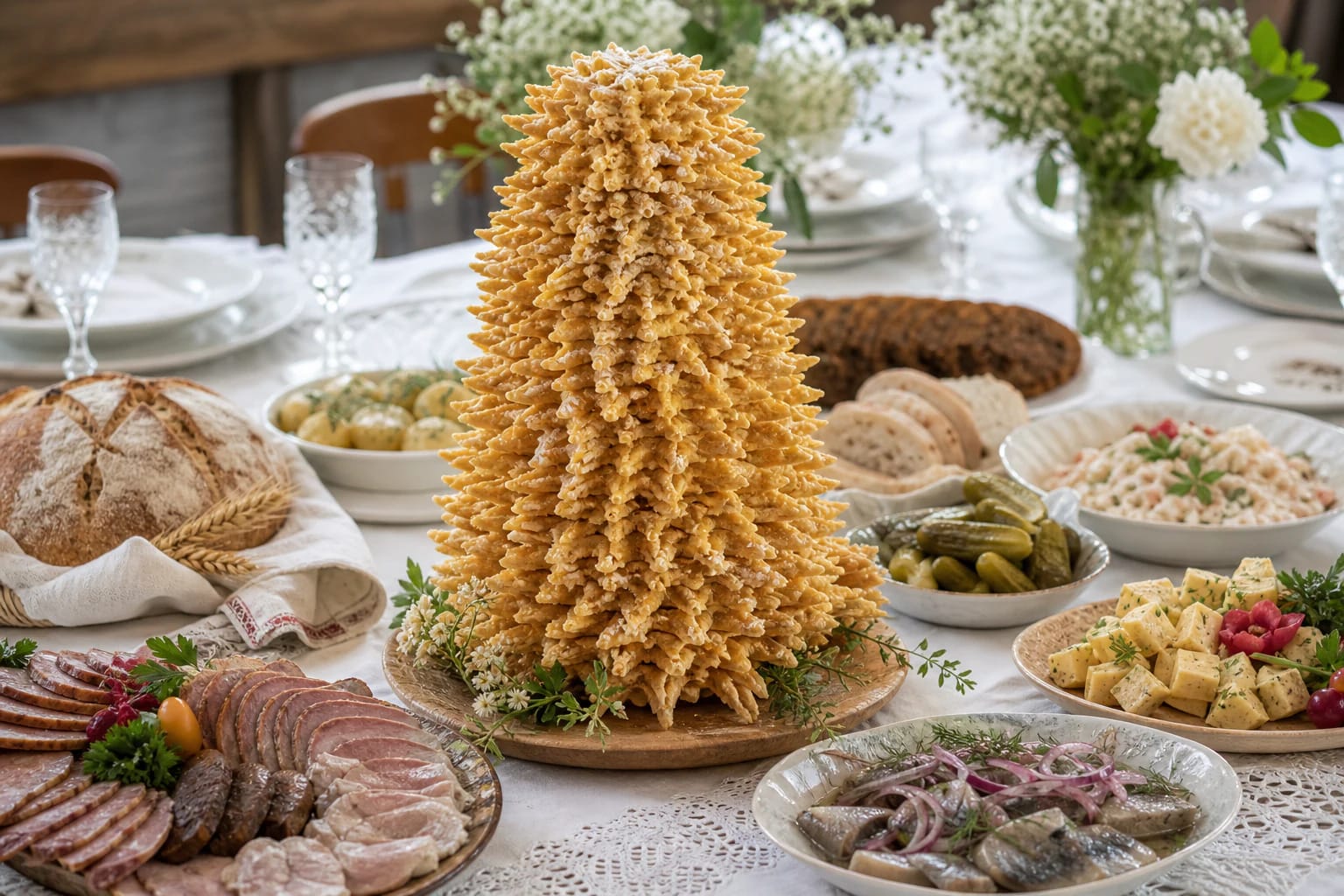
Wedding feasts in Lithuania connect the communal table, karvojus, homemade cakes, beer, and šakotis. Šakotis is especially recognizable as a tall, layered festive cake that has become a center of the wedding table.
Food and heritage context
- Category
- Festive dishes
- Type
- wedding-table tradition with šakotis, karvojus, and feast foods
- Heritage status
- living festive tradition
- Context
- Weddings, šakotis, karvojus, svočia, cakes, beer, feast, family celebration
Names and variants
Wedding šakotis, Wedding table
The wedding table
Wedding feasts traditionally were not only food but also a social act: receiving guests, family togetherness, songs, wishes, and ritual bakes.
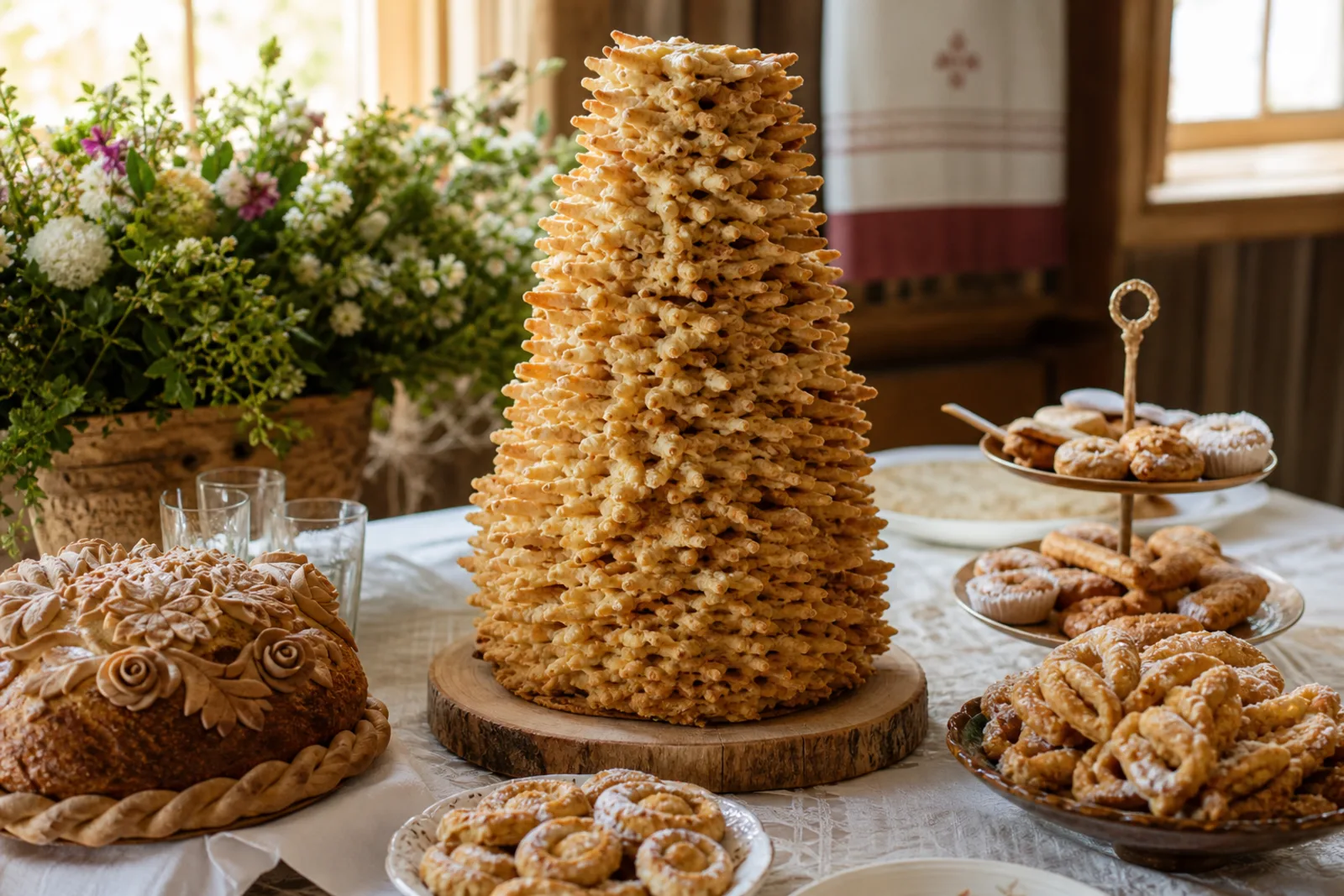
In the wedding context, the Universal Lithuanian Encyclopedia mentions karvojus, beer, and cakes brought by guests, so the table was communal, not simply a restaurant menu.
Šakotis at weddings
Šakotis is strongly associated in Lithuania with major celebrations. The Universal Lithuanian Encyclopedia describes it as a bake that may function at weddings as the svočia's cake. The encyclopedia notes that šakotis began to be baked in Lithuania only in the second half of the nineteenth century, first in manors and parsonages, and that it is made from 30-120 eggs beside a rotating cone-shaped form.
Its height, branches, and layers make it a visible center of the table.
Karvojus and šakotis
Karvojus is a ritual wedding bake with its own meanings. Šakotis is an impressive festive dessert. They may appear at the same event, but they should not be treated as the same thing.
This distinction helps speak more accurately about the history of wedding food.
Contemporary feasts
Today a wedding table can be very varied, but traditional signs can be kept through šakotis, karvojus, bread, local appetizers, and family bakes.
The best solution is not to copy an entire old table, but to understand which signs matter to the family.
Menu guide
How to plan a wedding feast table with šakotis
True šakotis is baked on a spit, so a home recipe can only be a flavor interpretation. For a wedding table, the main task is to coordinate šakotis with other feast elements without overloading the table with sweets alone.
Suggested dishes
Planning and serving
- Place the šakotis as the central accent of the dessert table, but leave room for karvojus or other ritual bakes.
- Balance sweet bakes with savory snacks, vegetables, and bread.
- If karvojus is used, clearly separate its symbolic place from the dessert function of šakotis.
- Cut or break the šakotis only when the dessert part begins.
Notes
Šakotis and karvojus are not the same: one is a layered spit cake, the other a ritual wedding bake.
Alcohol service should be moderate and legal.
Related pages about Vestuvių vaišės ir šakotis
Vestuvių vaišės ir šakotis: frequently asked questions
How is šakotis different from karvojus?
Šakotis is baked in layers on a rotating spit, while karvojus is a ritual wedding bake closer to decorated bread or cake.
Why is šakotis hollow?
It is baked on a spit, so the center remains where the baking cylinder was.
Can šakotis be baked without a special form?
A flavor interpretation can be baked, but true šakotis branches form only on a rotating spit.
What height of šakotis should be chosen for a wedding?
Choose according to the number of guests and the table composition. A large šakotis looks impressive, but it must still be convenient to serve.
How is šakotis cut?
It can be cut into slices or broken from the branches, depending on size and serving style.
How long does šakotis keep?
Stored dry, šakotis keeps fairly well, but it should be protected from moisture.
Is beer required at a wedding feast?
No. Historically it is mentioned in some feast contexts, but modern weddings can choose non-alcoholic options.