
Lithuanian traditional foods
Šakotis
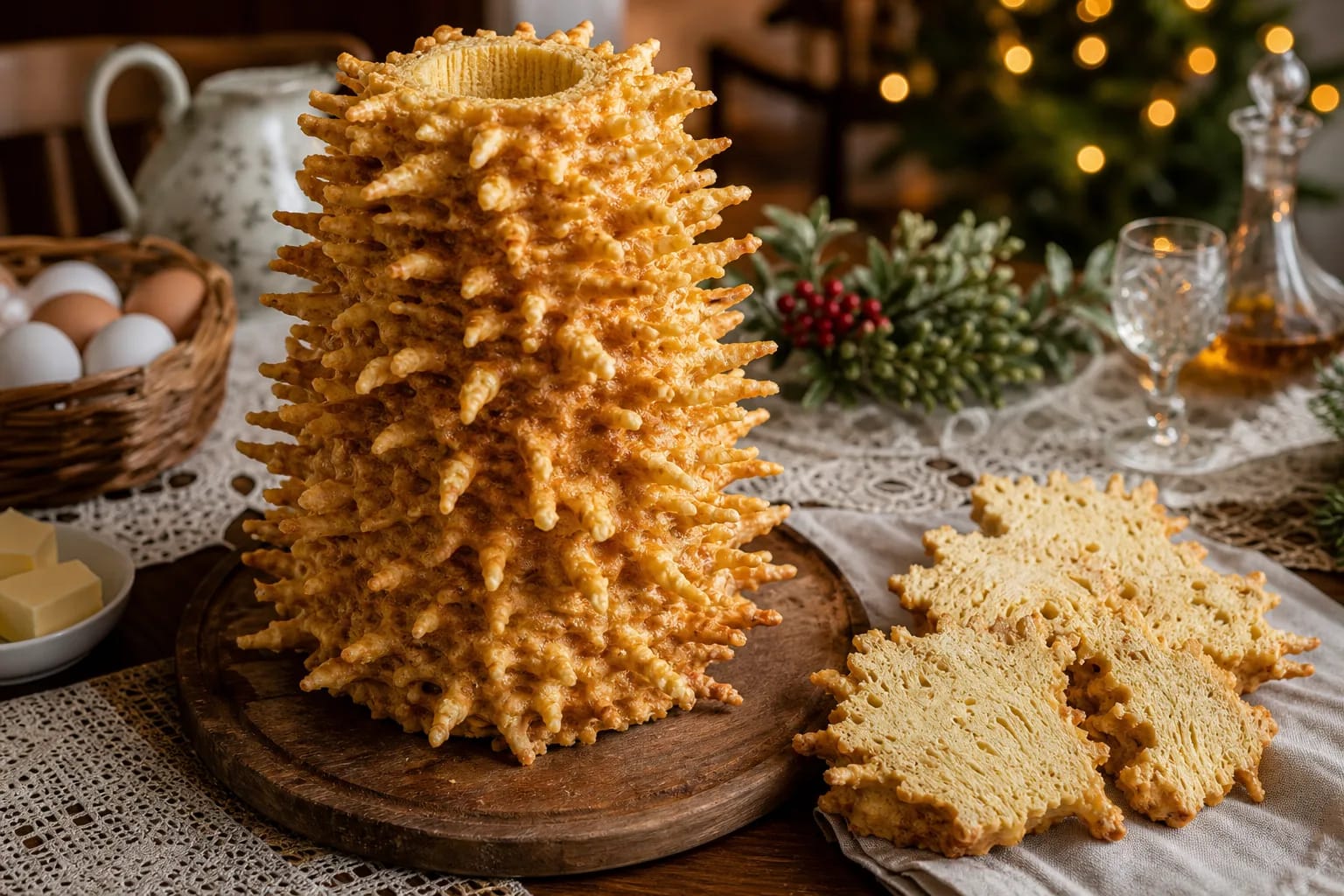
Šakotis is a festive Lithuanian cake traditionally baked by pouring egg- and butter-rich batter onto a rotating spit near heat. Its branches and layers have become a sign of weddings, anniversaries, and large family celebrations.
Food and heritage context
- Category
- Festive baked goods
- Type
- layered cake baked on a rotating spit
- Heritage status
- living festive tradition
- Context
- Weddings, celebrations, eggs, butter, sour cream, spit baking, raguolis
Names and variants
Raguolis, Bankuchenas, Tree cake
What is šakotis?
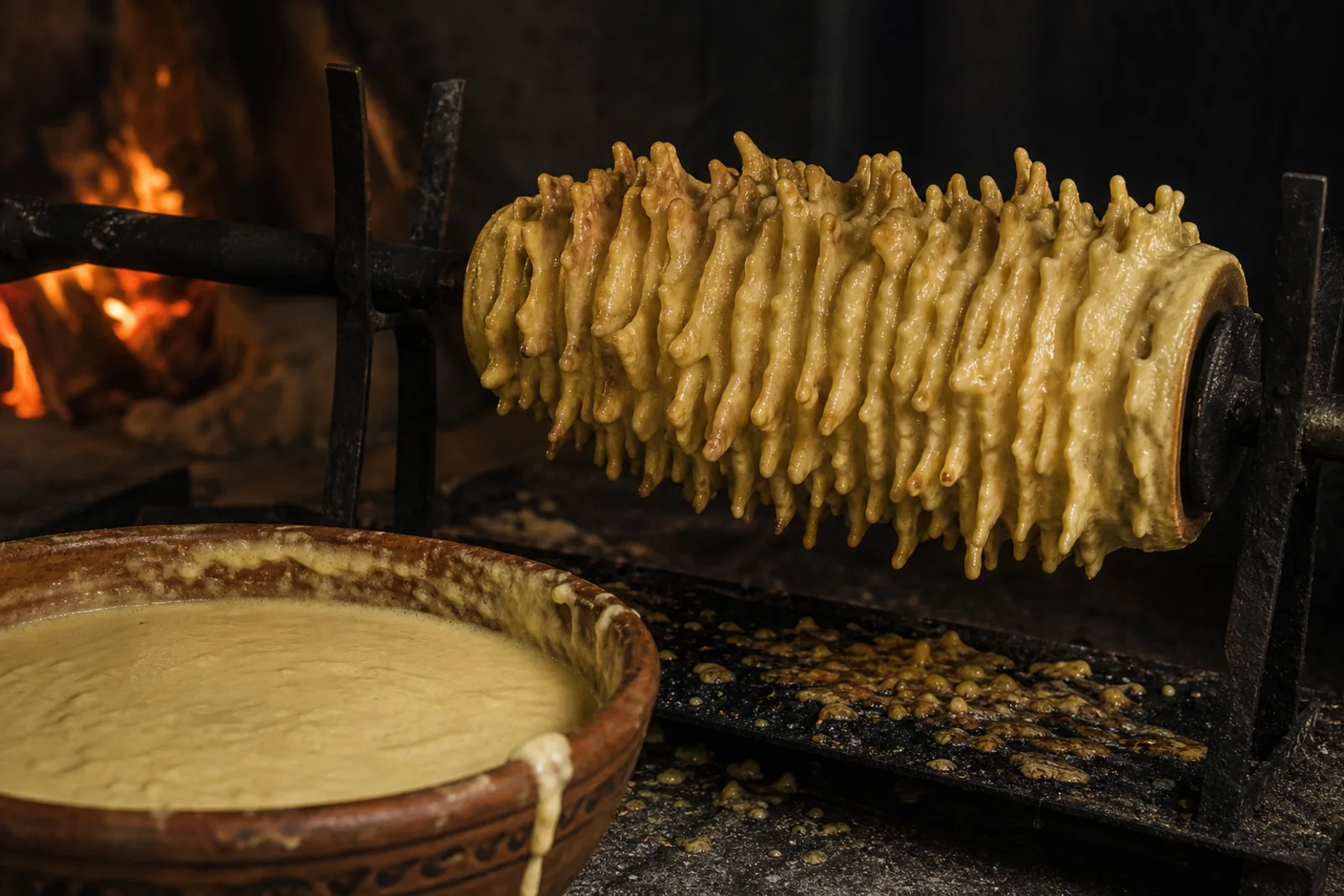
Šakotis is a layered cake rich in eggs and butter, with a shape that resembles a tree with branches. It is baked by pouring batter onto a rotating spit, and as the batter runs and sets, protrusions form.
Because of its impressive shape, šakotis became a centerpiece of the festive table. It is common at weddings, christenings, anniversaries, and presentations of Lithuanian cuisine.
Historical context of šakotis
Šakotis belongs to a broader Central and Eastern European tradition of cakes baked on a spit. In Lithuania it gained its own festive meaning and became a highly recognizable local cake. According to the Universal Lithuanian Encyclopedia, a similar cake has long been baked in Germany and eastern Poland, while šakotis began to be baked in Lithuania only in the second half of the nineteenth century, first in manors and rectories; it is made from 30-120 eggs and was traditionally a wedding matron's or godmother's cake.
The National Heritage Catalogue presents šakotis as a traditional product, so it is important to distinguish the festive baking tradition from an ordinary homemade cake. Its identity depends not only on ingredients but also on baking on a rotating spit.
The names raguolis and bankuchenas show different linguistic and cultural layers, but šakotis is now the most established Lithuanian name.
Why it is baked on a spit
The rotating spit lets the batter accumulate in thin layers. Heat quickly sets each new layer, and batter drips form branches.
For that reason, šakotis is not only an ingredient recipe but also a dish of equipment and technique.
Serving and storage
Šakotis is sliced or broken into pieces from the branches. It suits coffee, tea, a dessert table, and festive meals.
Because of butter and sugar, šakotis keeps well, but it should be stored dry so it does not lose crispness.
Recipe
How šakotis is made
Oven-baked layered šakotis-style cake
True šakotis is baked on a rotating spit, so a home-oven version is an interpretation, not a full replacement for the traditional technique. It can recreate the egg-rich, buttery flavor and layered structure in a pan.
Ingredients
Method
- Beat the butter with sugar until fluffy. Add the egg yolks one at a time.
- Mix in the sour cream, cream, vanilla sugar, and flour.
- Beat the egg whites to stiff peaks and fold them carefully into the batter.
- If baking in a pan, pour thin layers of batter and briefly brown each layer so the structure forms.
- Bake until the inside sets and the top browns. Cool before slicing.
Notes
On a spit-baked šakotis, branches form from batter that runs and sets. An oven version will not reproduce the branches in the same way.
The large amount of eggs and butter is not a mistake; it is the basis of the cake's texture.

Šakotis: frequently asked questions
Can šakotis be baked in a home oven?
A flavor interpretation can be baked, but true šakotis with branches forms on a rotating spit.
Why does šakotis need so many eggs?
Eggs give structure, richness, and stability to the layers. They are one of the cake's defining features.
How is šakotis different from raguolis?
Today the names are often used closely, but šakotis emphasizes the branched form, while raguolis is another traditional name.
Why is šakotis associated with weddings?
It is impressive, keeps well, and symbolically suits large feasts, so it became a festive table centerpiece.
Should šakotis be dry?
It should be firm and layered, but not over-dried. Good šakotis keeps buttery richness.
How should šakotis be stored?
Store it dry, at room temperature, protected from moisture. Moisture softens the brittle branches.
Is šakotis an everyday cake?
No. Because of the amount of ingredients and the baking technique, it belongs more to celebrations and representative tables.