
Lithuanian traditional foods
Užgavėnių valgiai
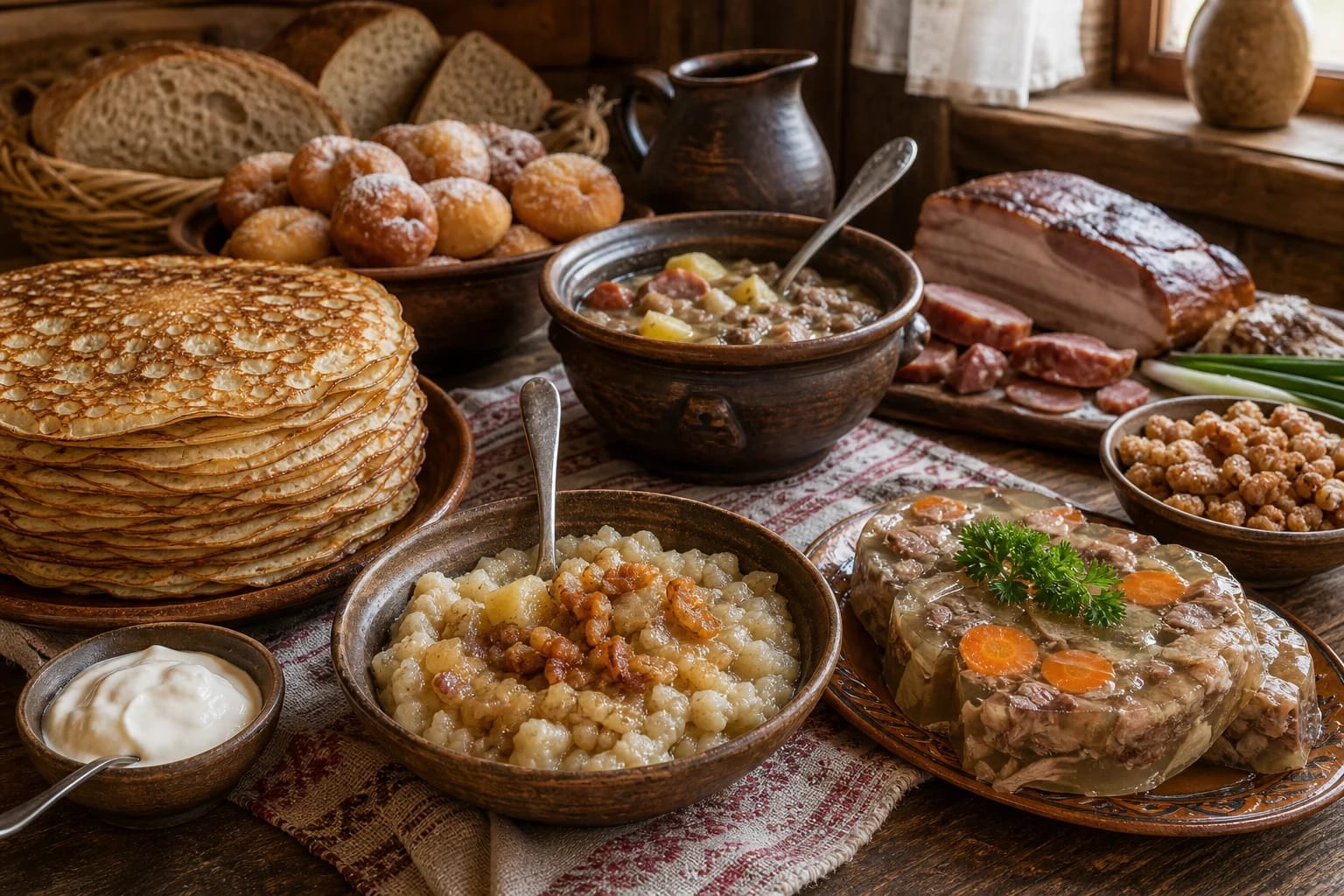
Užgavėnių valgiai form a deliberately filling and fatty table on the last day of the winter meat-eating season before Lent: pancakes, Samogitian šiupinys, šaltiena, and other meat dishes. According to old belief, a person who eats richly and heartily on Užgavėnės will be strong all year.
Food and heritage context
- Category
- Calendar holiday dishes
- Type
- the rich, fatty, meaty table of the last day of mėsiedas before Lent
- Heritage status
- living calendar tradition
- Context
- Užgavėnės, winter mėsiedas, pancakes, šiupinys, šaltiena, fatty meat dishes, Lent, Samogitia
Names and variants
Užgavėnės table, End-of-mėsiedas foods
What are Užgavėnių valgiai?
Užgavėnės is the farewell to winter and welcome to spring, the last day of the winter mėsiedas, the meat-eating season. According to the Universal Lithuanian Encyclopedia, mėsiedas lasts from Christmas until Užgavėnės, and the Lenten fast begins the next day, Ash Wednesday. Užgavėnės foods are the last chance to eat richly and with meat before a long period of abstinence.
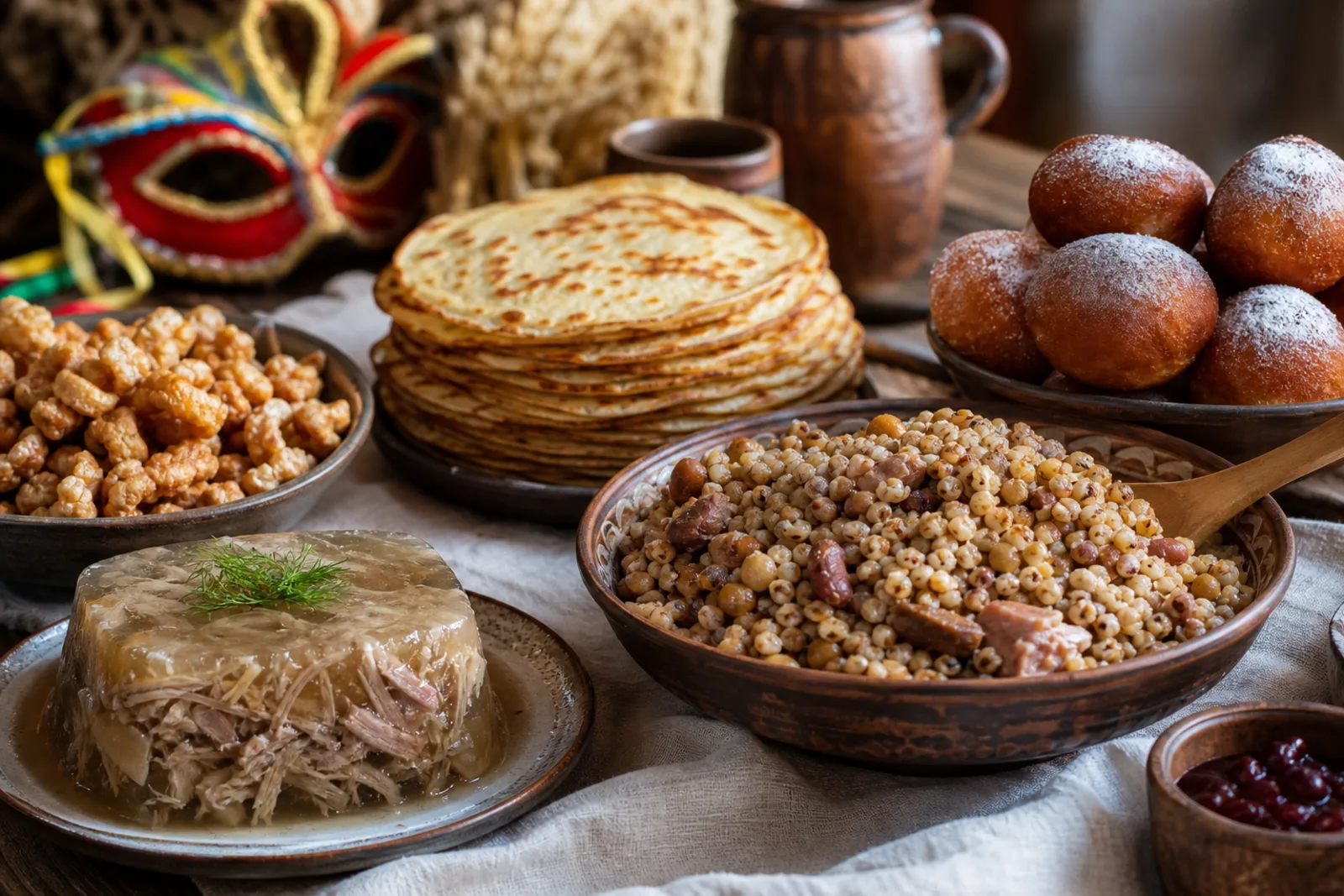
For that reason the Užgavėnės table is deliberately filling and fatty, almost the opposite of the Kūčios fasting table. If Kūčios is marked by meatless and dairy-free fish, mushroom, grain, and poppy-seed dishes, Užgavėnės is marked by pancakes, meat dishes, bacon, and cracklings.
Užgavėnės has long been celebrated in many European countries; Lithuanians once called it ragučio šventė. After Lithuania's Christianization, the timing of the celebration was aligned with the church calendar: the Tuesday before Lent.
The logic of fullness: strong all year
The main attitude behind Užgavėnės eating is the idea of magical fullness. From old times, people believed that someone who ate richly and heartily during Užgavėnės would be strong and healthy all year. That is why people returned to the table many times; folk sayings mention eating nine or twelve times.
Užgavėnės rites tied to agriculture, such as riding, swinging, splashing with water, and especially abundant eating, were meant to magically encourage fertility and determine the coming harvest. Food here acts not only as nourishment but also as a ritual sign.
The same fullness also had a practical side. Before Lent, households needed to use up fatty, perishable meat supplies, because they could not be eaten during the long fast.
Pancakes: the Užgavėnės food across Lithuania
The traditional Užgavėnės food throughout Lithuania is pancakes, most often made from flour. Round, golden pancakes are often explained as a sign of the sun and returning light, appropriate for a spring-welcoming holiday, but first of all they are a filling, fatty food that can be fried quickly for a large company.
In Samogitia, sour yeasted pancakes are especially characteristic at the Užgavėnės table: fluffy, fermented pancakes fried thicker. Elsewhere, simple flour pancakes or thin crepes are more common. Pancakes are eaten with butter, honey, jam, cracklings, or sour cream.
Alongside pancakes, other pastries fried in fat are common at the table, including sklindžiai and spurgos. In the Universal Lithuanian Encyclopedia's overview of Lithuanian foods, sklindžiai and šiupinys are directly mentioned among surviving sacred Užgavėnės foods.
Samogitian šiupinys
In Samogitia, the most important Užgavėnės dish is šiupinys, a thick, filling food made from peas, beans, and barley groats with pork. According to the encyclopedia, it is already known from Kristijonas Donelaitis's The Seasons and was cooked from barley groats, peas, and beans with potatoes and pig's head, feet, and ears.
Šiupinys fits the logic of Užgavėnės perfectly: before the fast, people eat a lot, richly, and heartily. Legumes provide protein, groats provide bulk, and pork parts, bacon, and cracklings provide fat and aroma. It is a pot dish whose texture is close to a thick porridge or stew.
In the Klaipėda region, it was customary to drink beer or coffee with šiupinys. Although Samogitian šiupinys is named as the most vivid regional version, the idea of a mixed, long-cooked legume and groat dish is broader than one region.
Šaltiena and meat dishes
Meat, mainly pork, stands at the center of the Užgavėnės table. According to old custom, every person who came into the house had to taste šaltiena and other meat dishes. Those foods could not be left over, because the Lenten fast began the next day, Ash Wednesday, and meat would not be eaten until Easter.
Šaltiena is a set dish boiled for a long time from pig's feet, head, and ears, eaten with garlic, horseradish, or vinegar. Bacon, cracklings, sausages, and other end-of-mėsiedas leftovers are paired with it. These dishes rest on the fact that peasants slaughtered pigs in winter, and Užgavėnės was the last chance to eat these foods.
This meatiness is an essential feature of Užgavėnės foods. The table must be not only abundant but fatty: fat, not sweetness or luxury, marks the end of mėsiedas and the beginning of Lent.
Masked visitors, Morė, and table customs
Užgavėnės foods are inseparable from the theatre of the holiday. Masked, unrecognizable visitors move through the village; they parody the matchmaking of overaged suitors and act as a witch, death, devil, goat, or crane, while in Samogitia they carry the effigy Morė or Kotrė, and in Aukštaitija Gavėnas.
The struggle between stout Lašininis and lean Kanapinis represents the fight between winter and spring; Lašininis and Kanapinis directly embody fatty mėsiedas and lean fasting. At the end of the holiday, the winter-symbolizing Morė is usually burned and the ashes scattered in the fields, supposedly driving out evil and the tiresome winter.
Masked visitors had to be treated at the table, so generous food was also a sign of hospitality. Eating, hosting, and masked rounds form one Užgavėnės whole.
Užgavėnės and other festive tables
In the Lithuanian calendar cycle, the Užgavėnės table has a clear place. It closes the winter mėsiedas, which begins after Christmas, and opens Lent, the strict fasting period until Easter. Užgavėnės is therefore the peak of fatty, meaty eating, followed by sudden abstinence.
The Universal Lithuanian Encyclopedia's overview of Lithuanian foods lists Kūčios foods, such as prėskučiai, poppy milk, and kisielius, Užgavėnės foods, such as sklindžiai and šiupinys, and Easter foods, such as margučiai, among the most important surviving ritual tables. Užgavėnės is thus written into the broader map of sacred holiday cooking.
Individual Užgavėnės dishes, pancakes, šiupinys, šaltiena, sklindžiai, and spurgos, have their own histories and recipes, but the Užgavėnės custom is what joins them into one rich, filling, theatrical table.
How to build an Užgavėnės table today
A contemporary Užgavėnės table can be built practically: a pile of pancakes with several toppings, one thick šiupinys, šaltiena, and a few meat dishes already give a clear traditional core. The exact number of dishes matters less than the feeling of fullness and fat.
It is worth keeping regional accents: in Samogitia, yeasted pancakes and šiupinys; elsewhere, simple flour pancakes or thin crepes. Spurgos or sklindžiai fried in fat work well at the end, while honey and jam bring sweetness.
The essence is to feel the meaning of Užgavėnės clearly: the last rich, abundant, joyful day before Lent. So both the table and the mood are created not through restraint, as at Kūčios, but through fullness, generosity, and playful holiday theatre.
Menu guide
How to build a traditional Užgavėnės table
The Užgavėnės table is not a single recipe, so this is a practical menu framework: filling, fatty, meaty foods for the last day before Lent. Pancakes, Samogitian šiupinys, šaltiena, and other pork dishes form the base, with sweets fried in fat at the end.
Suggested dishes
Planning and serving
- Soak the peas and beans for šiupinys in advance, and for šaltiena boil the pig's feet and head broth so it will set.
- Mix pancake batter; in Samogitia choose slightly sour yeasted pancakes, elsewhere simple flour pancakes.
- Cook a thick šiupinys, fry pancakes in batches, and fry doughnuts or sklindžiai in fat.
- Place several meat dishes on the table together with pancakes so each guest can taste šaltiena and the other dishes.
- Eat heartily and without rushing: according to custom, people return to the table many times because Lent begins the next day on Ash Wednesday.
Notes
Užgavėnės foods are deliberately fatty and meaty; this is the end-of-mėsiedas table, not a fasting table.
Meat dishes were not left over, because from the next day they were no longer eaten until Easter.
Užgavėnių valgiai in Lithuanian traditions
Explore the celebrations and customs associated with this food.
Related pages about Užgavėnių valgiai
Žemaičių blynai
Yeasted Samogitian pancakes are one of the foundation foods of the Užgavėnės table in Samogitia.
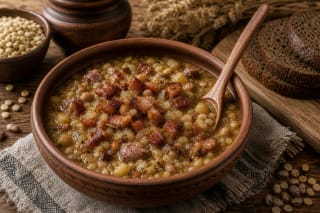
Šiupinys
Samogitian šiupinys made from peas, beans, groats, and pork is a classic Užgavėnės dish.
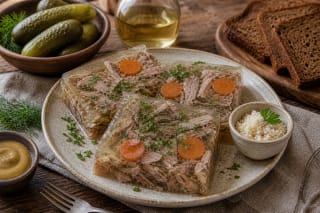
Šaltiena
Every visiting guest was expected to taste šaltiena, because fasting begins the next day.
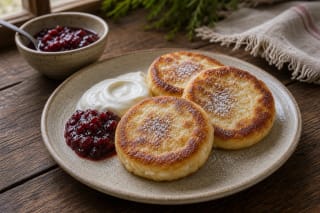
Sklindžiai
Sklindžiai are mentioned among surviving sacred Užgavėnės foods.
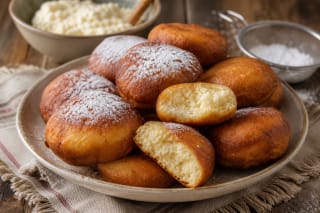
Spurgos
Doughnuts fried in fat add to the rich sweet side of the Užgavėnės table.
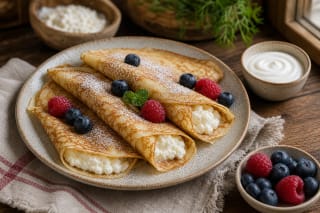
Lietiniai blynai
Thin crepe-style pancakes are another Užgavėnės pancake variant.
Užgavėnių valgiai: frequently asked questions
How is the Užgavėnės table different from Kūčios?
The Užgavėnės table is deliberately fatty and meaty: it marks the end of mėsiedas. The Kūčios table, by contrast, is a fasting table without meat or dairy. Užgavėnės and Kūčios are two opposite sides of Lithuanian cooking.
Why is Užgavėnės eating so fatty and filling?
From old times, people believed that whoever ate richly and heartily on Užgavėnės would be strong all year. It is also the last day before Lent when meat and fatty foods can still be eaten.
How many times should one eat during Užgavėnės?
According to custom, people return to the table many times; folk tradition mentions nine or twelve times. It is a sign of magical fullness, not a strict rule. The main point is to eat abundantly and variously.
What are the main Užgavėnės foods?
Across Lithuania, pancakes, usually flour pancakes, are central. In Samogitia, šiupinys and sour yeasted pancakes are characteristic. Šaltiena and other rich pork dishes, sklindžiai, and spurgos also appear on the table.
Why must šaltiena be tasted during Užgavėnės?
According to custom, every visiting guest had to taste šaltiena and other meat dishes, and they could not be left. The reason is simple: the next day, Ash Wednesday, begins the Lenten fast, and meat is not eaten until Easter.
Is šiupinys only an Užgavėnės dish?
Šiupinys is especially associated with Samogitian Užgavėnės, but it is also a broader filling dish of legumes, groats, and pork. During Užgavėnės it becomes one of the table's most important foods.
What pancakes are best for Užgavėnės?
Flour pancakes are traditionally fried throughout Lithuania. Sour yeasted pancakes are typical in Samogitia, while thin crepes are common elsewhere. Potato sklindžiai also fit; the important point is that the foods are filling and fried in fat.
How are Užgavėnės foods connected with Lašininis and Kanapinis?
Stout Lašininis embodies fatty mėsiedas, while lean Kanapinis represents the coming fast; their fight depicts the struggle between winter and spring. The rich Užgavėnės table directly echoes this meaning.
On which calendar day are Užgavėnės foods eaten?
After Christianization, Užgavėnės was aligned with the church calendar: it is the Tuesday before Lent, at the beginning of the seventh week before Easter. The next day, Ash Wednesday, begins Lent.