
Lithuanian traditional foods
Šaltiena
Šaltiena is a Lithuanian meat aspic made from long-simmered meat and collagen-rich pork cuts that set without added gelatin. It is served cold with horseradish, vinegar, bread, or potatoes.
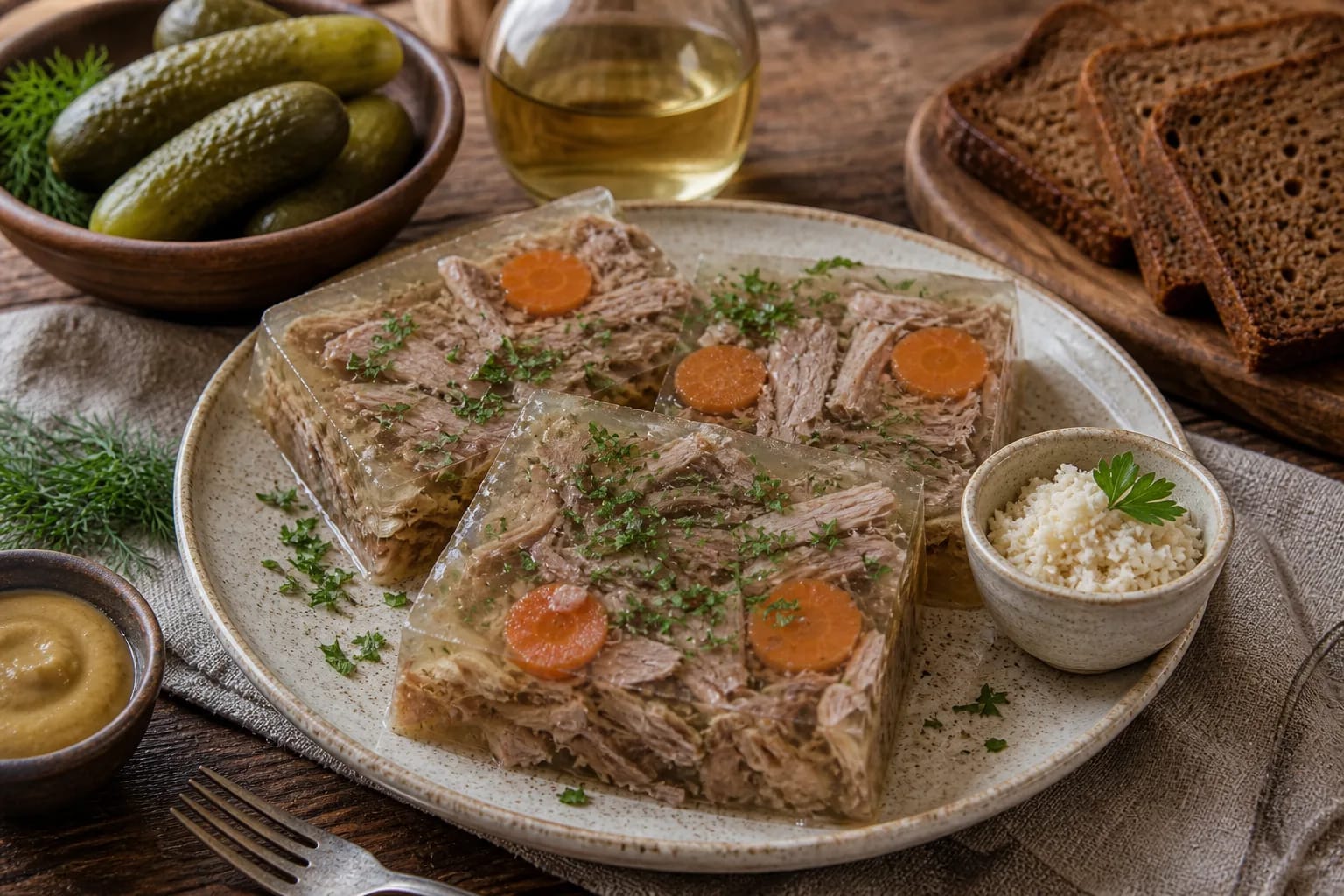
Food and heritage context
- Category
- Meat dishes
- Type
- set meat jelly dish
- Heritage status
- living tradition
- Context
- Pig's feet, pork knuckle, aspic, garlic, bay leaves, horseradish, cold table
Names and variants
Meat aspic, Košeliena
What is šaltiena?
Šaltiena is a set dish of meat and broth. It depends on long cooking and natural collagen from pork parts.
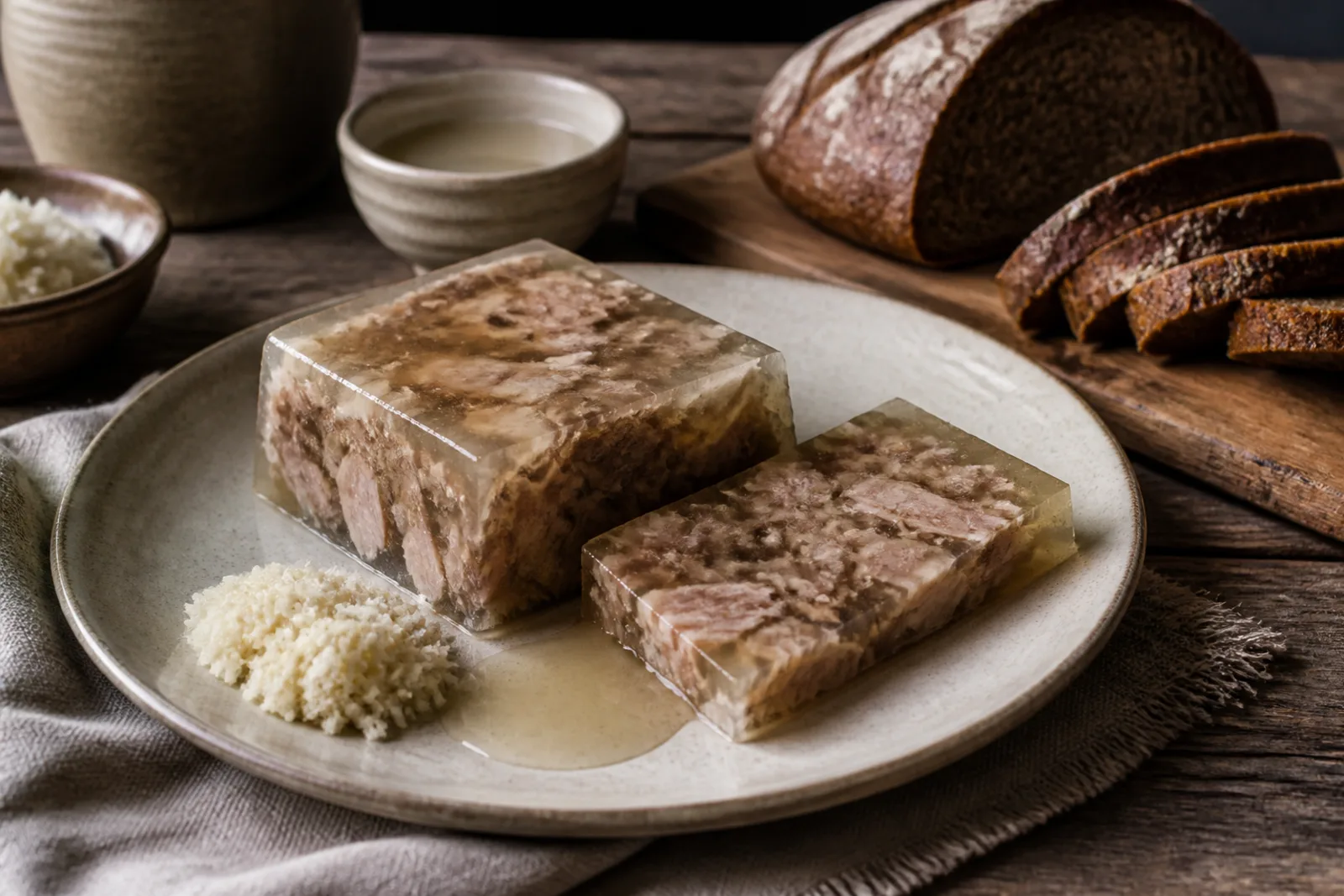
It is a practical way to use bony, gelatin-giving cuts and prepare a cold snack for several days.
Context of the pork table
In its overview of Lithuanian foods, the Universal Lithuanian Encyclopedia emphasizes that peasants mostly ate pork among meats, slaughtered pigs before Christmas and Easter, and preserved and used the meat economically by salting and smoking.
Šaltiena fits that kitchen well: feet, skin, knuckle, and bones are not second-rate waste but parts that produce naturally setting broth.
For that reason, šaltiena often appears on the cold table beside horseradish, bread, boiled potatoes, or pickled vegetables. It is fatty, balanced by acidity, and easy to portion.
Why it sets
Pig's feet, skin, and knuckle contain collagen. During long cooking it moves into the broth, and when cooled it sets. According to the Universal Lithuanian Encyclopedia, šaltiena is boiled from heads, ears, feet, and meat for 3-6 hours at 95-98 °C, then chopped meat is placed into strained broth and chilled so it sets without additional gelatin.
If only lean meat is used, šaltiena may remain liquid.
Recipe
How to make šaltiena
Šaltiena sets because of collagen, so it needs pig's feet, skin, pork knuckle, or other gelatin-giving parts. If there are too few of them, the broth may not set.
Ingredients
Method
- Wash the meat well, cover with water, and simmer slowly, skimming off foam.
- Add carrot, onion, bay leaves, and pepper. Cook until the meat separates easily.
- Remove the meat, take it off the bones, and chop it.
- Strain the broth and season it with garlic and salt.
- Put the meat into dishes, cover with broth, and chill until set.
Notes
Salt is perceived less strongly in a cold dish, so the broth should taste pronounced.
Related pages about Šaltiena
Šaltiena: frequently asked questions
Why did my šaltiena not set?
There were probably too few collagen-rich parts or too much water.
Does šaltiena need gelatin?
Traditional šaltiena does not need gelatin if there are enough pig's feet, skin, or pork knuckle.
What is šaltiena eaten with?
With horseradish, vinegar, rye bread, potatoes, or pickled vegetables.
How long should it be cooked?
Usually 3-4 hours, until the meat separates easily from the bones.
How do you clarify the broth?
Simmer slowly, skim foam, and avoid stirring too aggressively.
How long can šaltiena be kept in the refrigerator?
Keep it safely chilled and eat it within a few days.