
Lithuanian traditional foods
Obuolių sūris
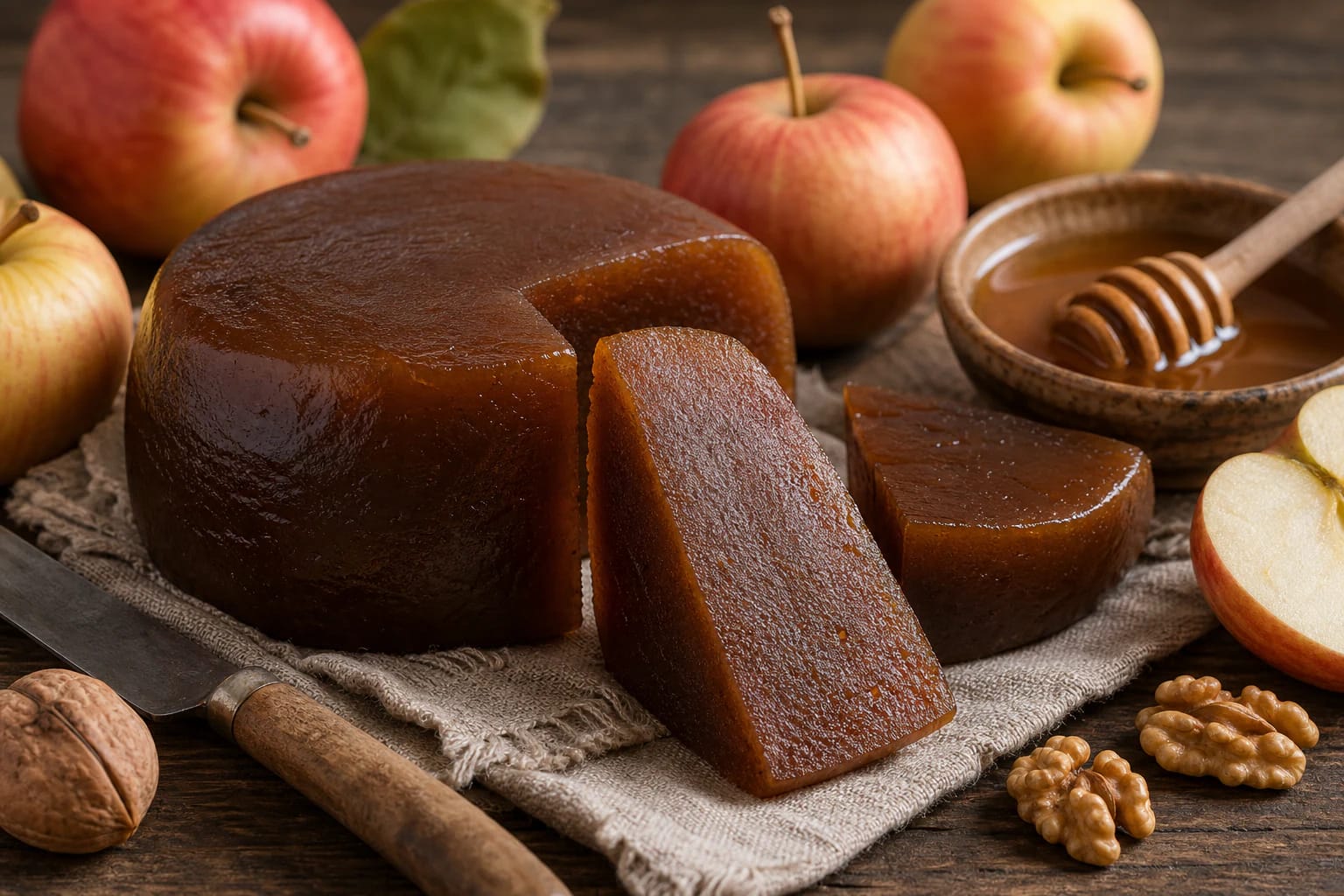
Obuolių sūris is not dairy cheese: it is a sweet made from long-cooked apples, sugar, and spices, then pressed and dried. It preserves the autumn apple harvest and is sliced like a festive treat.
Food and heritage context
- Category
- Sweets and fruit preserves
- Type
- a sweet made from long-cooked, pressed, and dried apple mass
- Heritage status
- home preserving tradition
- Context
- Apples, sugar, drying, pressing, autumn stores, nuts, cinnamon
Names and variants
Apple cheese, Apple sweet
Why is it called cheese?
Obuolių sūris is called cheese because of its shape and pressing, not because of milk. The long-cooked apple mass is placed in cloth, pressed, and dried in a way that resembles some home cheeses.
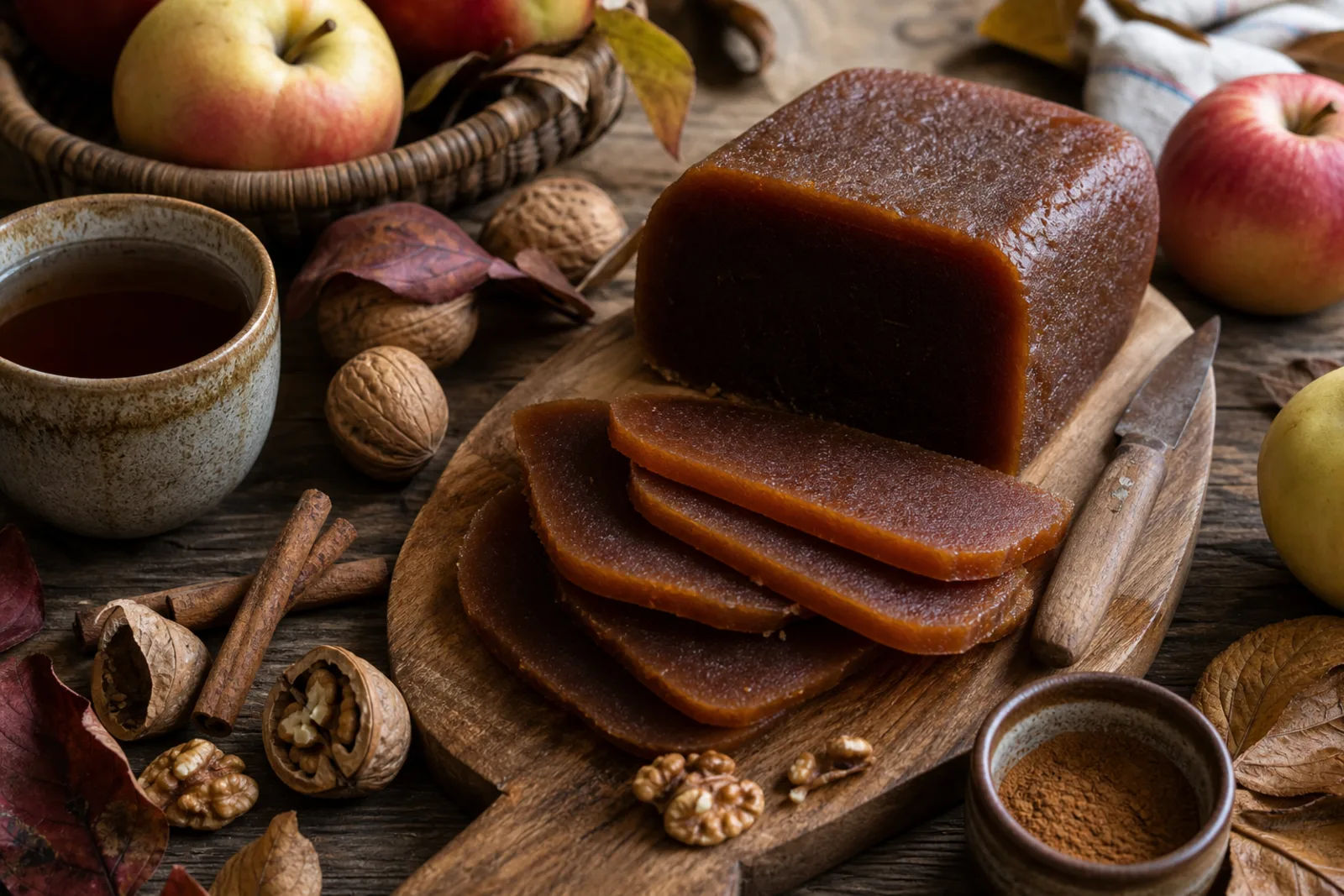
It is a way to preserve the autumn harvest: apples become a dense, sliceable sweet that can last longer than fresh fruit.
Flavor and texture
Good obuolių sūris is elastic, sliceable, clearly apple-flavored, and sweet-tart. Nuts, cinnamon, or citrus should complement the apples, not overwhelm them.
Cheese that is too soft usually means too little cooking or too little drying.
Historical stores context
Obuolių sūris is best understood as a home-preserving tradition, where surplus fruit is turned into a longer-keeping sweet.
Specific origin dates should be treated cautiously, but the production principle is clearly tied to the autumn orchard and family stores. This kind of fruit 'cheese' is not exclusively Lithuanian; similar pressed and dried fruit sweets are found across Central and Eastern Europe.
Serving
Obuolių sūris is sliced thinly and eaten with tea, acorn coffee, cheese, nuts, or festive baked goods.
It suits Christmas and the winter table because it connects the autumn harvest with a longer-keeping sweet.
Recipe
How to make obuolių sūris
Obuolių sūris needs tart apples and patience. The mass must be cooked until very thick, then pressed and dried.
Ingredients
Method
- Peel and cut the apples, cover with sugar, and leave overnight.
- Drain the juice that forms, boil it down into syrup, and return it to the apples.
- Cook over low heat, stirring often, until the mass thickens and begins to hold its shape.
- Stir in cinnamon, lemon juice, and nuts.
- Put the mass into damp cheesecloth, press it, and dry for several days in a cool, ventilated place.
Notes
The cheese will not set if the mass is too wet or was cooked too briefly.
While drying, protect it from mold and inspect it daily.
Related pages about Obuolių sūris

Obuolių sūris: frequently asked questions
Is obuolių sūris made from milk?
No. It is a sweet made from apple mass, called cheese because of its shape, pressing, and sliceable texture.
What apples are best?
Tart, aromatic apples work best. Very sweet apples can give a flatter flavor.
Why does the apple cheese not set?
The mass is too wet, was cooked too briefly, or was not dried enough.
Can honey be used?
Some sugar can be replaced with honey, but honey changes the flavor and may make the mass wetter.
How can scorching be avoided?
Cook in a heavy-bottomed pot over low heat and stir often, especially near the end.
How long should it dry?
Several days or longer, until the cheese is firm and the surface is no longer wet.
How should obuolių sūris be stored?
Keep it dry and cool, wrapped in paper or cloth, and watch for mold.