
Lithuanian traditional foods
Sūriai
Lithuanian sūriai include homemade curd cheese, caraway-flavored or dried cheese, and a separate tradition of aged rennet cheeses. The cheese bag, whey, and pressing are key signs of home cheese making.
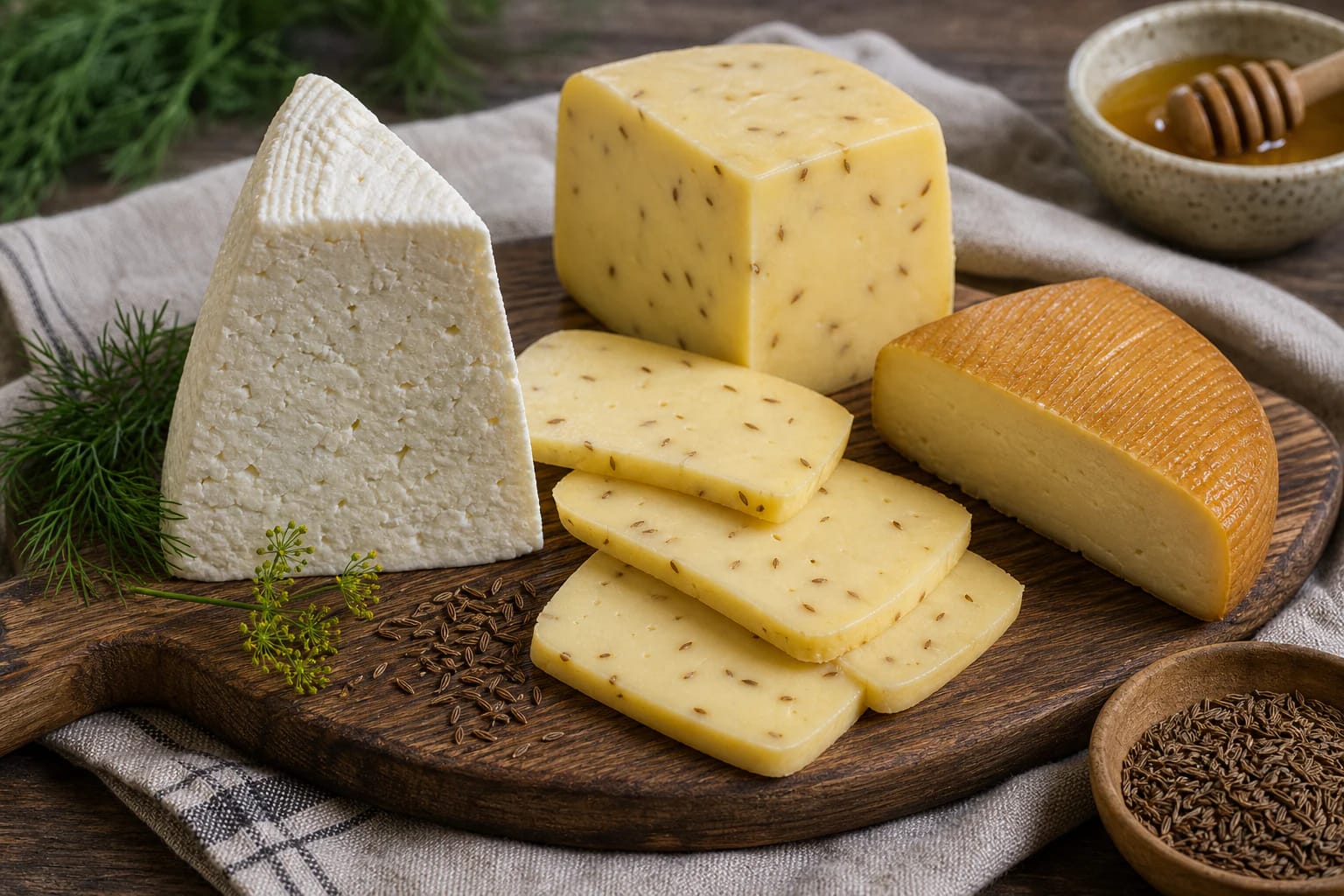
Food and heritage context
- Category
- Dairy products
- Type
- tradition of curd, rennet, and aged cheeses
- Heritage status
- living tradition
- Context
- Milk, curd, cheese bag, caraway seeds, drying, smoking, Džiugas, Liliputas, varškės sūris
Names and variants
Curd cheese, Caraway cheese, Homemade cheese
The core of Lithuanian cheese
In Lithuanian home cooking, cheese first means curd cheese. Milk sours, curd forms, it is drained, placed in a cheese bag, and pressed. According to the Universal Lithuanian Encyclopedia, curd was more liked in Aukštaitija and cheeses in Žemaitija, and two kinds of pressed cheese were made: sweet and sour; there was a custom of giving cheese to shepherds at Pentecost and eating it with honey.
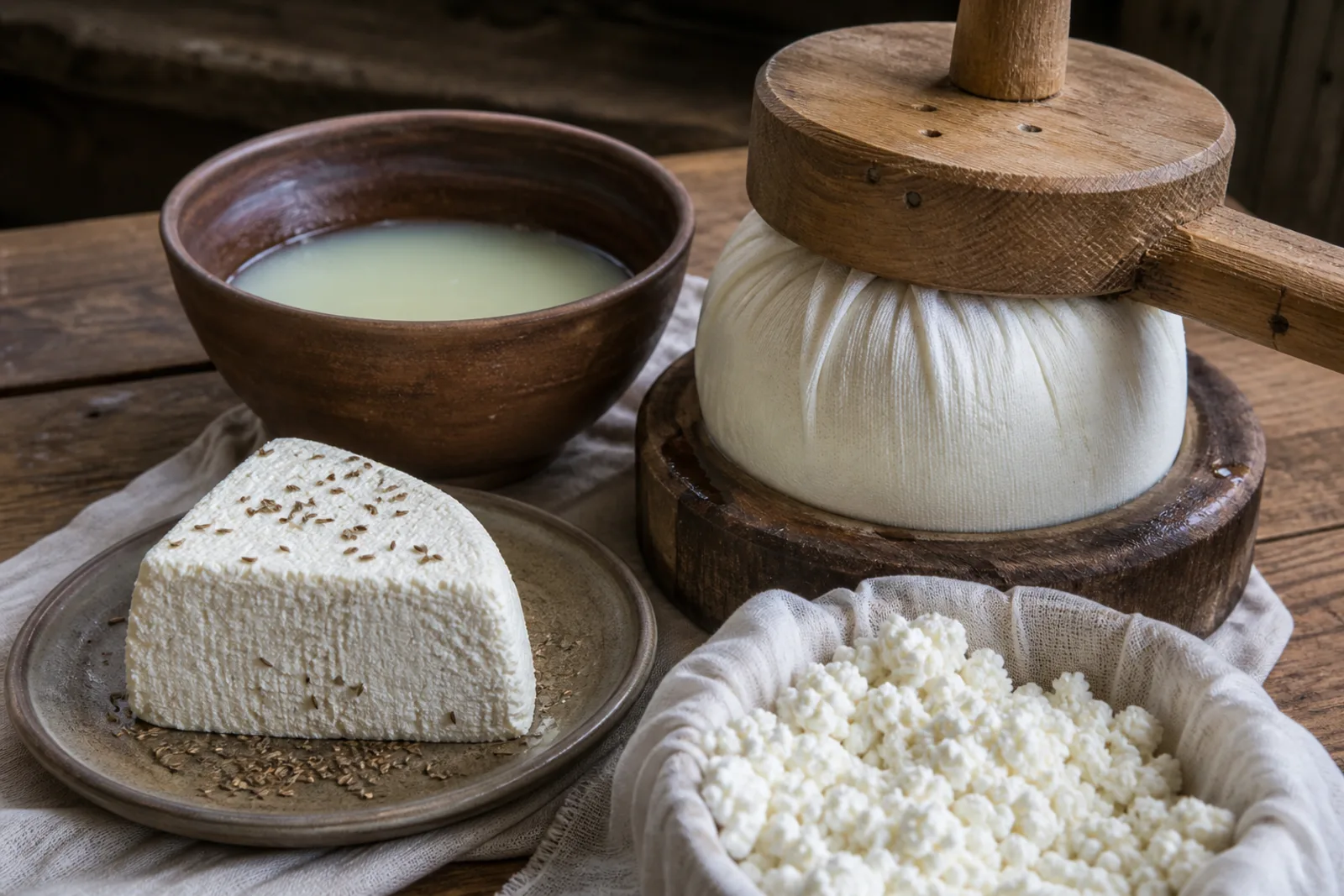
Such cheese can be fresh, flavored with caraway, dried, smoked, or fried. This differs from aged rennet cheeses, but both fields matter in Lithuanian food culture.
Cheese bag and pressing
The cheese bag gives the cheese its shape and lets whey drain away. Pressing determines firmness: a shorter press gives a softer cheese, a longer press a firmer one.
Caraway seeds are one of the most recognizable additions to curd cheese, but cheese can also be made without them.
Dried, smoked, and aged
Drying and smoking help cheese keep longer and give it a different flavor. They require suitable conditions so the cheese does not mold improperly.
Aged rennet cheeses such as Džiugas or Liliputas are made with a different technology and have a protected-name context.
Cheese on the table
Curd cheese is eaten with bread, honey, sour cream, potatoes, jam, or vegetables. It can be everyday food, holiday food, or market food.
Cheese shows the dairy farm's ability to extend the life of milk: from quick-spoiling milk comes a product that keeps longer.
Recipe
How to make curd cheese
Pressed curd cheese with caraway
This recipe is for a simple homemade curd cheese with caraway seeds. It is eaten fresh, but may be dried briefly.
Ingredients
Method
- Warm the milk, add the curd, and heat while stirring until the whey separates.
- Tip the mixture into a cheese bag or dense cloth and drain well.
- While still warm, mix the curd with salt, caraway seeds, eggs, and butter if using.
- Put into a cheese bag, wrap, and press for 4-8 hours.
- Cool. Eat fresh or dry briefly in a cool place.
Notes
If the cheese crumbles, the mass has too little moisture or has not bound enough.
The cheese bag must be very clean and rinsed free of scented detergents.


Sūriai: frequently asked questions
How is curd cheese different from rennet cheese?
Curd cheese is made from acid-set curd and pressed, while rennet cheese is made with enzymes, cultures, and aging.
What is a sūrmaišis when making traditional cheese?
It is a cloth bag or piece of linen into which the curd mass is placed so whey can drain and the cheese can form.
How long should cheese be pressed?
From a few hours to a day, depending on the desired firmness and the size of the cheese.
What determines whether pressed cheese will crumble?
The curd may be too dry, not bound enough, or pressed too strongly.
When are caraway seeds added?
To the warm, drained curd mass before it is placed in the cheese bag.
Can cheese be dried at home?
Yes, but it needs a cool, dry, clean, and ventilated place. Improperly dried cheese can mold.
Which Lithuanian cheeses have protected names?
Protected names include Lietuviškas varškės sūris, Sūris Džiugas, and Sūris Liliputas, but each has a specific specification.