
Lithuanian traditional foods
Žolelių arbatos
Žolelių arbatos in Lithuania are made from local flowers, leaves, twigs, and fruits: chamomile, linden blossom, thyme, raspberry twigs, and wild strawberry leaves. They should be presented as food and folk-tradition drinks, not as a promise of treatment.
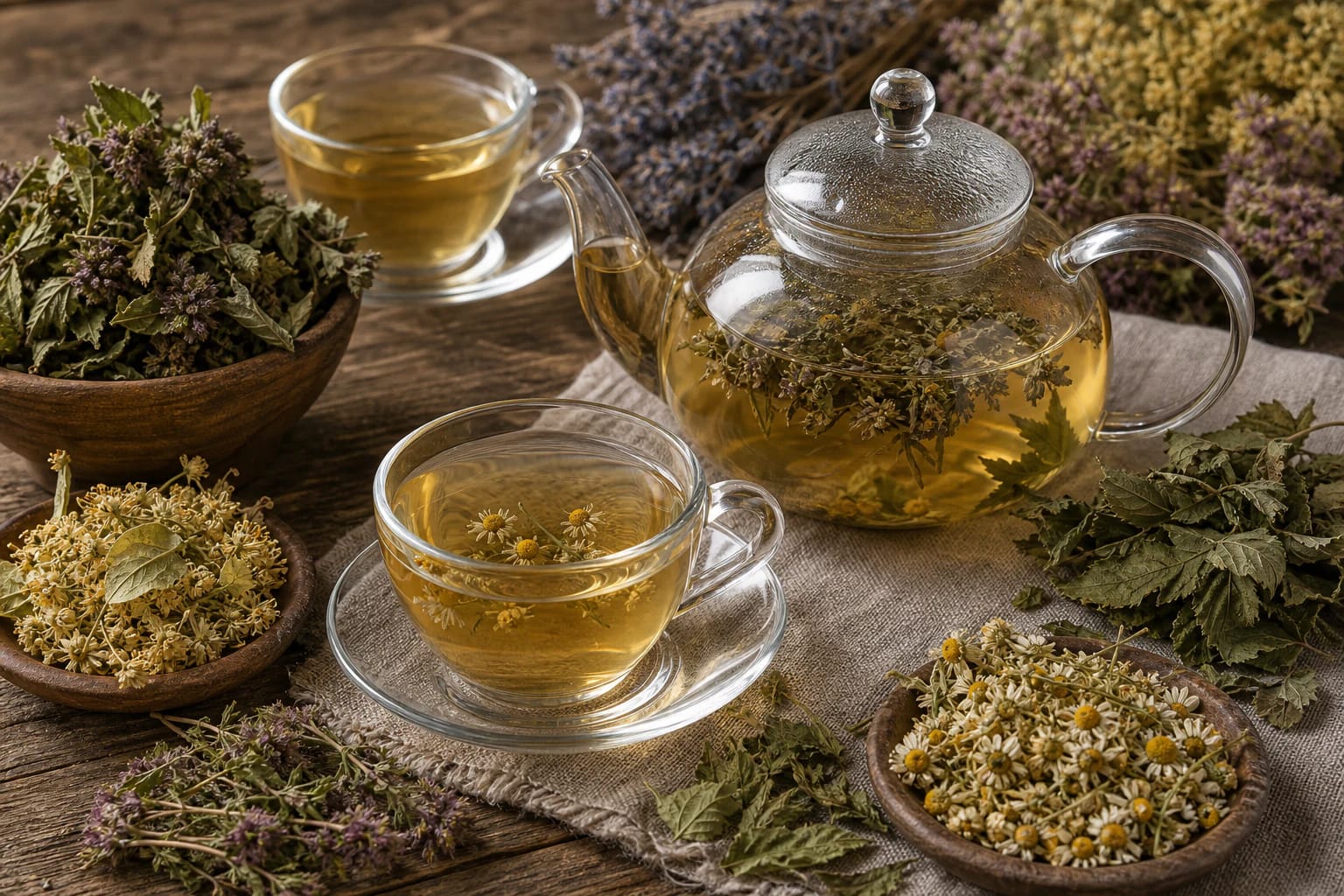
Food and heritage context
- Category
- Drinks
- Type
- infusions of local herbs, flowers, leaves, and twigs
- Heritage status
- living home and herbalist tradition
- Context
- Chamomile, linden blossom, thyme, raspberry twigs, wild strawberry leaves, infusion, decoction
Names and variants
Medicinal herb tea, Herb tea
A drink from local plants
In the context of tea, the Universal Lithuanian Encyclopedia mentions infusions of local plants used in Lithuania: chamomile, linden blossoms, raspberry twigs, wild strawberry leaves, and other plants.

Tea from the tea plant spread in Lithuania later, so herbal teas preserve an older layer of local drinks.
Infusion and decoction
Soft flowers and leaves are usually infused with hot water. Harder twigs, roots, or fruits may require a decoction.
Steeping too long can bring bitterness, especially with thyme or stronger plants.
Gathering and drying
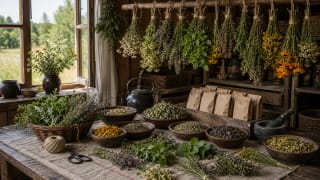
Flowers are gathered in dry weather, away from roads and pollution. They are dried in shade in a well-ventilated place.
They are stored airtight and in the dark because light and moisture reduce aroma.
Careful wellness tone
In folk tradition, herbal teas were used both as everyday drinks and as medicinal-herb drinks. However, a public page should not promise treatment.
It is safest to speak about taste, custom, plant knowledge, and cautious use.
Recipe
How to prepare herbal tea
Flower and leaf herbal tea
Flowers and leaves usually only need an infusion, while harder twigs or fruits are better simmered briefly. Add honey only after the drink has cooled somewhat.
Ingredients
Method
- Place the flowers and leaves in a teapot.
- Pour over freshly boiled water that has cooled for one minute.
- Cover and steep for 5-10 minutes.
- Strain, let cool slightly, and only then add honey.
Notes
Gather herbs only in clean places, not along roadsides.
If you have health conditions, take medication, or are pregnant, consult a specialist about using herbs.
Žolelių arbatos: frequently asked questions
How is herbal tea different from black tea?
Black tea is made from tea-plant leaves, while herbal tea is made from local flowers, leaves, twigs, or fruits.
Which herbs are typical in Lithuanian tradition?
Chamomile, linden blossoms, thyme, raspberry twigs, wild strawberry leaves, and other local plants.
When should flowers be gathered?
On a dry day, when the flowers are open and there is no dew. They should be gathered in clean places.
Can plants be gathered along roadsides?
No. Roadside plants may be contaminated with dust, heavy metals, and other substances.
When should I make an infusion and when a decoction?
Flowers and leaves usually need only an infusion; twigs, roots, or hard fruits may need a decoction.
Can several herbs be mixed?
Yes, but it is better to start with simple blends and not overload them with strong-tasting plants.
When should a specialist be consulted?
If you take medication, have chronic illnesses, are pregnant, breastfeeding, or giving stronger herbal teas to children.