
Lithuanian traditional foods
Velykų pyragas
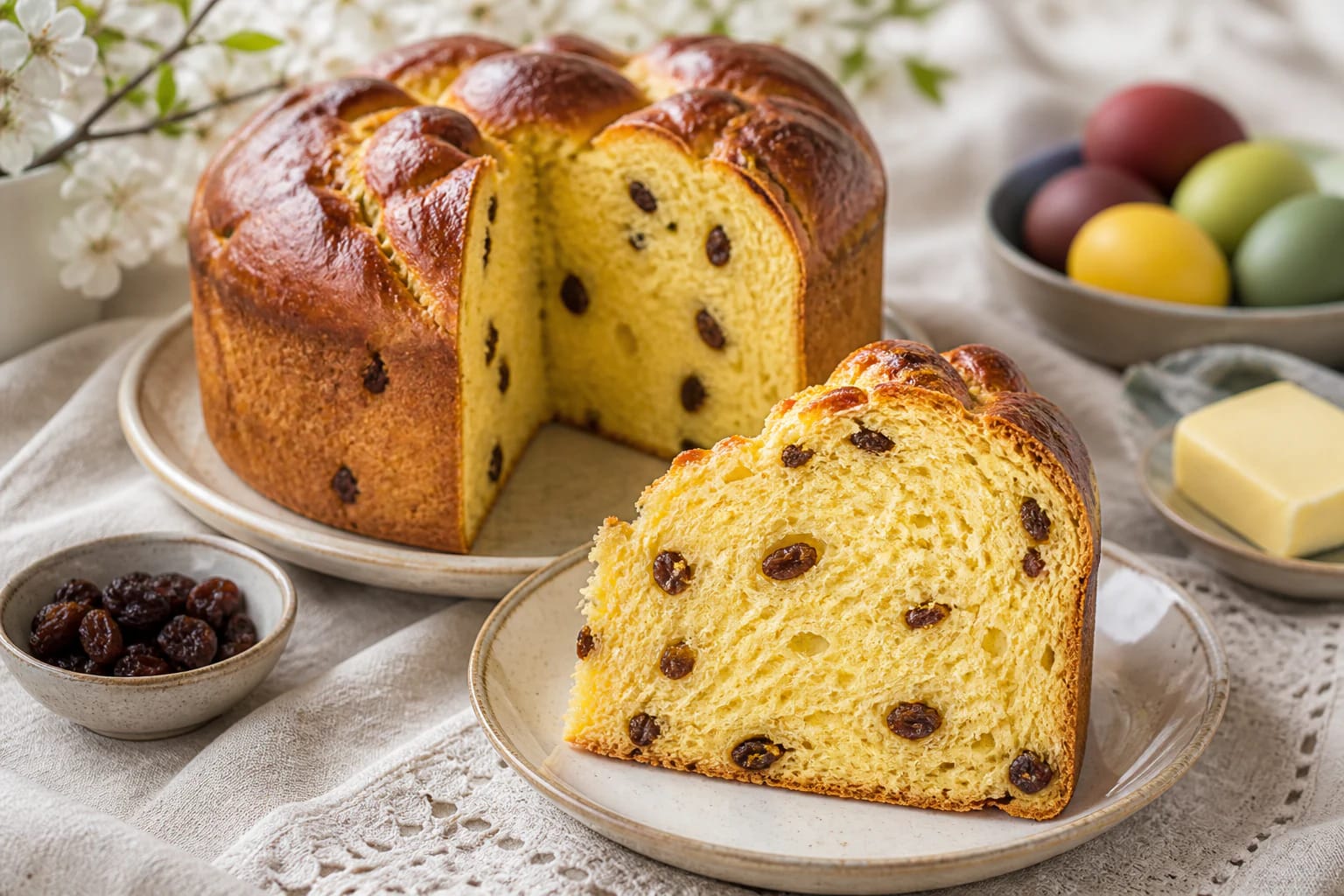
Velykų pyragas is not one strict recipe, but a sweet bake enriched with butter and eggs, placed on the festive Easter table alongside margučiai, meat dishes, and horseradish.
Food and heritage context
- Category
- Festive baked goods
- Type
- sweet yeasted Easter-table bake
- Heritage status
- Easter table tradition
- Context
- Easter, yeasted dough, eggs, butter, raisins, glaze, festive breakfast
Names and variants
Easter cake, Yeasted Easter cake
An Easter-table bake
In the context of Easter breakfast, the Universal Lithuanian Encyclopedia mentions margučiai, meat dishes, and cake. Velykų pyragas is therefore best understood as a festive-table category, not one mandatory recipe. According to the Universal Lithuanian Encyclopedia, until the mid-twentieth century rural households baked wheat-flour cakes only for major annual holidays, such as Easter and Christmas, and for family occasions, while a separate cake, karvojus, was baked for weddings.
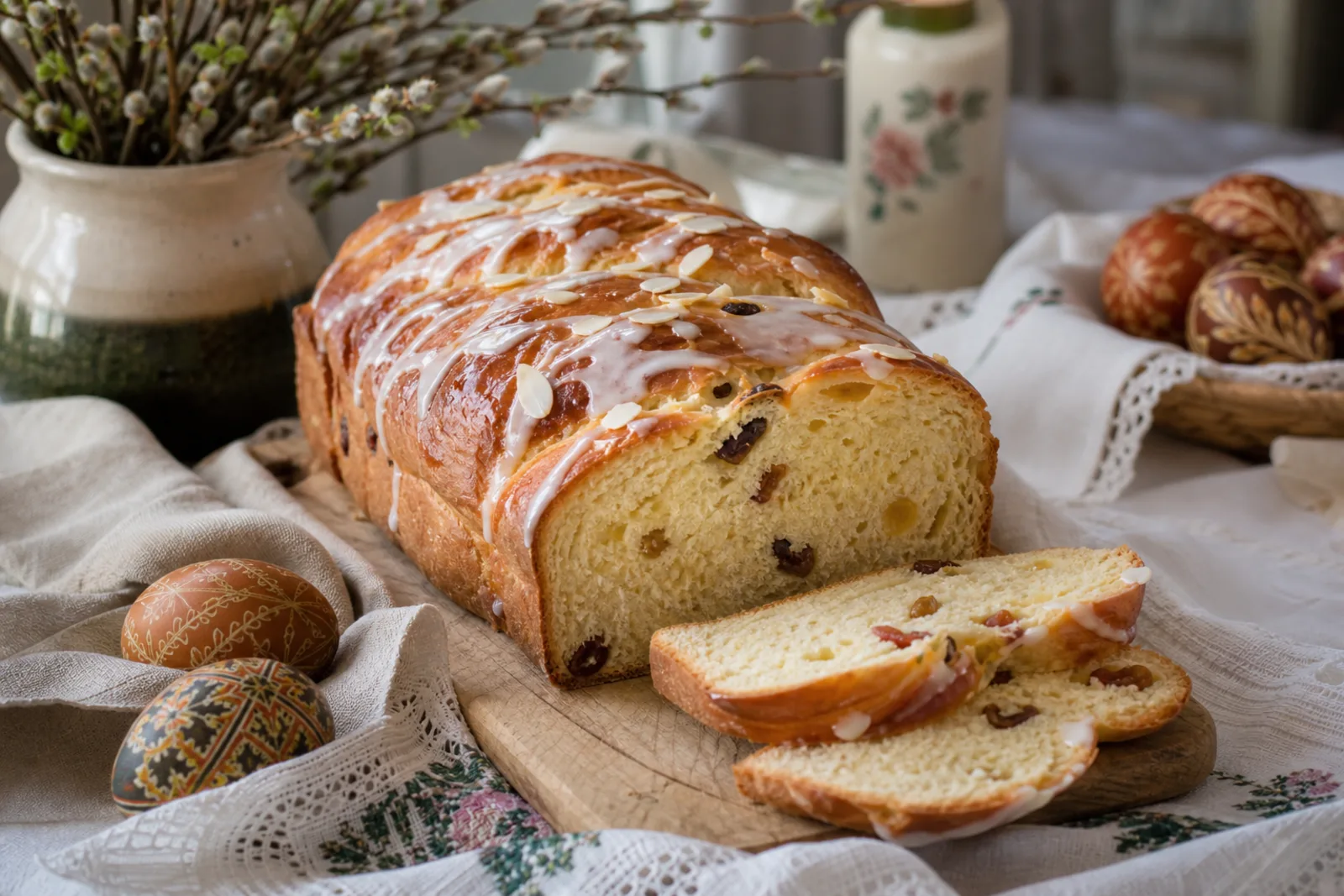
After Lent, a sweeter bake enriched with eggs and butter marks a more abundant table.
Yeasted dough
Velykų pyragas is often made from yeasted dough with milk, butter, yolks, and raisins. It rises more slowly, but when baked it is aromatic and festive.
The key is not to overload it with flour. Soft dough gives a fluffy cake.
Decoration
The cake may be dusted with powdered sugar, glazed with lemon glaze, or decorated with nuts. Decoration should complement the bake, not hide it.
Margučiai, horseradish, ham, šaltiena, and other Easter foods belong beside it on the table.
Leftovers
The next day, Velykų pyragas can be toasted, used for a bread dessert, or eaten with butter and tea.
Airtight storage slows drying, but nothing fully replaces a fresh yeasted bake.
Recipe
How to bake Velykų pyragas
Rich yeasted dough rises more slowly, so Velykų pyragas needs warmth and time. Do not rush it, or the bake will be heavy.
Ingredients
Method
- Stir the yeast into warm milk with a spoonful of sugar and leave until foamy.
- Beat the yolks with sugar, then mix in the yeast, flour, salt, and vanilla.
- Pour in the melted butter while kneading and knead until the dough becomes elastic.
- Mix in the raisins, let the dough rise until doubled, then place it in a pan and let it rise again.
- Bake at 175 °C for 45-55 minutes. Glaze when cooled.
Notes
Raisins can be soaked in warm water, then drained and patted dry.
If the top browns quickly, cover it with baking paper.
Velykų pyragas in Lithuanian traditions
Explore the celebrations and customs associated with this food.
Related pages about Velykų pyragas
Velykų pyragas: frequently asked questions
Does Velykų pyragas have one traditional recipe?
No. It is a category of festive-table bakes. A common version is a sweet yeasted cake with butter, eggs, and raisins.
Why does the dough rise slowly?
It contains a lot of butter, sugar, and eggs, so the yeast needs more time and warmth.
Can it rise overnight?
Yes, in the refrigerator, using less yeast. In the morning the dough should warm up and rise in the pan.
How do you keep the cake from drying out?
Do not overbake it, and keep it covered after cooling. Too much flour also dries it out.
What can replace raisins?
Dried cranberries, candied peel, nuts, or nothing if you want a simpler bake.
When should it be glazed?
Only when fully cooled, so the glaze does not run off or soak in.
Can dry yeast be used?
Yes, but you need less than fresh yeast. Follow the package ratio.