- Category
- Roofs and Structures
- Type
- Traditional wooden roof coverings
- Context
- Malksnos, skiedros, gontai, wooden roof covering, aspen, spruce, battens, gabled roof
- Source status
- well attested
Skiedra roof, Malksna roof, Gont roof
Malksnos, Skiedros, and Gont Roofs: types and elements
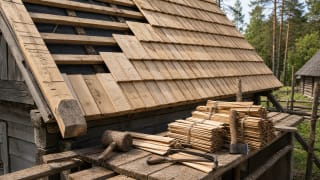
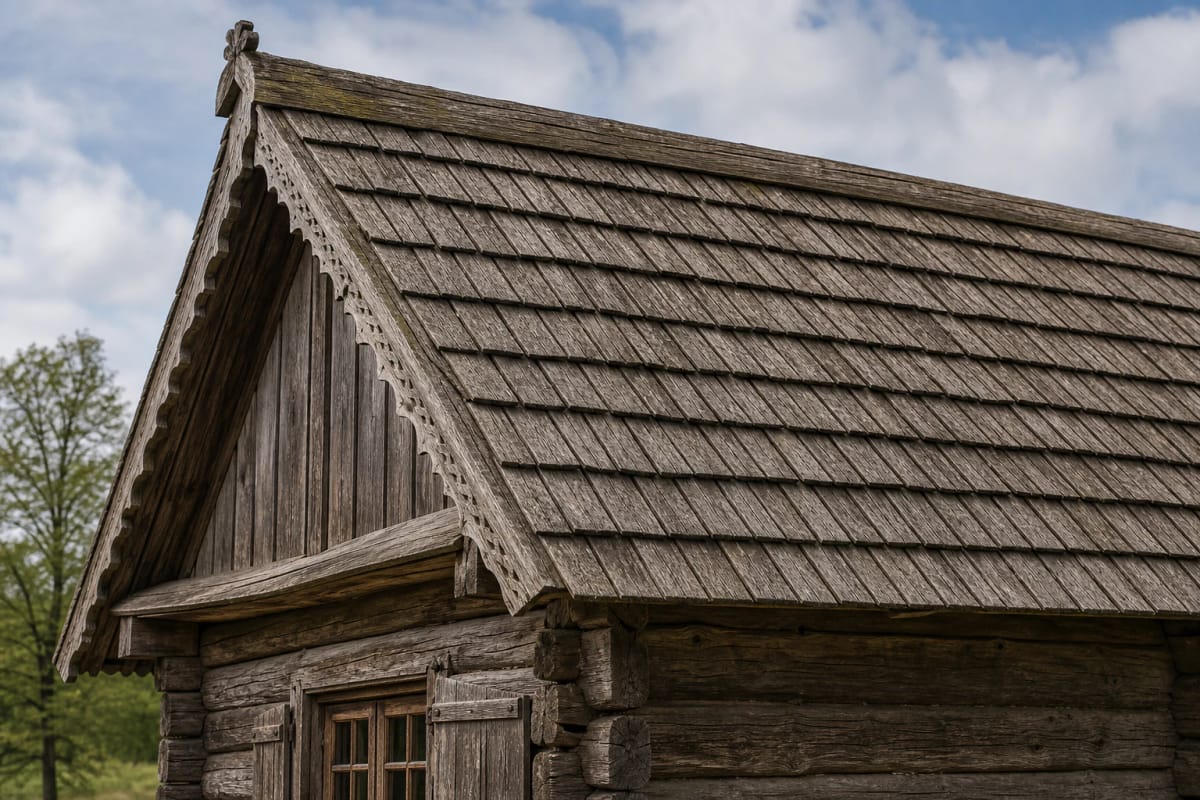
Skiedra roof: A roof made of thin wooden shingles, often laid in several layers.
Malksna roof: A roof made of thicker and usually longer split wooden pieces or boards.
Gont roof: A roof made of wedge-shaped boards with a lengthwise groove.
What are wooden roof coverings?
Malksnos, skiedros, and gontai are wooden roof coverings. They were used when a more durable or more controlled covering than straw or reed was needed, or when local tradition and timber suited the choice.
These coverings belong to the material world of wooden architecture: the roof remains wooden not only in structure but also on its surface.
Differences
Skiedros are thin wooden shingles, often of aspen or spruce, laid in several layers. Malksnos are usually thicker and longer. Gontai are wedge-shaped and have a groove. According to VLE, a malksna is a smooth, single-layer wooden board for roofing, thicker and usually longer than a skiedra, cut along the grain and laid with overlap; such coverings were used until the mid-twentieth century, and gontai, wedge-shaped boards with a lengthwise groove, were sometimes also called malksnos.
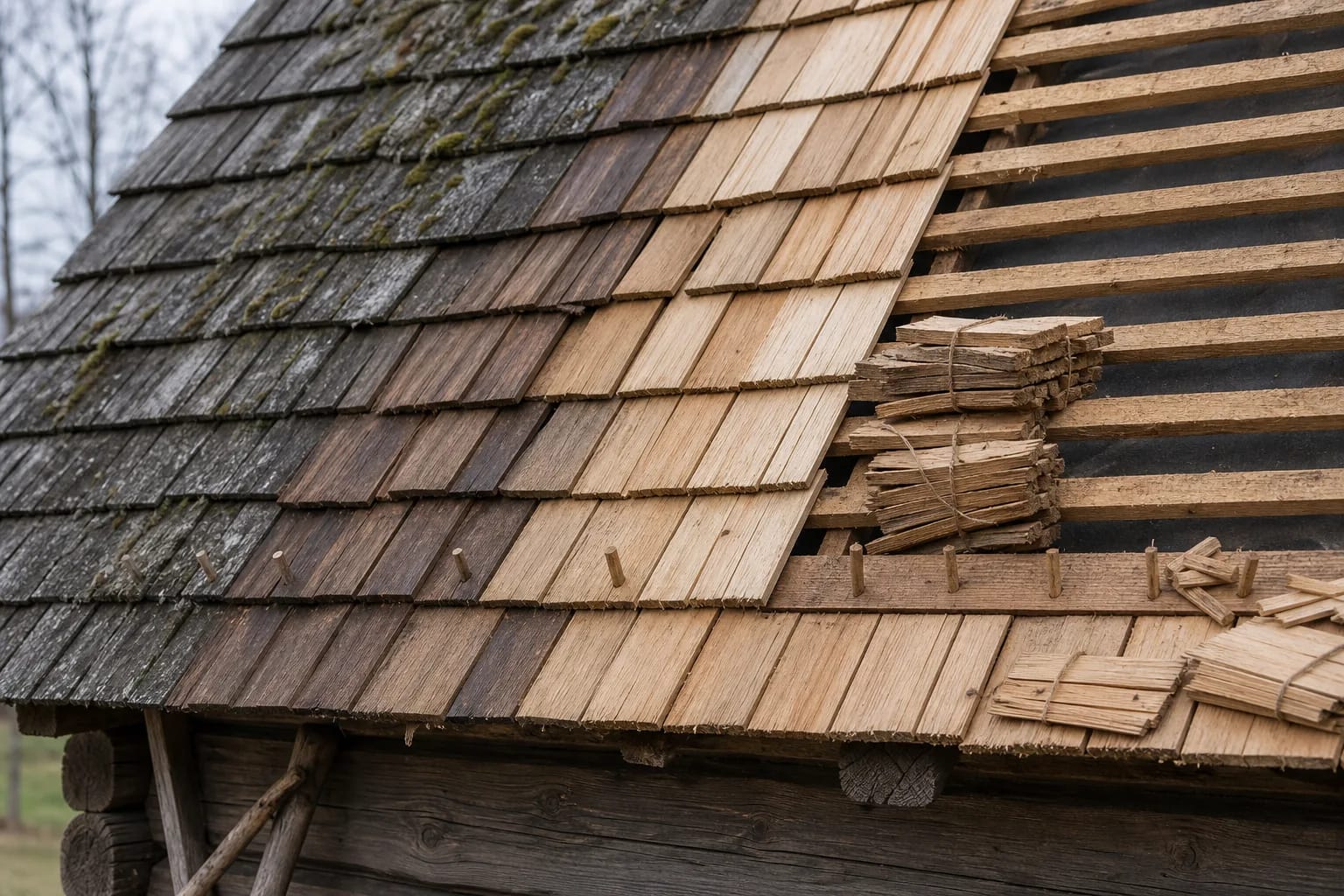
The distinction matters in restoration: even if all the coverings look wooden from a distance, their laying, thickness, and water-shedding behaviour differ.
History and spread
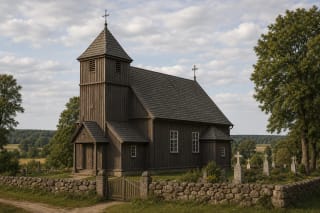
Wooden coverings were used in Lithuania from old times, while skiedros spread more widely in the late nineteenth and early twentieth centuries. They suited dwelling houses, granaries, farm buildings, churches, and bell towers.
The choice of covering depended on timber availability, craft skills, and the household's means.
Care
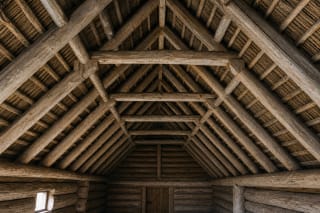
A wooden roof needs suitable pitch, ventilation, correct layers, and a well-made ridge. Poorly laid covering begins to rot quickly.
In restoration, it is worth choosing the covering type that matches the building's region, period, and structure.