- Place
- Leliūnai Eldership, Utena District Municipality
- Region
- Utena District
- Type
- educational nature trail in an oakwood
- Coordinates
- 55.46400, 25.58600
Ąžuolija Nature Trail, Ąžuolija Reserve Trail
An old deciduous forest near Utena
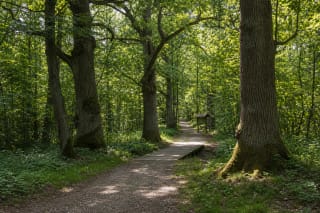
Ąžuolija Reserve Educational Nature Trail is in Utena District, Leliūnai Eldership. Ąžuolija Forest begins about 1.5 km south of Utena, covers 305 ha, and stretches about 4.5 km from north to south-west.
This is not only a short park walk. Ąžuolija is presented as a northern-subzone Central European broadleaf forest, dominated by oaks, aspens, ashes, and lindens. The trail is valuable for seeing the structure of an older deciduous forest.
Botanical-zoological reserve and scale
Part of the Ąžuolija oakwood was declared a botanical-zoological reserve in 2001 by Utena District Council. Saugoma.lt gives the reserve as about 67 ha, while the 2001 founding documents mention 68.2 ha of protected forest; the whole forest is 305 ha.
Saugoma.lt states the reserve's purpose: to preserve a unique mature oak stand, deciduous-forest plant and animal communities, habitats of rare and Red Data Book species, and the scenic Vieša stream landscape. The forest borders the Vieša stream in the north-west and is surrounded by Utena-region hills.
Educational stops
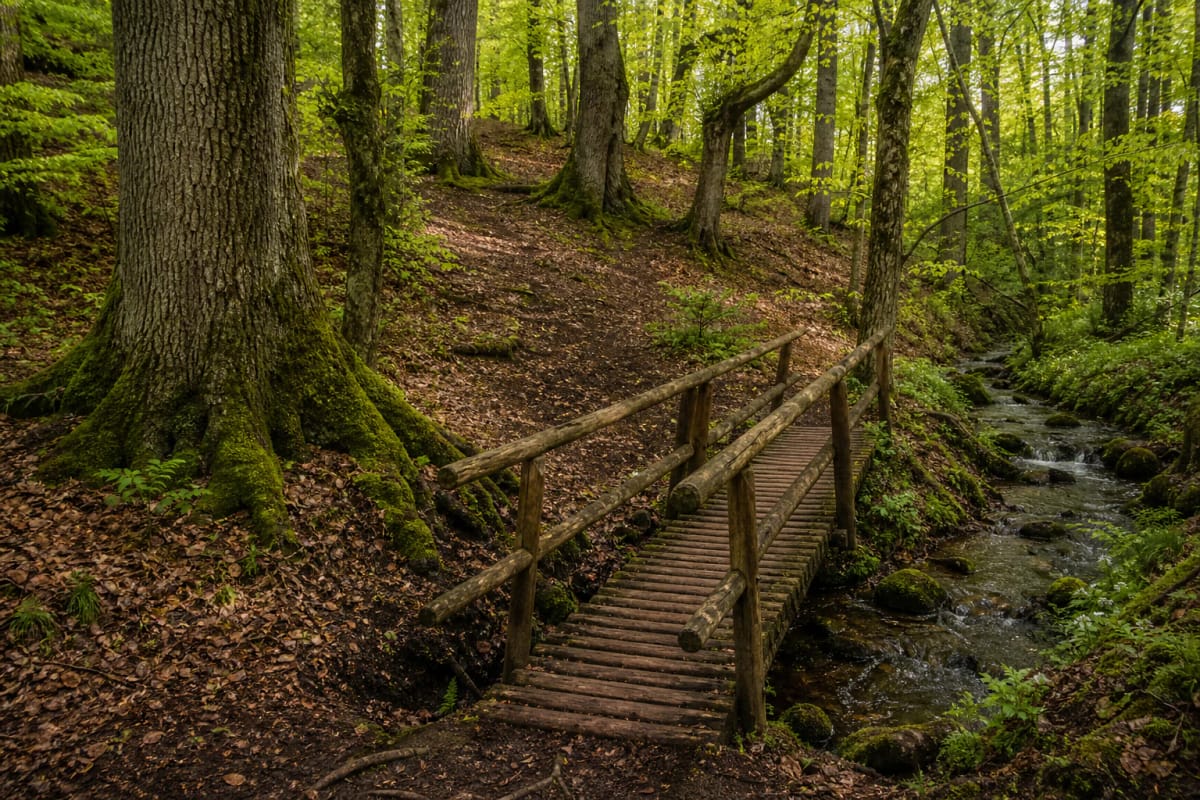
The full trail is about 2 km. It introduces visitors to old deciduous forest and natural stream diversity. The stops are not random; they help read the forest close up and make the trail suitable for school groups.
Topics include the oakwood, oxbow, beaver dam, hollow oak, woodpeckers, fungi, stream, and wet black alder stand. Marking has changed over time, so the number and names of stops can differ between sources; a shorter route visits part of them, a longer route all of them.
Why Ąžuolija matters for biodiversity
Ąžuolija has many old oaks, stumps, and standing dead trunks. Such places matter not only because of tree age but because of habitats they create: hollows, decaying wood, insects, fungi, and cavity-nesting birds.
Up to 7-8 of the 9 woodpecker species breeding in Lithuania can be found here. Sources mention all four pied woodpeckers, great, middle, lesser, and white-backed, as well as black and grey-headed woodpeckers. This richness is directly linked with the number of old and hollow oaks.
How to visit responsibly
Comfortable shoes and a slow pace are enough. Stop at the learning points, but do not leave the trail in sensitive places, especially near the stream, wet black alder stands, and low relief. After rain, some sections are damp, so waterproof footwear helps.
Official sources did not state a ticket or opening time, so the trail can be treated as a freely visited nature site; for educational or group trips, check Utena District Municipality information. Spring shows the blooming deciduous forest best, while autumn brings oakwood colour.