
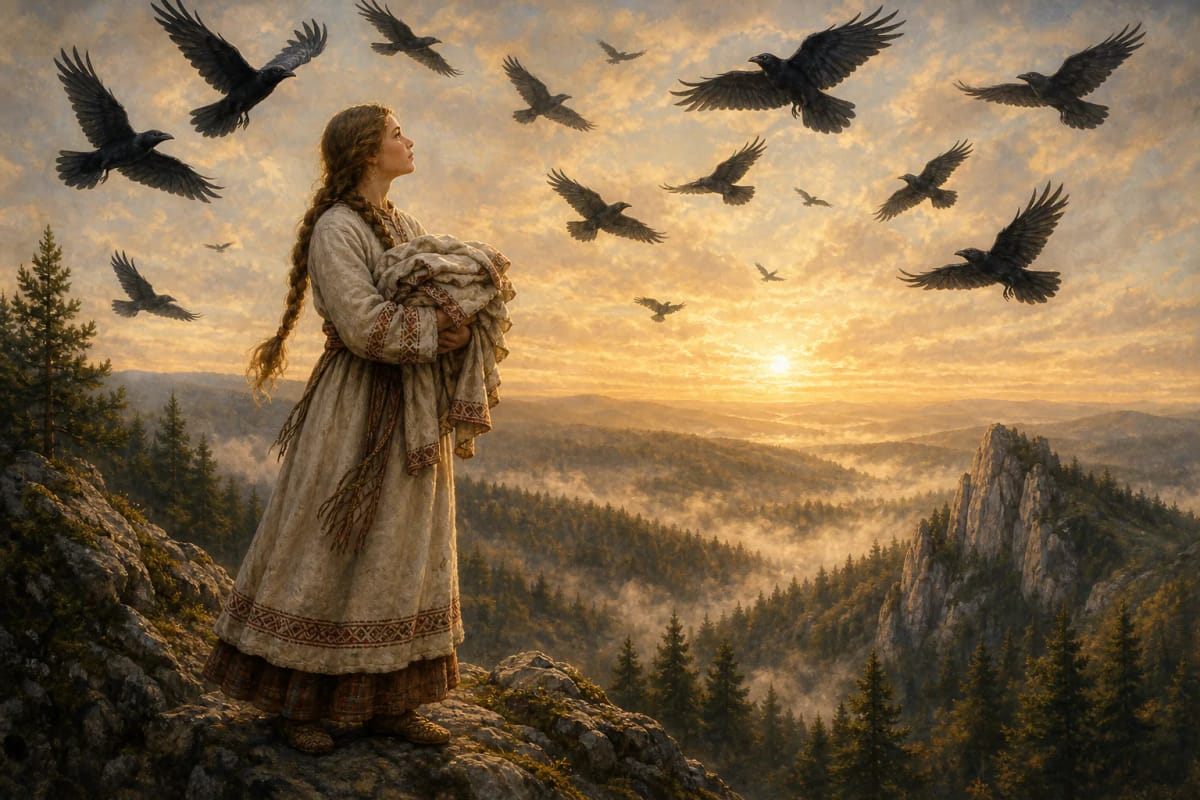
- Genre
- Wonder tale
- Source status
- traditional folklore
- Motifs
- bird brothers, sister's loyalty, test of silence, shirts made from plants, breaking an enchantment
Twelve Brothers Who Flew as Ravens, The Raven Brothers
The tale
A king or father had twelve sons, but the birth of a daughter became a fateful sign: because of a careless promise, curse, or ill will, the brothers turned into ravens and flew into another world. The sister grew up without knowing the whole truth until she heard of her missing brothers.
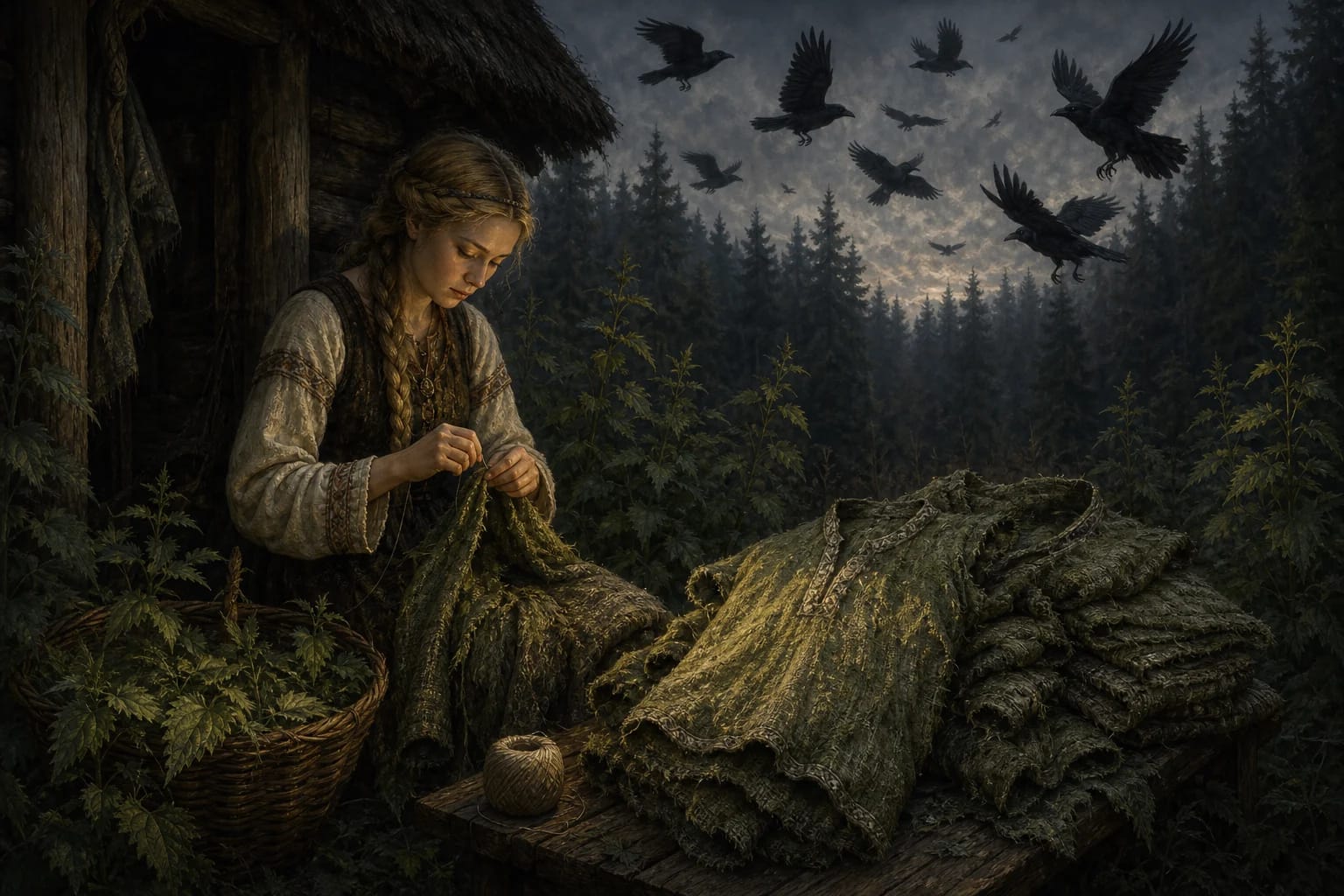
The girl set out to search for them. When she found their dwelling, she learned that the enchantment could be broken only by very hard work: for a long time she had to remain silent, not cry, not laugh, and sew or weave shirts for her brothers from nettles, grasses, or other materials named by the tale.
The sister endured the trial even when others considered her guilty, strange, or dangerous. In the ending the brothers regained human form, although in some variants one brother keeps a bird's wing or another sign showing that the rescue came at the last possible moment.
Interpretation
This tale is first of all about the sister's loyalty. She alone takes on work that others do not understand and saves her brothers not by fighting but by endurance. The motif of silence shows that the heroine must live through injustice until her action itself bears witness to the truth.
The ravens are not merely decorative birds. Bird form marks an in-between state: the brothers are still alive, but pushed out of the human world. They belong to the sky, the forest, and the time of enchantment.
Sewing or weaving shirts connects the tale with women's work, which here becomes a magical form of rescue. Everyday labor is raised to a ritual level: cloth restores body, name, and family.
History and variants
The tale has no single date of creation. It belongs to the field of international wonder tales, yet Lithuanian variants especially emphasize the sister's silence, bird-brothers, and patiently completed work.
In the international Aarne-Thompson-Uther system, this plot is ATU 451, "The Maiden Who Seeks Her Brothers." It is widespread across Europe; famous parallels include the Brothers Grimm tales "The Six Swans" (KHM 49), "The Twelve Brothers" (KHM 9), and "The Seven Ravens" (KHM 25). Lithuanian variants are described in the catalogues of Jonas Balys (1936) and Bronislava Kerbelytė (1999-2002), and the Lithuanian Literature and Folklore Institute archive preserves more than 30,000 identified Lithuanian fairy-tale variants in all.
Different recordings change the number of brothers, the bird species, the cause of the enchantment, and the material from which the shirts must be made. This page should therefore be read as a retelling of the plot, not a copy of one specific text.
Why the tale matters
It joins themes of family loss, bird transformation, silence, and weaving. For that reason it connects well with sister-and-brother imagery in Lithuanian songs and with broader bird symbolism.