
- Genre
- Animal and comic tale
- Source status
- variant tradition
- Motifs
- pig, godparenthood, false kinship, greed, comedy
The Sow-Godmother, The Pig-Godmother, Kiaulė-kūma
The tale
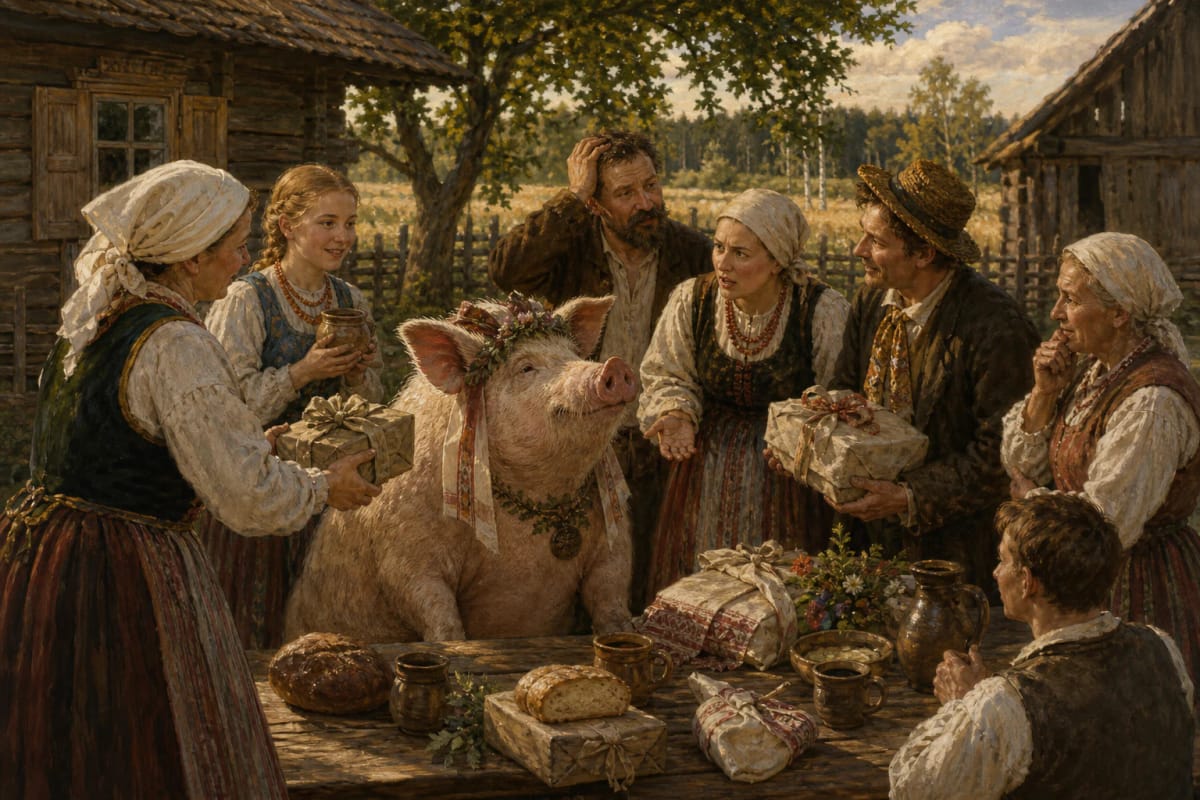
In the tale a pig is called a godmother or is drawn into a godparent relationship as if it were human. This creates comic confusion: an animal receives a human social role, and people begin behaving according to a distorted social order.
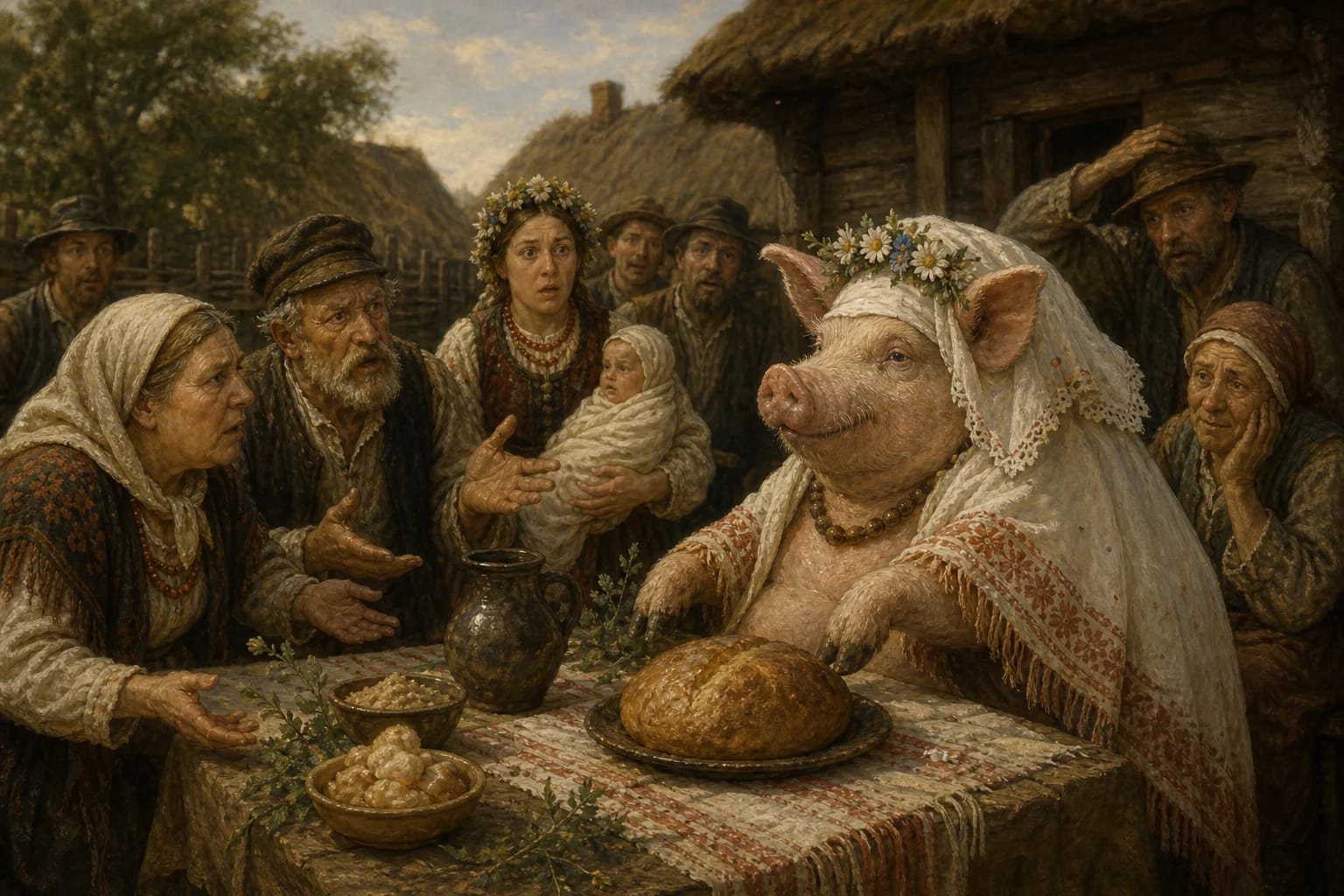
Godparenthood traditionally means a close and responsible bond, but in the tale it can be used to expose greed, pretense, or foolishness. The words sound serious, while the situation is funny.
In the ending the false order collapses. The laughter falls on whoever believed the trick too seriously or tried to profit from godparenthood.
Interpretation
The Sow-Godmother works as a parody of social roles. A human relationship title is given to an animal, making the title itself seem strange when separated from responsibility.
The tale can be read as laughter at greed and the formal use of kinship. Godparenthood without a real bond becomes an empty mask.
The image of the pig heightens the comedy because a farm animal enters the language of human ceremony and honor.
History and variants
There is no exact date of creation. Such comic tales lived as short humorous stories about the inversion of social rules.
Variants may differ in who calls the pig godmother and what benefit is expected, but the main joke arises from mixing animal and human roles.
The tale belongs to the field of animal and comic tales, where supposed kinship or godparenthood with an animal creates a comic reversal of social rules, comparable to the international trick motif of pretended godparenthood known from tales about the fox as godmother. Lithuanian animal tales number about 2,500 variants in roughly 100 plot types; their classification appears in the catalogues of Jonas Balys (1936) and Bronislava Kerbelytė (1999-2002).
Parody of godparenthood
The tale is funny because a serious godparent relationship is transferred to an animal. This exposes the difference between real social responsibility and an empty title that can be manipulated.