
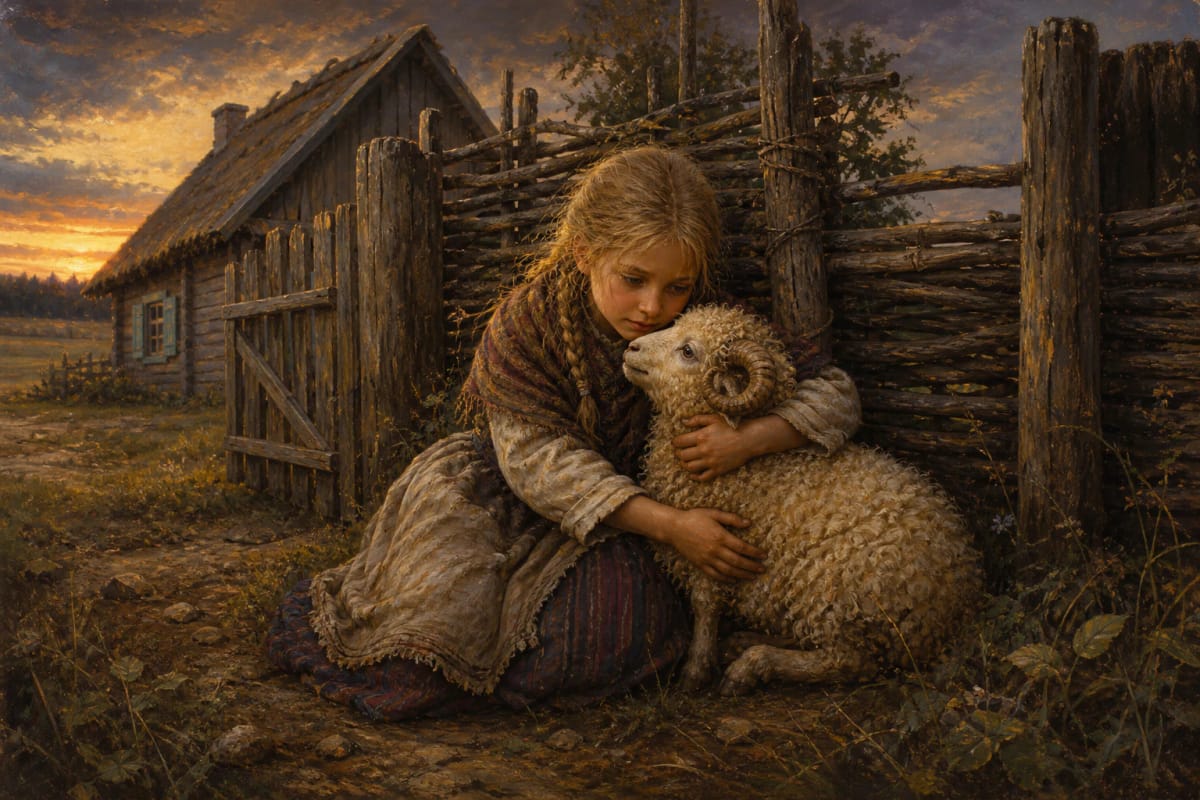
- Genre
- Wonder and orphan tale
- Source status
- traditional folklore
- Motifs
- orphan girl, brother as little ram, stepmother, animal form, restoration of justice
Orphan Elenytė and Joniukas the Little Ram, Elenytė and Joniukas the Little Ram
The tale
Elenytė is an orphan, and her closest person is Joniukas. Because of the stepmother's anger, an enchantment, or an unhappy event, the boy becomes a little ram. The sister is left to protect a brother who no longer has human form and to defend herself from injustice.
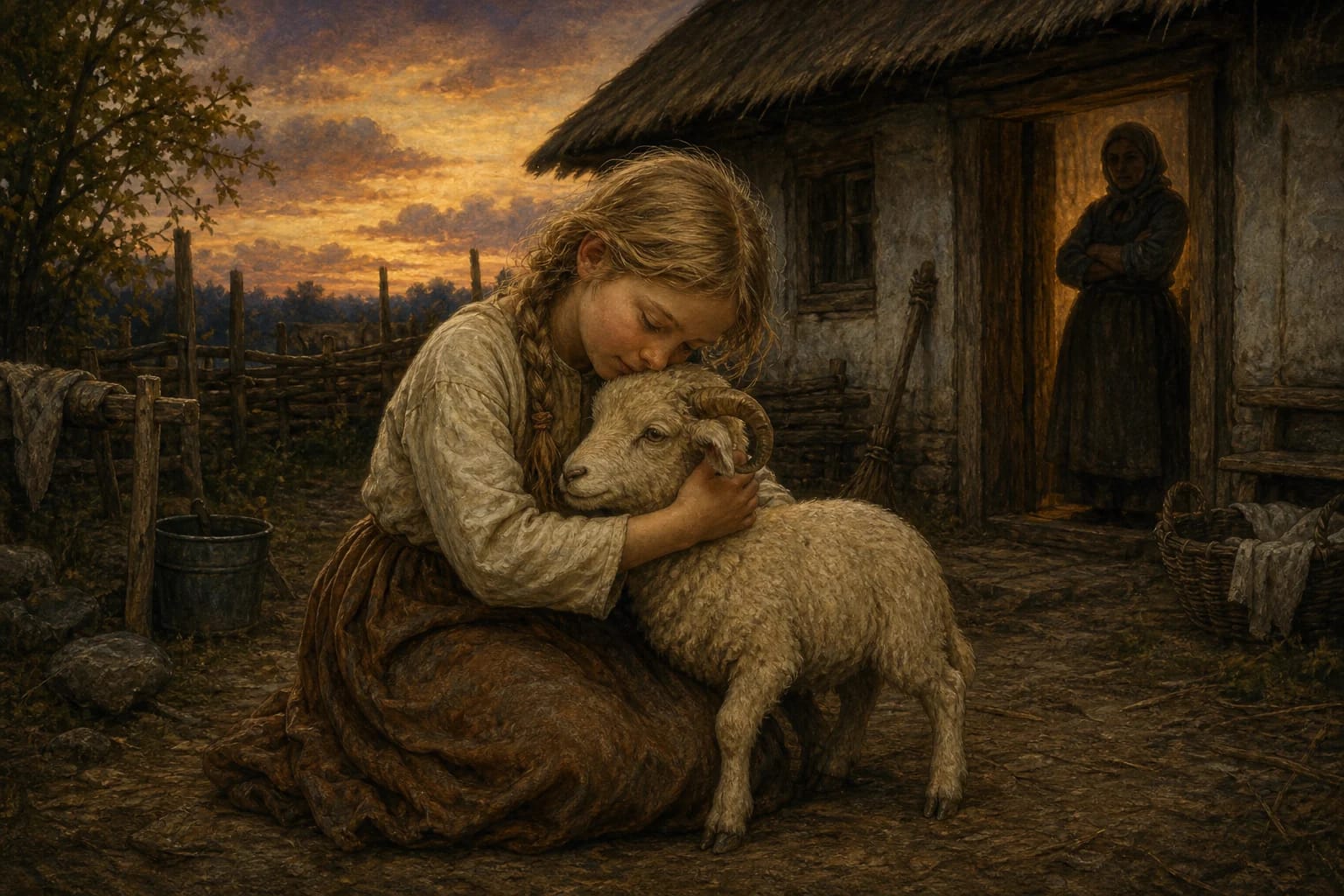
The stepmother tries to get rid of Elenytė or Joniukas, but the girl tries to preserve her brother. The little ram is not just an animal: he is the remaining sign of a family bond that must be recognized and protected.
In the ending the deception is exposed. Elenytė's loyalty becomes the basis for restoring justice, and Joniukas's animal form reminds readers that even a changed loved one remains one's own.
Interpretation
In this tale the orphan motif is joined with the brother in animal form. That deepens the vulnerability: Elenytė loses not only her mother but also her brother's ordinary human help.
The little ram can be understood as a sign of innocence and sacrifice. He belongs to the household world, yet he is also the form of an enchanted human being.
The tale asks whether love recognizes a loved one when the outward form changes. Elenytė's answer is yes: she remains loyal to the bond, not merely to appearance.
History and variants
This is a variant folk tale, so its beginning, the stepmother's actions, and the ending may differ from text to text. There is no exact date of creation.
In Lithuanian tales, orphan and transformed-brother motifs often combine with village-household imagery: livestock, work, the homestead, and the domestic space ruled by the stepmother.
In the international Aarne-Thompson-Uther system, this plot is connected with ATU 450, "Little Brother and Little Sister" (the Brothers Grimm "Brother and Sister," KHM 11). In that type the brother drinks enchanted water and becomes an animal; in the Grimm tale a fawn, while in Lithuanian variants most often a lamb or little ram. The sister protects him, and injustice is corrected at the end. Lithuanian variants are described in Bronislava Kerbelytė's catalogue of narrative folklore (1999-2002).
Why the tale is distinctive
It makes it possible to speak specifically about a family member in animal form, not only about the general orphan's conflict with a stepmother.