
- Genre
- Animal tale
- Source status
- variant tradition
- Motifs
- lie, goat, false accusation, owner, truth revealed
The Little Lying Goat, The Lying Goat, Ožkelė melagėlė
The tale
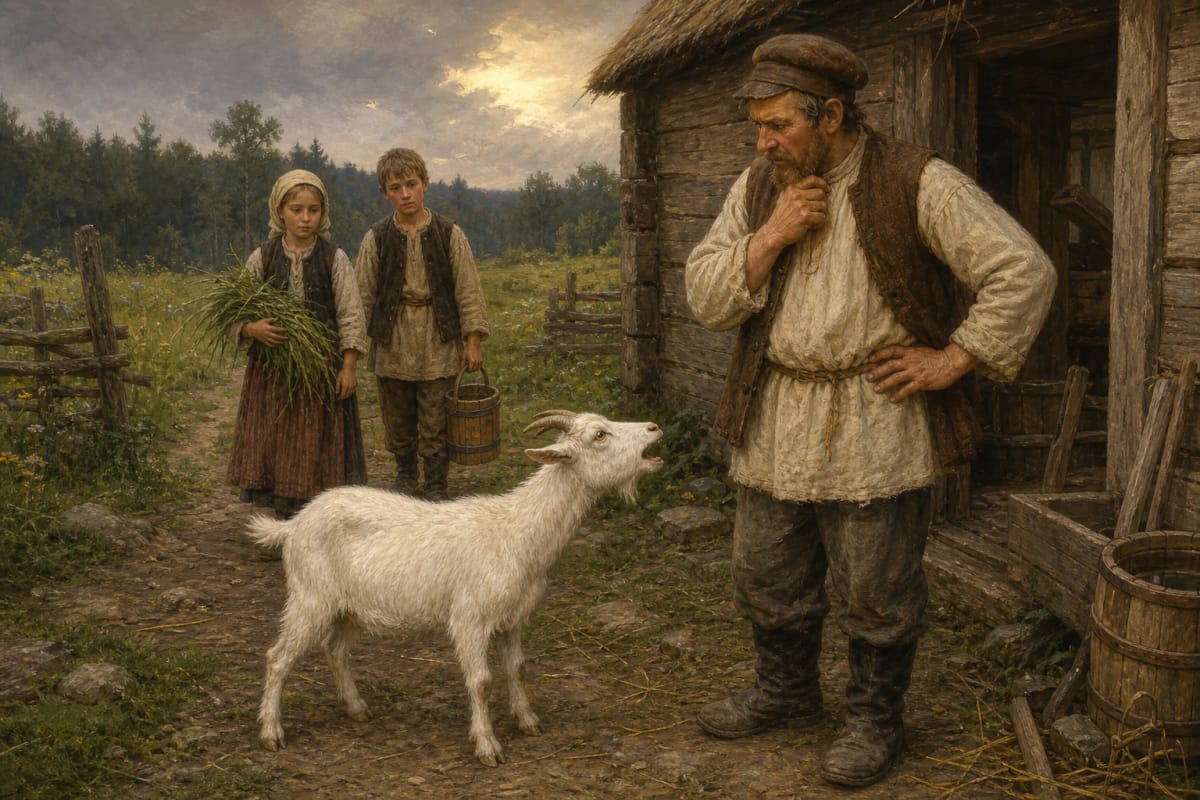
An owner keeps a little goat and entrusts children or workers with grazing it. When the goat returns, it lies that it was not fed, received no grass, or was poorly cared for.
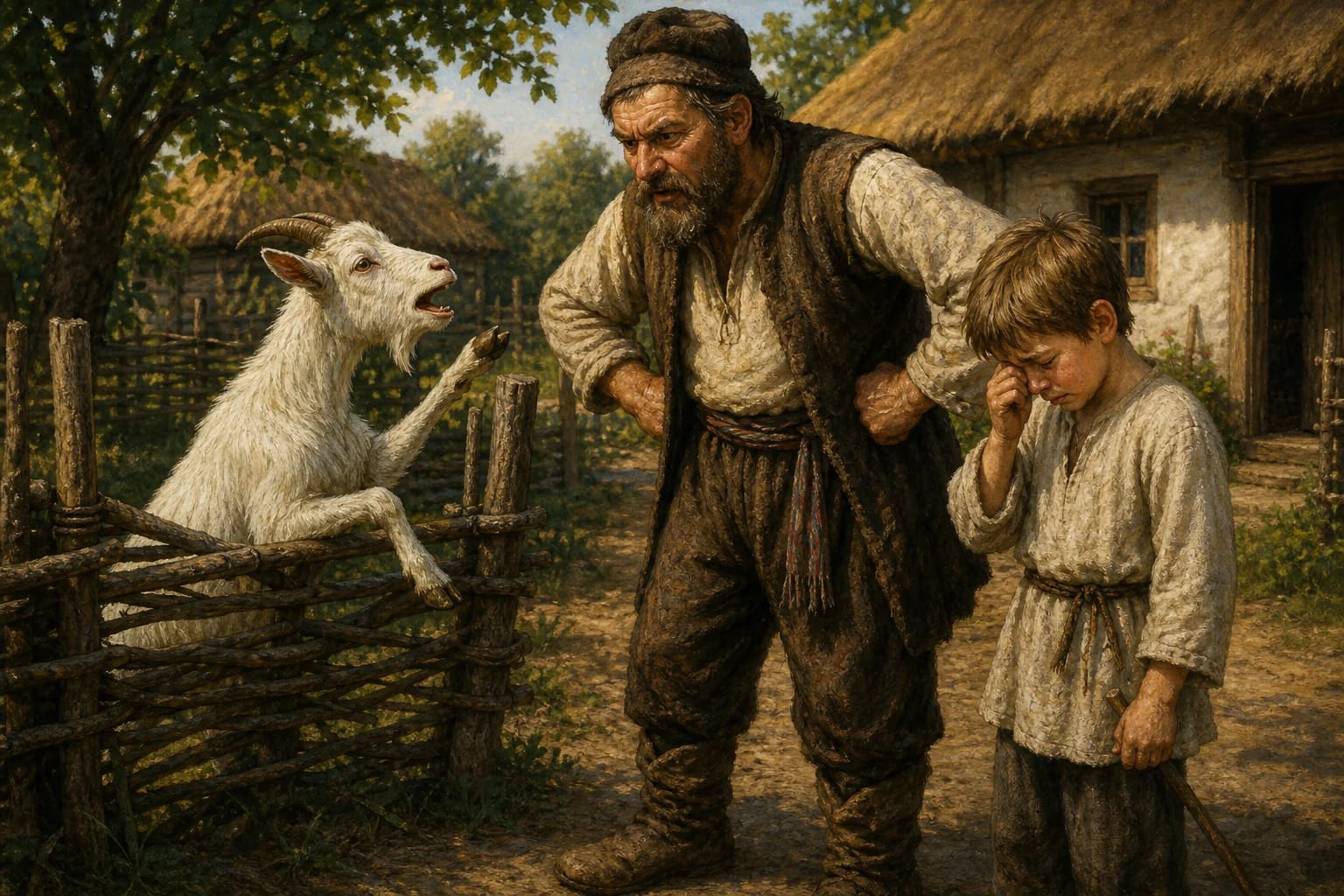
The owner believes the goat's complaints and punishes innocent people. The lie repeats until someone checks the truth or the goat gives herself away.
When the lie is exposed, the unjustly accused characters are vindicated, and the little goat is punished or loses trust.
Interpretation
The tale speaks very directly about lying. The little goat is small and at first seems innocent, but her speech destroys justice.
The motif of mistaken belief also matters. The owner punishes not because he has seen guilt himself, but because he has not checked the words.
It is a good tale for children and adults about responsibility for speech: even a small lie can wound another person.
History and variants
The plot of the little lying goat belongs to animal tales in which an animal takes on a human character trait. There is no exact date of creation.
Variants may change who herds the goat, how the lie is discovered, and what punishment the liar receives.
In the international Aarne-Thompson-Uther system, this plot is ATU 212, "The Lying Goat": the goat falsely complains that it was not fed, the father drives out his children because of it, and once the lie is discovered he punishes the goat itself. The motif is also familiar from the Brothers Grimm tale "The Wishing-Table" (KHM 36). Lithuanian variants are described in Bronislava Kerbelytė's catalogue of narrative folklore (1999-2002).
What to emphasize
This tale is not about wild danger. Its center is domestic injustice caused by an unchecked complaint.