
- Genre
- Domestic and didactic tale
- Source status
- variant tradition
- Motifs
- laziness, son, work, lesson, independence
The Idle Son, Dykaduonis sūnelis
The tale
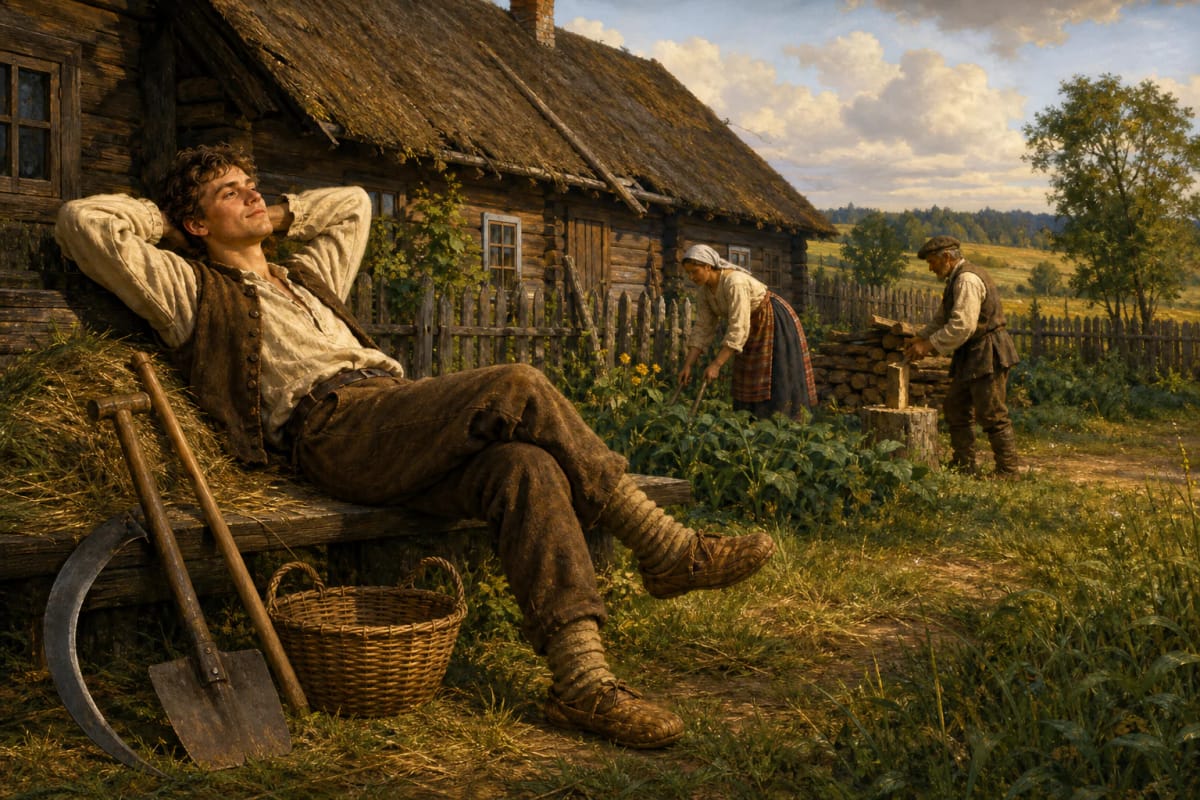
Parents have a son who does not want to work. He expects others to feed him, excuses his laziness, and avoids responsibility.
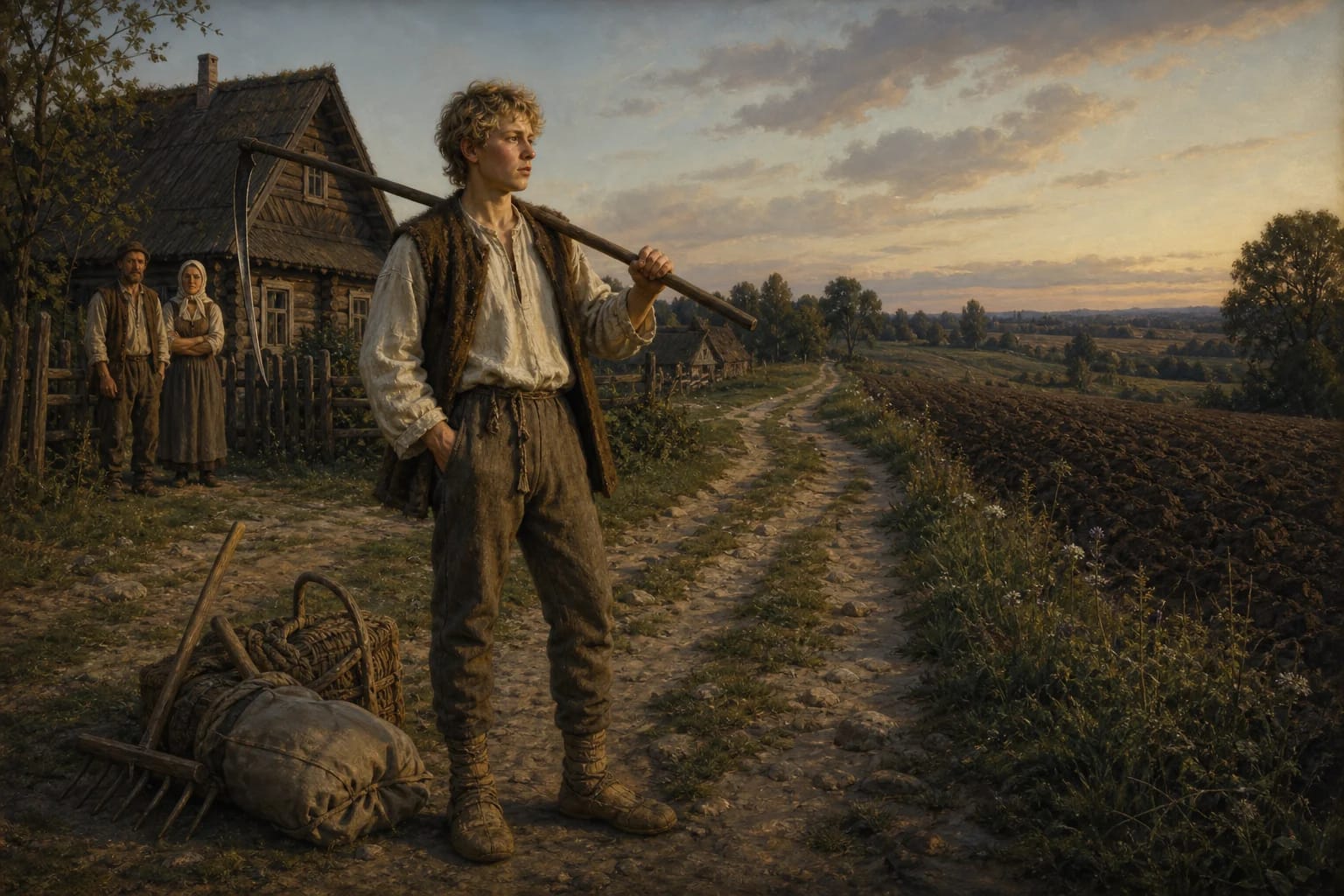
His parents, neighbors, or life itself force him to go out into the world. There the idler encounters tasks that cannot be solved by talk alone.
In the ending, the son either changes or becomes an object of laughter. The tale shows that idleness looks comfortable only as long as someone else pays for it.
Interpretation
This tale is about social maturity. A child or young person must move from dependence toward responsibility.
Work here is not only an economic duty. It means a person's ability to be part of a community and to shape one's own life.
Laughing at the idler allows the tale to speak gently about a serious problem: what happens when someone wants to use other people's labor without contributing.
History and variants
Plots about lazy people and idlers are common in domestic and didactic tales. There is no single date of creation.
Variants may differ in the trials and the ending: in some, the son improves; in others, he remains a figure taught through laughter.
In the classification used by Visuotinė Lietuvių enciklopedija, this is a domestic, didactic tale. The motif of the lazy or idle person forced to learn work belongs to a broad international field of domestic tales and anecdotal narratives about laziness. Lithuanian variants are described in Bronislava Kerbelytė's catalogue of narrative folklore (1999-2002).
Why the title remains relevant
It is a clear long-tail tale title that covers themes of laziness, work, and the didactic domestic tale.