
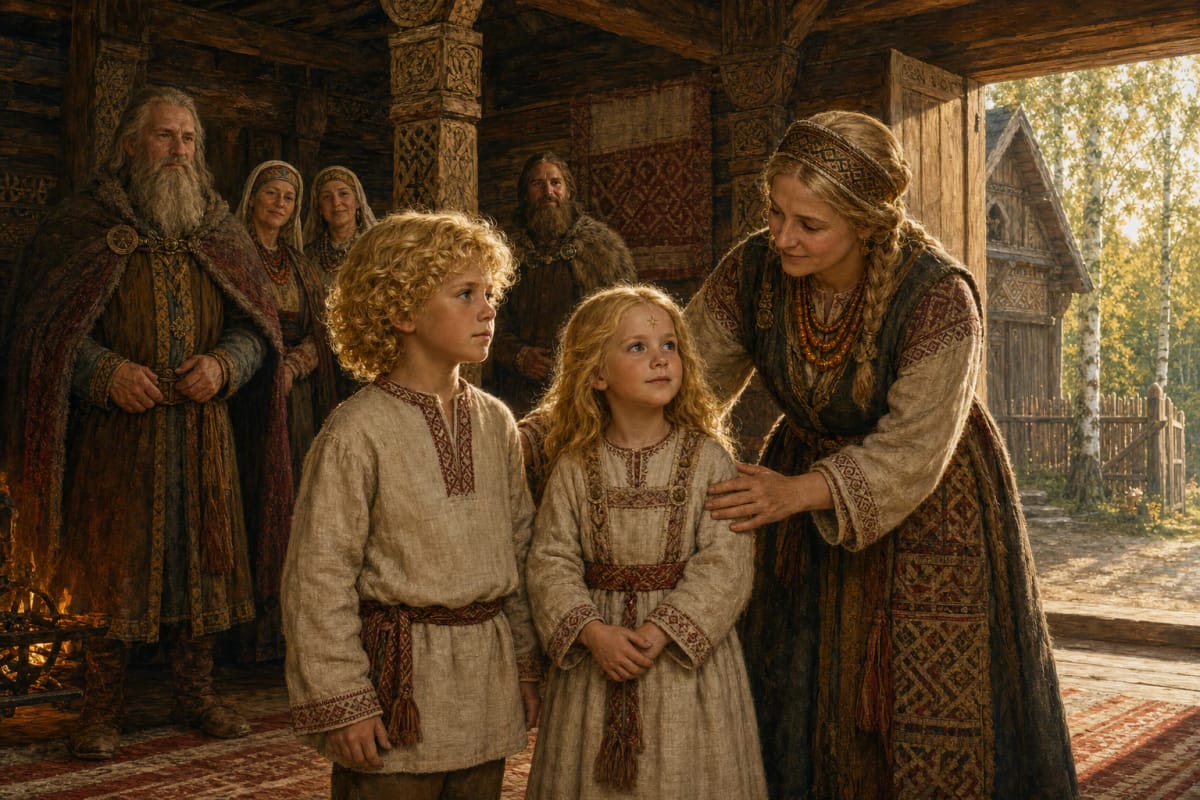
- Genre
- Wonder tale
- Source status
- traditional folklore
- Motifs
- miraculous children, golden hair, star mark, envy, recognition
Golden-Haired Boy and Golden-Star Girl, Auksaplaukis ir Auksažvaigždė
The tale
Extraordinary children are born into a royal family: Auksaplaukis and Auksažvaigždė, here rendered as the Golden-Haired Boy and the Golden-Star Girl. Marks on their bodies or in their appearance show an exceptional origin, but they also provoke the envy of those who fear losing power or status at court.
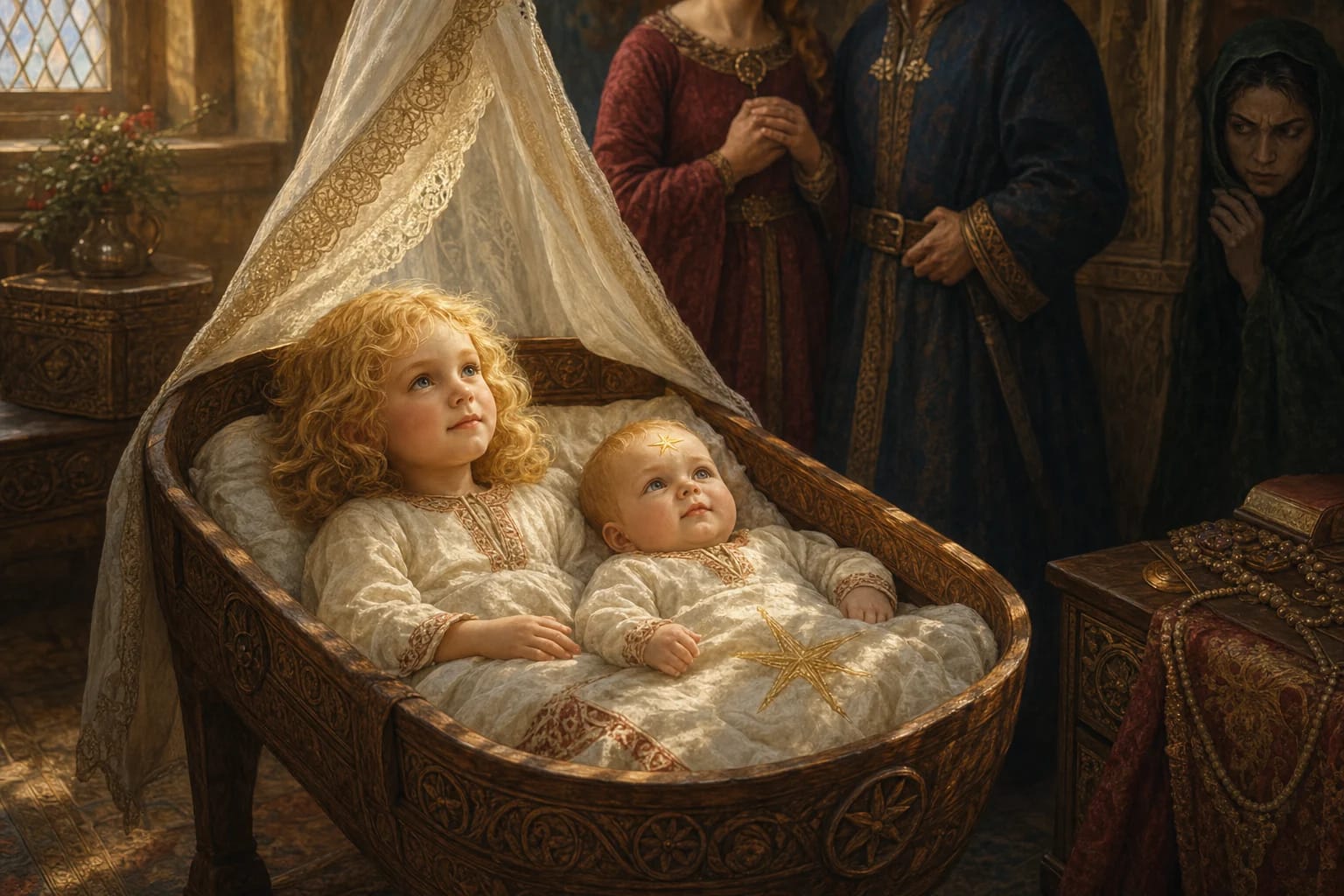
An evil relative, servant, or rival substitutes the children, hides them, or spreads lies about their mother. The true children grow up far from the palace, often under the care of ordinary people, until their signs and actions begin to reveal the truth.
In the ending, Auksaplaukis and Auksažvaigždė are recognized. The lie collapses, their mother is vindicated, and the miraculous signs become not decoration but proof of origin and justice.
Interpretation
Golden hair and the star mark signify a special identity. They are signs that falsehood can cover for a time but cannot fully erase.
The tale speaks about substituted children and a mother unjustly accused. It is a drama of family and authority: whoever controls the story of birth temporarily controls the truth.
Recognition is the main form of resolution. The true children return not because someone happens to pity them, but because the signs of truth remain written into their bodies and conduct.
History and variants
The plot of Auksaplaukis and Auksažvaigždė belongs to tales of miraculous children and substitution. Such motifs are widespread, but Lithuanian texts retain their own names and their emphasis on golden signs.
In the international Aarne-Thompson-Uther system, this is type ATU 707, "The Three Golden Children," also known through the motifs of the Truth Bird or children with golden stars. The type is known from the Middle East to Europe; a literary version is Alexander Pushkin's "The Tale of Tsar Saltan." Its central motif is a slandered mother and extraordinary children, marked by golden hair or stars, who are removed but eventually recognized. Lithuanian variants are described in the tale catalogues of Jonas Balys (1936) and Bronislava Kerbelytė (1999-2002).
There is no single date of creation. This is a plot from oral tradition, and variants may differ in the number of children, the villain, and the means of recognition.
Why the tale is useful
It lets readers examine the themes of the miraculous child, the golden sign, the vindicated mother, and envy within a royal household as separate but connected folklore motifs.