
- Genre
- Wonder and comic tale
- Source status
- variant tradition
- Motifs
- giant, devils, mill, night trial, cleverness
The Giant in the Devils' Mill, Milžinas velnių malūne
The tale
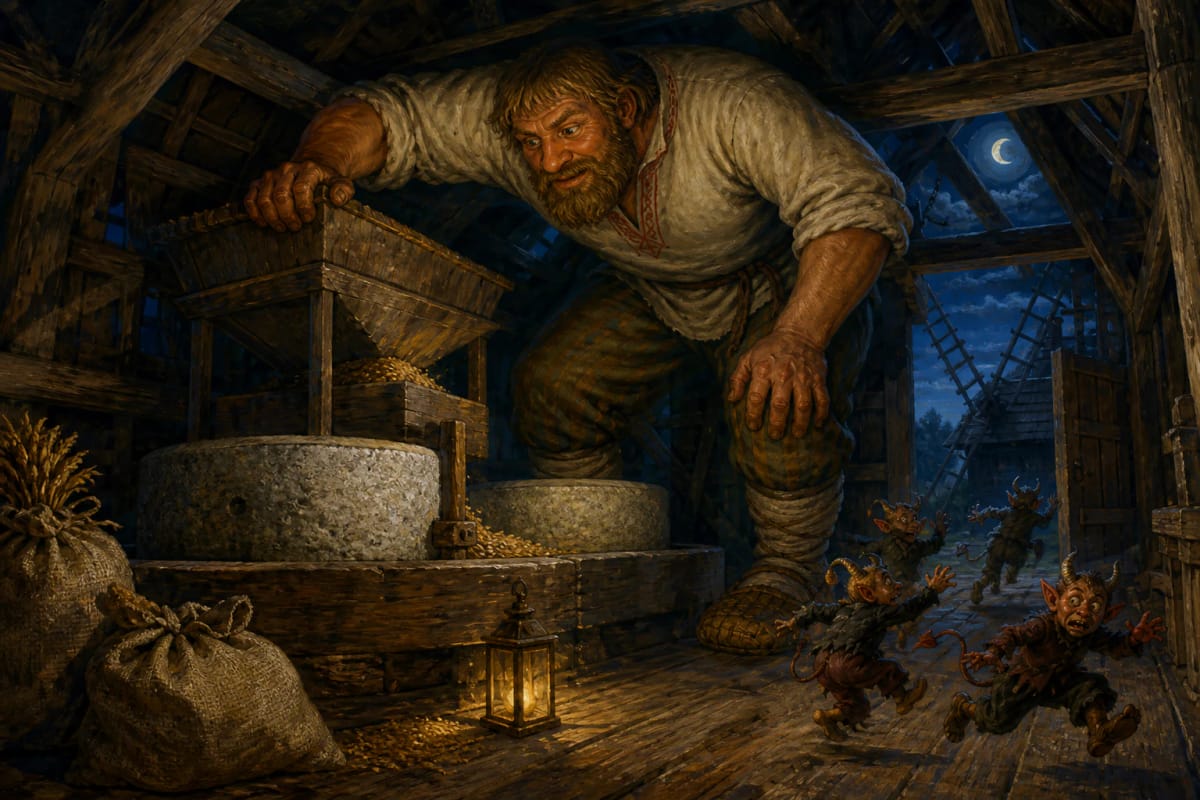
In the tale the mill stands apart, and devils rule it at night. People avoid it, because thudding is heard there, millstones turn, and unclear supernatural work takes place.
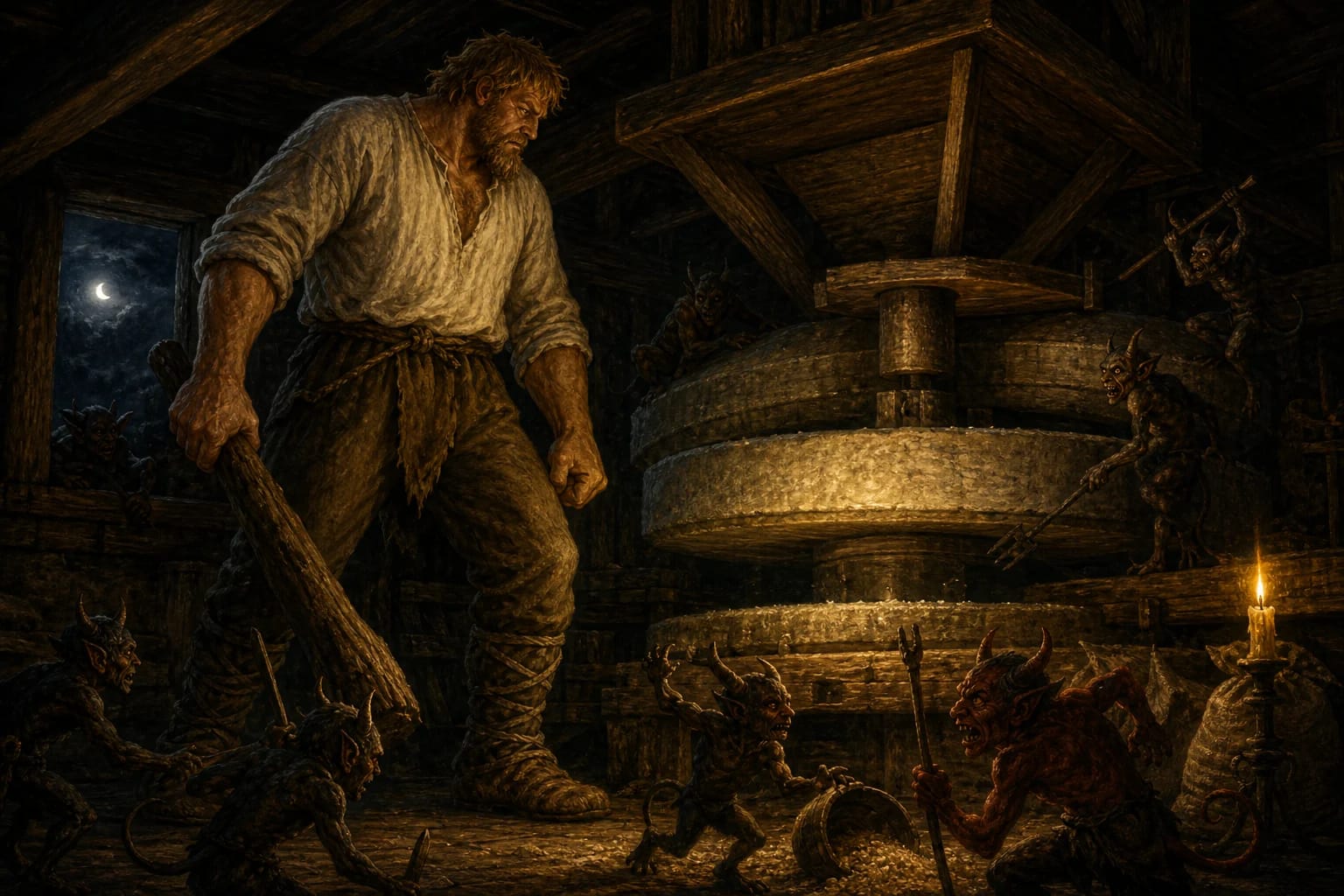
A giant or an extraordinarily strong person enters the mill. The devils try to frighten him, draw him into labor, or test his strength, but the character does not yield. He either surpasses them in strength or understands their game and answers more cleverly.
In the ending the devils lose and the mill is freed from fear. The tale leaves a comic impression: what seemed terrifying becomes conquerable.
Interpretation
In folklore the mill is often a liminal place: it stands by water or wind, works at night, hums, and does not feel entirely like the space of home. That makes it an easy dwelling place for devils.
The giant here may mean not only physical strength but a person unafraid to enter where others fear to go. His strength tests the devils' authority.
The tale manages fear through laughter. The devils' mill changes from a place of dread into a storytelling stage where danger is defeated.
History and variants
Devil and mill motifs are widespread in belief legends and tales. There is no exact date of creation for this plot; variants and local emphases matter.
Some variants stress strength, others cleverness, and still others the liberation of the mill as a frightening place.
The plot belongs to the field of foolish-devil tales and legends about enchanted places, which Visuotinė Lietuvių enciklopedija treats as a distinct Lithuanian tale group. The motif of a fearless person spending the night in a place ruled by supernatural beings and overcoming them is close to the international type ATU 326, "The Youth Who Wanted to Learn What Fear Is." Lithuanian variants are described in the catalogues of Jonas Balys (1936) and Bronislava Kerbelytė (1999-2002).
Why the page matters
This title covers a long, niche search and joins three strong Lithuanian folklore motifs: the giant, the devil, and the mill.