
- Genre
- Tale of the foolish devil
- Source status
- well attested
- Motifs
- foolish devil, clever human, hired worker, work, deception
The Devil as the Poor Man's Farmhand, Tale of the Foolish Devil
The tale
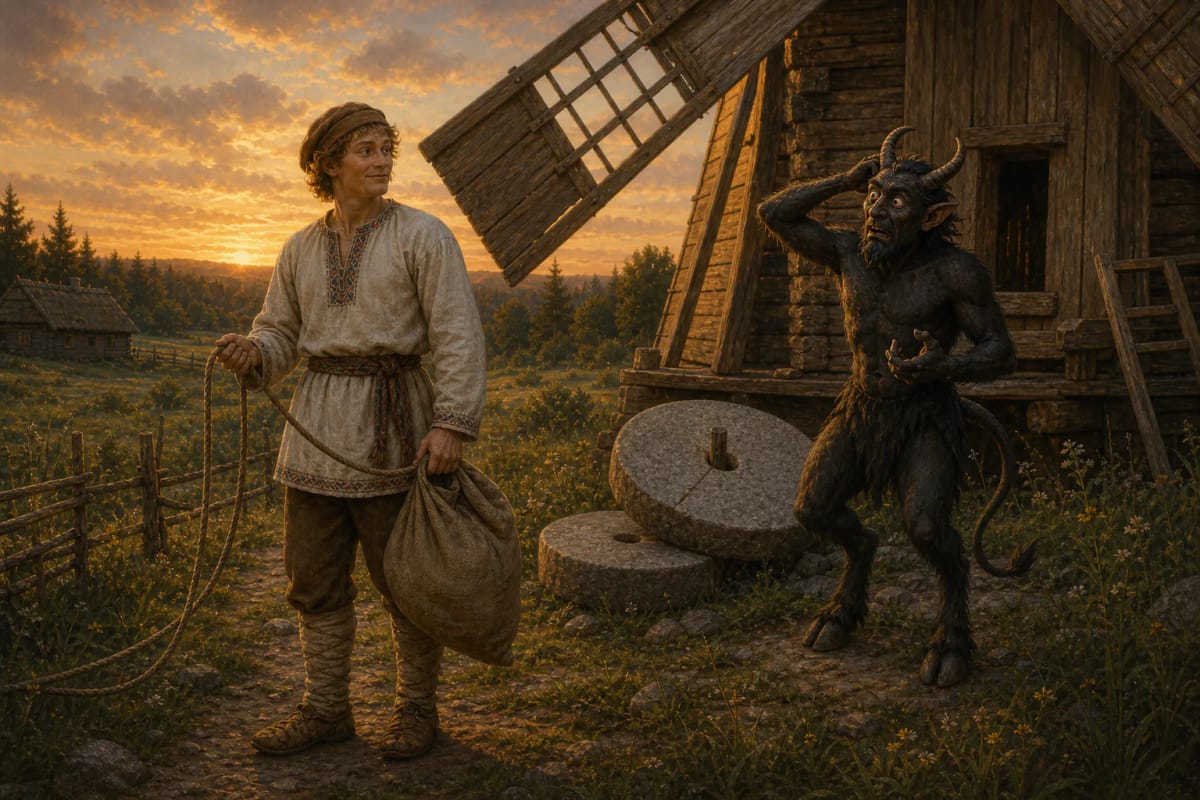
A poor person or farmhand encounters the devil. The devil appears strong, rich, or dangerous, but he lacks ordinary human experience. He easily believes wordplay, a clever agreement, or an ambiguous condition.
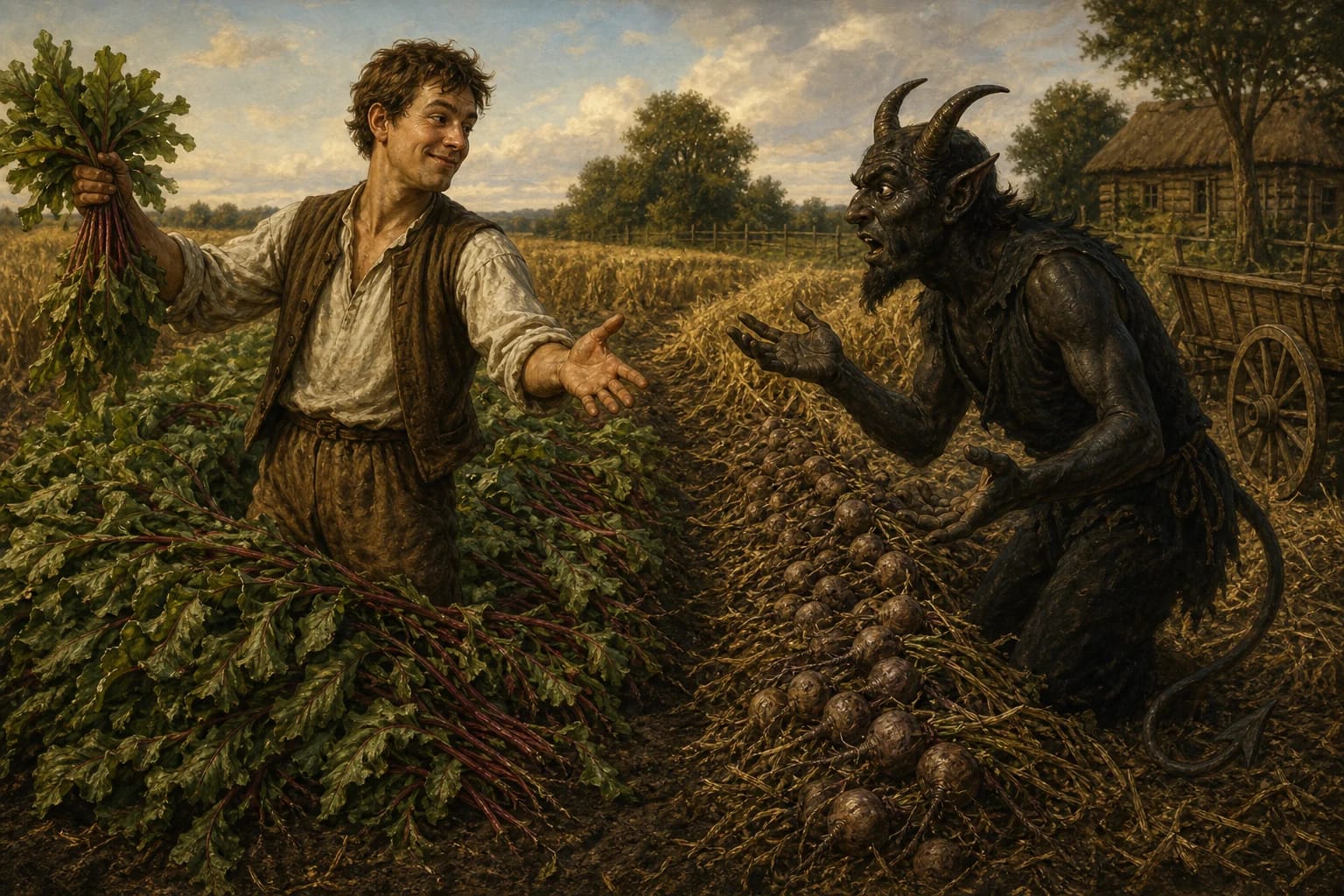
The human persuades the devil to work, carry things, divide the harvest, or compete. Each time he chooses an agreement in which the devil harms himself because he understands only the surface.
In the end the devil loses, although he had more strength. The human keeps the benefit, and the tale lets listeners laugh at the foolishness of a supernatural being.
Interpretation
In foolish-devil tales, the most important element is social and intellectual reversal. A weak human defeats a stronger opponent not by violence but by ingenuity.
The devil here is not grand theological evil. He is a folkloric opponent: dangerous, but earthy, gullible, and often comic.
Such tales give the listener psychological relief. They show that even a great threat can be overcome if a person keeps wit and humor.
History and variants
Tales about the foolish devil are a well-attested field of Lithuanian narrative folklore. In them the devil often competes with a peasant, farmhand, smith, or other ordinary person.
There is no single date of creation. This type of tale lived as comic and practical-wisdom storytelling, bringing the supernatural figure close to everyday life.
Visuotinė Lietuvių enciklopedija treats foolish-devil tales as a separate Lithuanian tale group. In the international Aarne-Thompson-Uther system, they correspond to tales about the foolish ogre or devil, ATU 1000-1199; the episode of dividing the crop is ATU 1030, "The Crop Division," where the human gives the devil tops or roots, whichever part is worthless that year. Lithuanian variants are described in the catalogues of Jonas Balys (1936) and Bronislava Kerbelytė (1999-2002).
Place among foolish-devil tales
This plot shows the basic logic of foolish-devil tales: the human has no supernatural power, but through work, verbal cleverness, and everyday experience overcomes a stronger opponent.