
- Genre
- Etiological sakme
- Source status
- folkloric
- Motifs
- distribution of eyes, the owl’s lateness, night vision, animal trait, decision of Dievas
The sakme
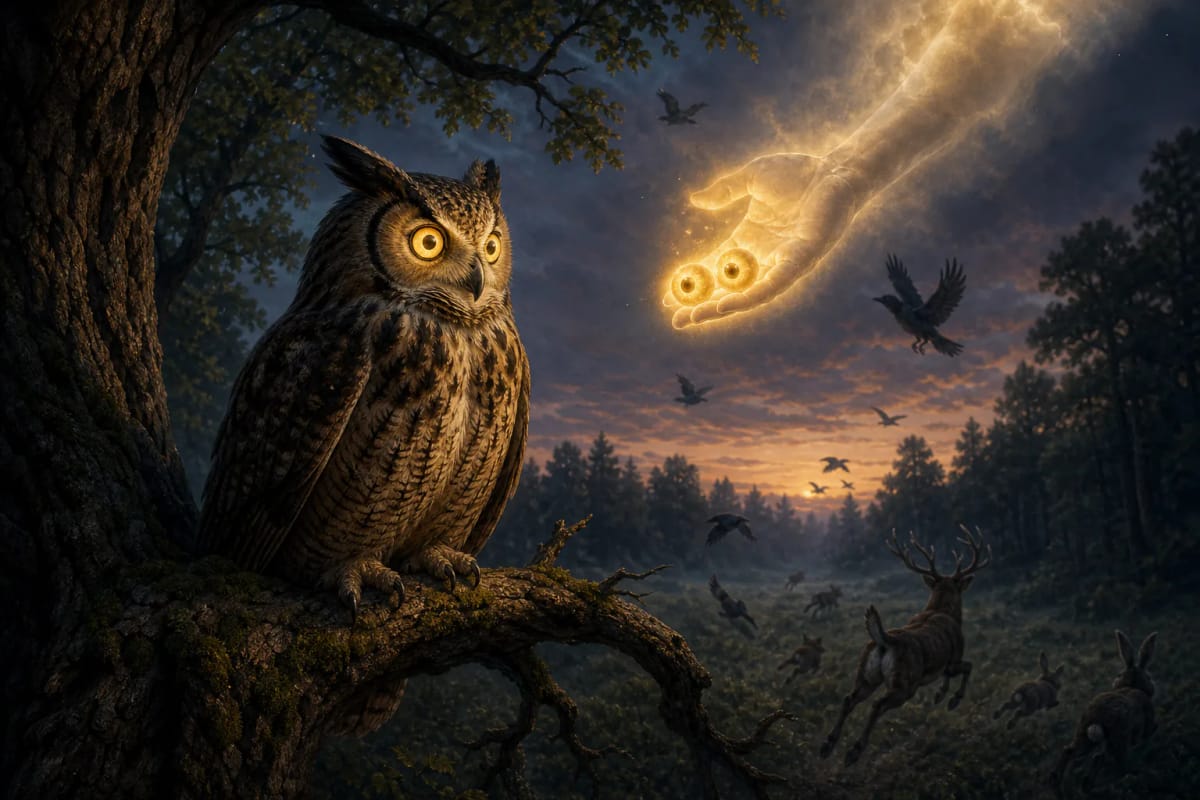
Very long ago birds and animals still had no eyes. Dievas called them all together to distribute eyes so each could see the world.
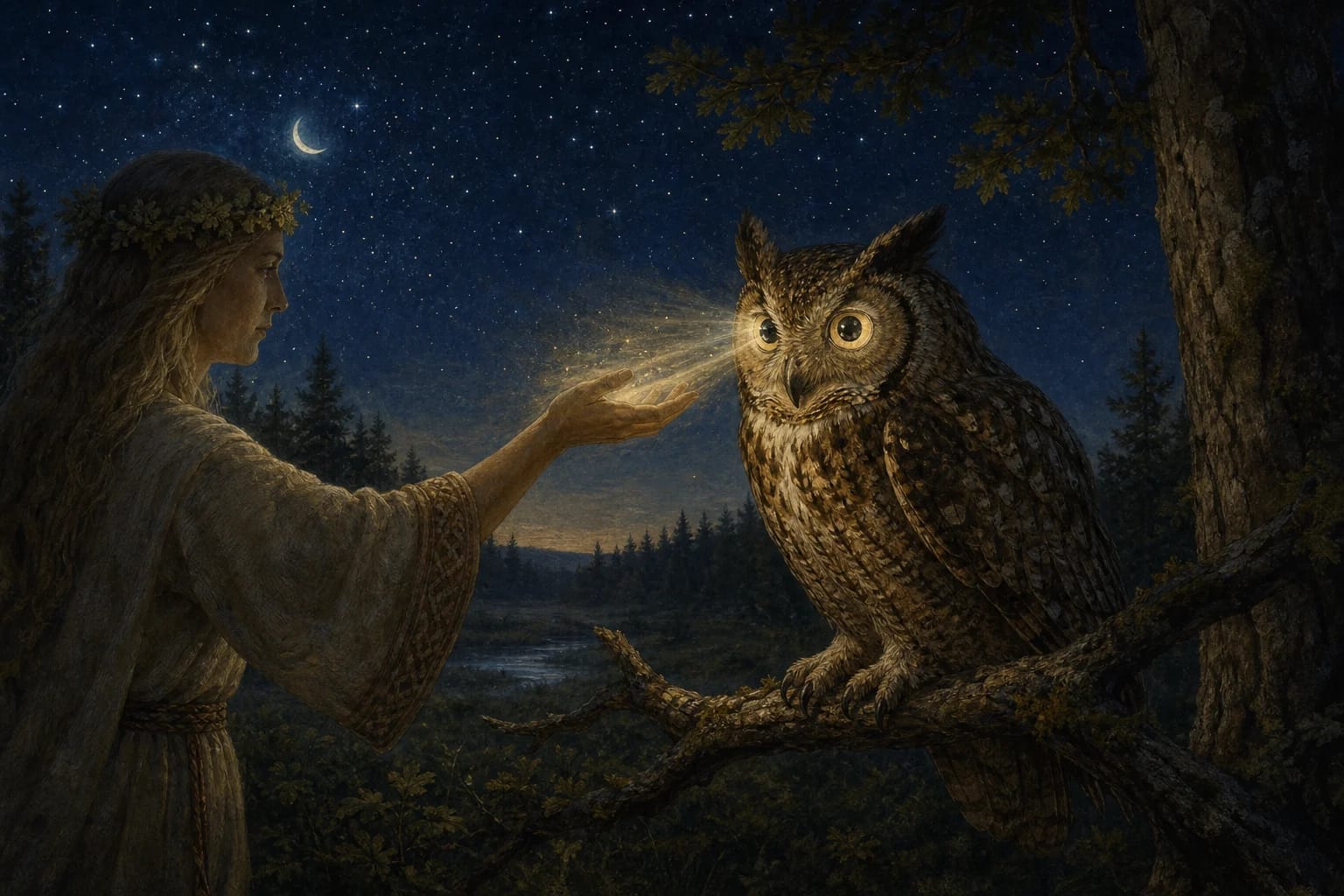
He said: whoever arrives earlier will receive better eyes. All hurried, but the owl moved slowly and appeared only after dusk.
Dievas did not want to prepare a bed for his late guest. In the dark he found large eyes and gave them to the owl so it could fly home immediately. The tale ends by explaining that the owl has seen at night ever since.
Interpretation: what do the owl’s eyes mean?
The sakme explains the owl’s night vision through narrative logic: it was late, so it received eyes suited to darkness.
Lateness here is not only punishment. The owl receives not worse but different eyes. Its place in the world becomes the night.
This is a graceful example of an etiological sakme: an animal’s trait is explained not dryly but as a meaningful event in creation time.
The source variant
Vaikams.lt: „Pelėdos akys“, complete legend text. An editorial retelling of the specific cited variant, checked against its complete source narrative. This is not a literal transcript.
A bird of the night
The owl’s eyes in the story allow it to live where others are blind. This is not a defect but a distinctive ability.
For that reason the sakme can also be read as a story about a late, different creature that nevertheless finds its own place.