
- Genre
- Etiological sakme
- Source status
- folkloric
- Motifs
- origin of an animal trait, hare’s fearfulness, sheep, laughter, split lip
The sakme
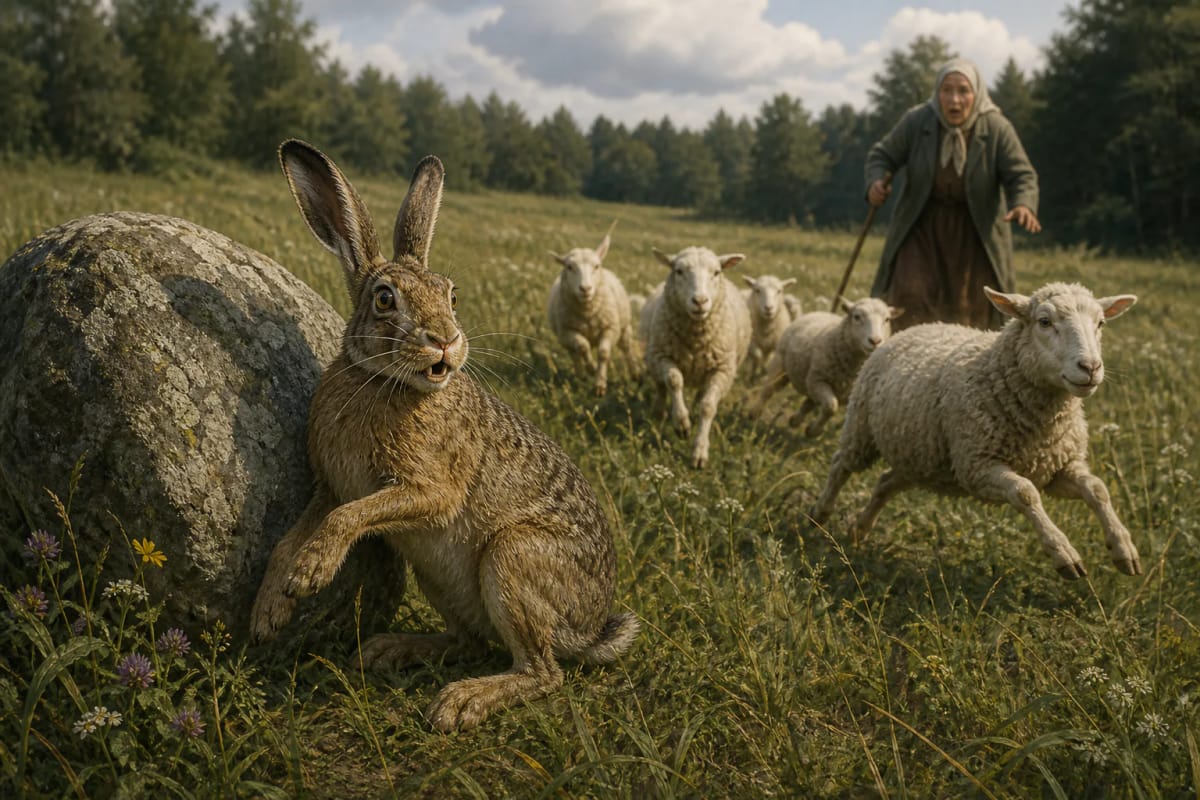
An old woman was tending sheep while sitting on a stone. On its other side she noticed a hare, weeping because nobody feared him.
He said he was going to drown himself, but the old woman stopped him. She told him to wait until the sheep came near and then jump out from behind the stone.
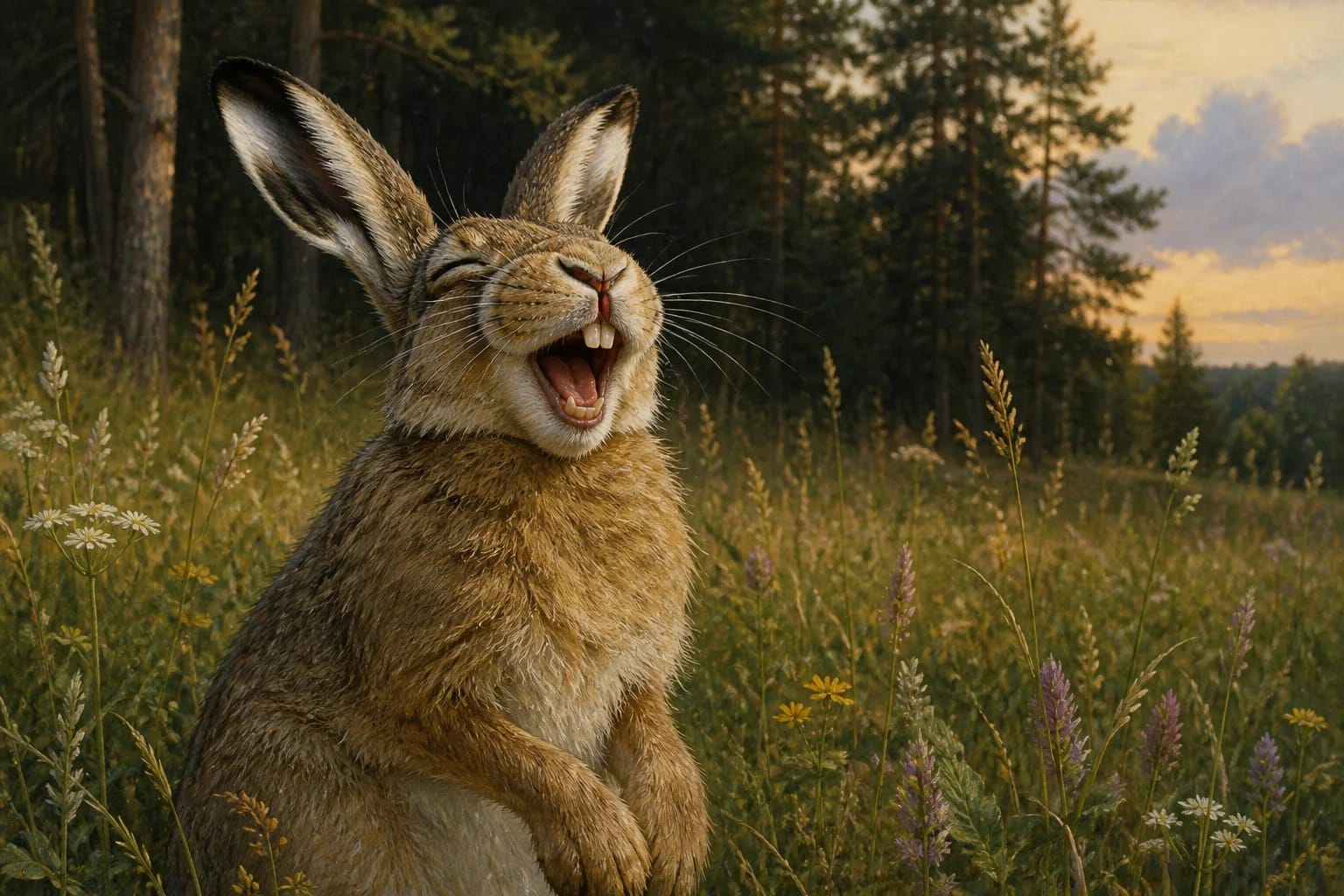
The hare did just that. The sheep were frightened and ran. The hare found it so funny that he began laughing and laughing until his little lip split.
From that time onward the hare’s lip has remained split.
Interpretation: what does the hare’s lip mean?
This is an etiological sakme explaining an animal’s bodily trait. It does not seek a biological explanation, but creates a funny and memorable origin story.
The hare is often considered a timid animal, but here he wants to be frightening. The humor comes from the fact that he scares sheep, which are not very brave themselves.
The split lip becomes a trace of laughter. A body form is explained as the result of excessive emotion.
The source variant
Vaikams.lt: „Kiškio lūpos“, complete legend text. An editorial retelling of the specific cited variant, checked against its complete source narrative. This is not a literal transcript.
Humor in etiological sakmes
Not all sakmes are frightening. Etiological stories about animals often use laughter, exaggeration, and an unexpected ending.
"Why the Hare Has a Split Lip" shows that folklore can also be a gentle game of observing nature.