
- Genre
- Etiological sakme
- Source status
- folkloric
- Motifs
- mushroom colors, poisonous mushrooms, fly, spider, forest habitats
The sakme
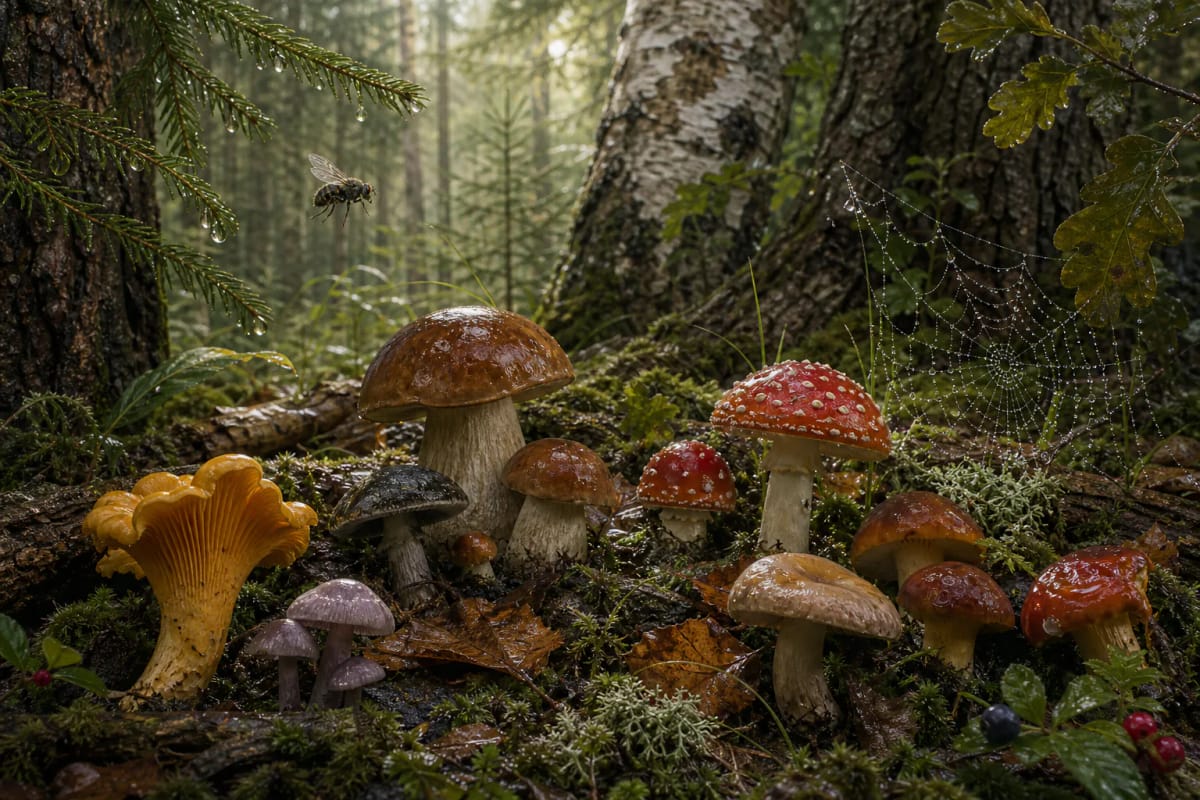
In the beginning all mushrooms were alike and not poisonous. There were no red caps, no yellow ones, no dark ones, and mushrooms grew without any special place of their own.
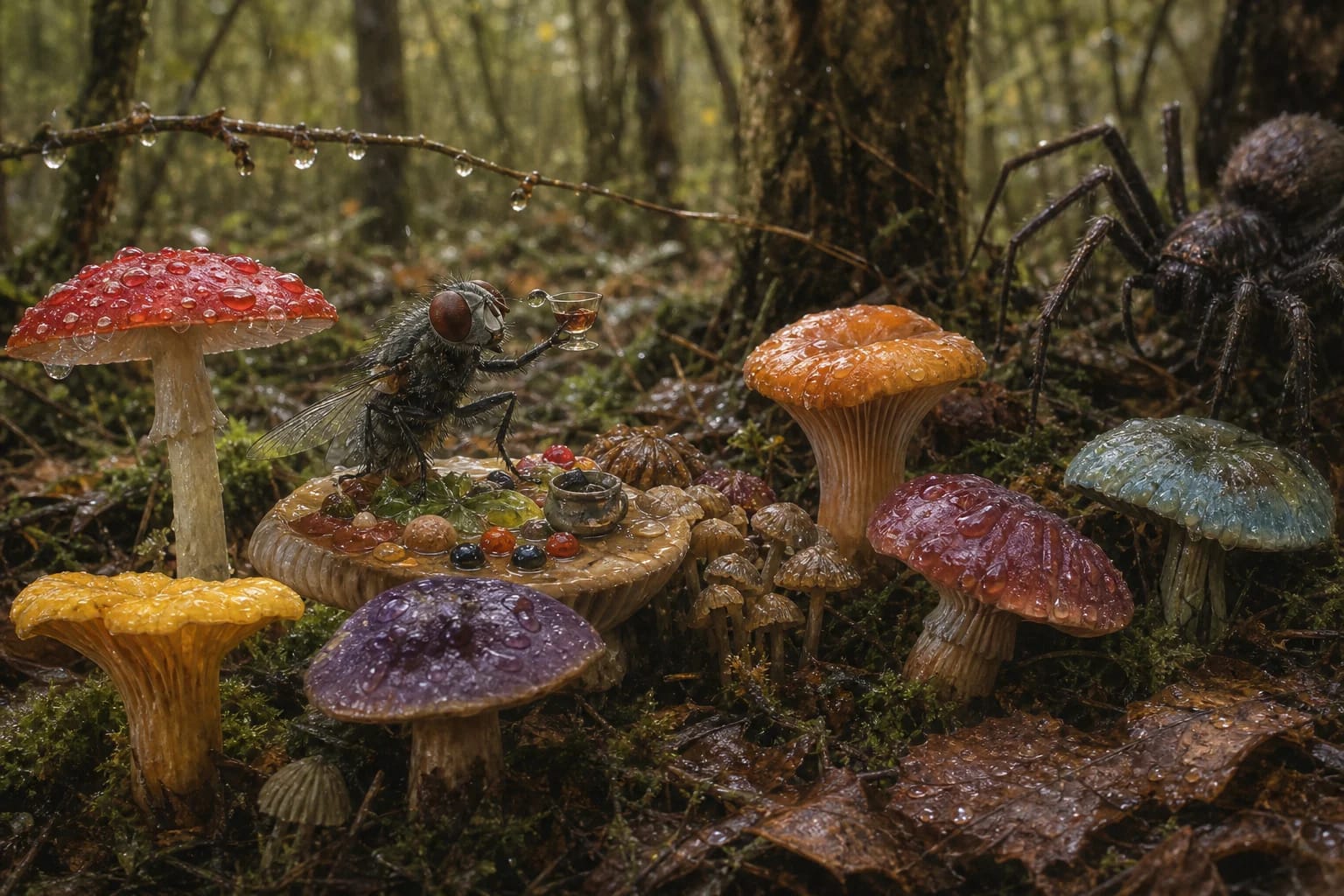
The fly, being spiteful and carrying all sorts of filth, decided to poison the mushrooms. It arranged a feast for them, dressed them in colored clothes, and gave each a place: some under pines, others under spruces, others under birches or oaks.
The spider resented the fly for marking its back with a cross and two dots, like a crusader. It spun a web, caught the culprit and ate it. With the fly gone, nobody could remove the mushrooms’ clothes.
That is how mushrooms remained colorful, and some of them poisonous.
Interpretation: what does mushroom color mean?
The sakme explains natural variety through the motifs of feast and clothing. Color becomes not a biological trait but a garment someone has put on.
The fly introduces disorder and poison; the spider stops it, but the world has already changed. The story therefore explains why beauty and danger can stand side by side in the forest.
Assigning mushrooms to different trees also reflects real observation of nature: people knew that particular mushrooms prefer particular habitats.
The source variant
Vaikams.lt: „Grybų spalva“, complete legend text. An editorial retelling of the specific cited variant, checked against its complete source narrative. This is not a literal transcript.
Color as warning
Mushroom colors in the sakme are not mere decoration. They call attention to recognition, caution, and the rules of the forest.
For that reason the story can be read as a folk ecological lesson: the forest is generous, but it demands knowledge.