
- Genre
- Mythological sakme
- Source status
- folkloric
- Motifs
- invisibility stone, raven, bird young, magical object, dangerous knowledge
The sakme
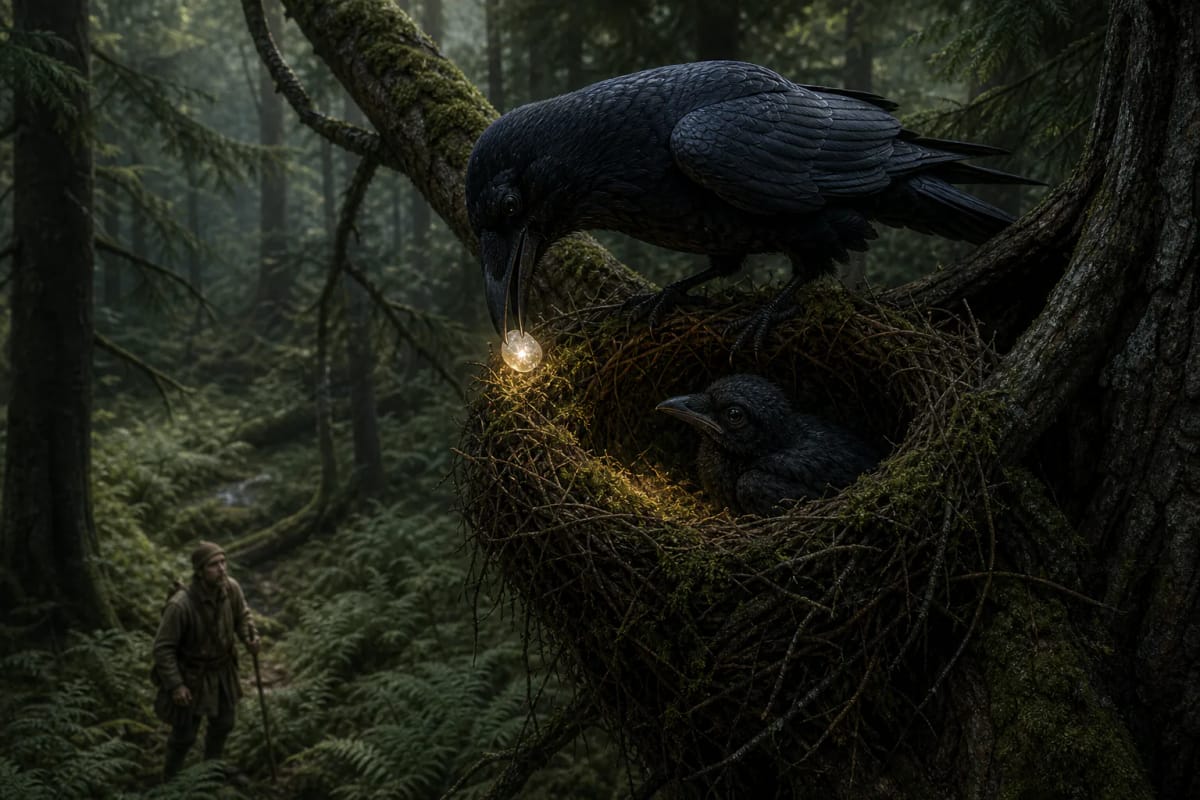
This old belief narrative describes a stone that makes its owner invisible. Obtaining it is linked to cruel treatment of a raven’s young.
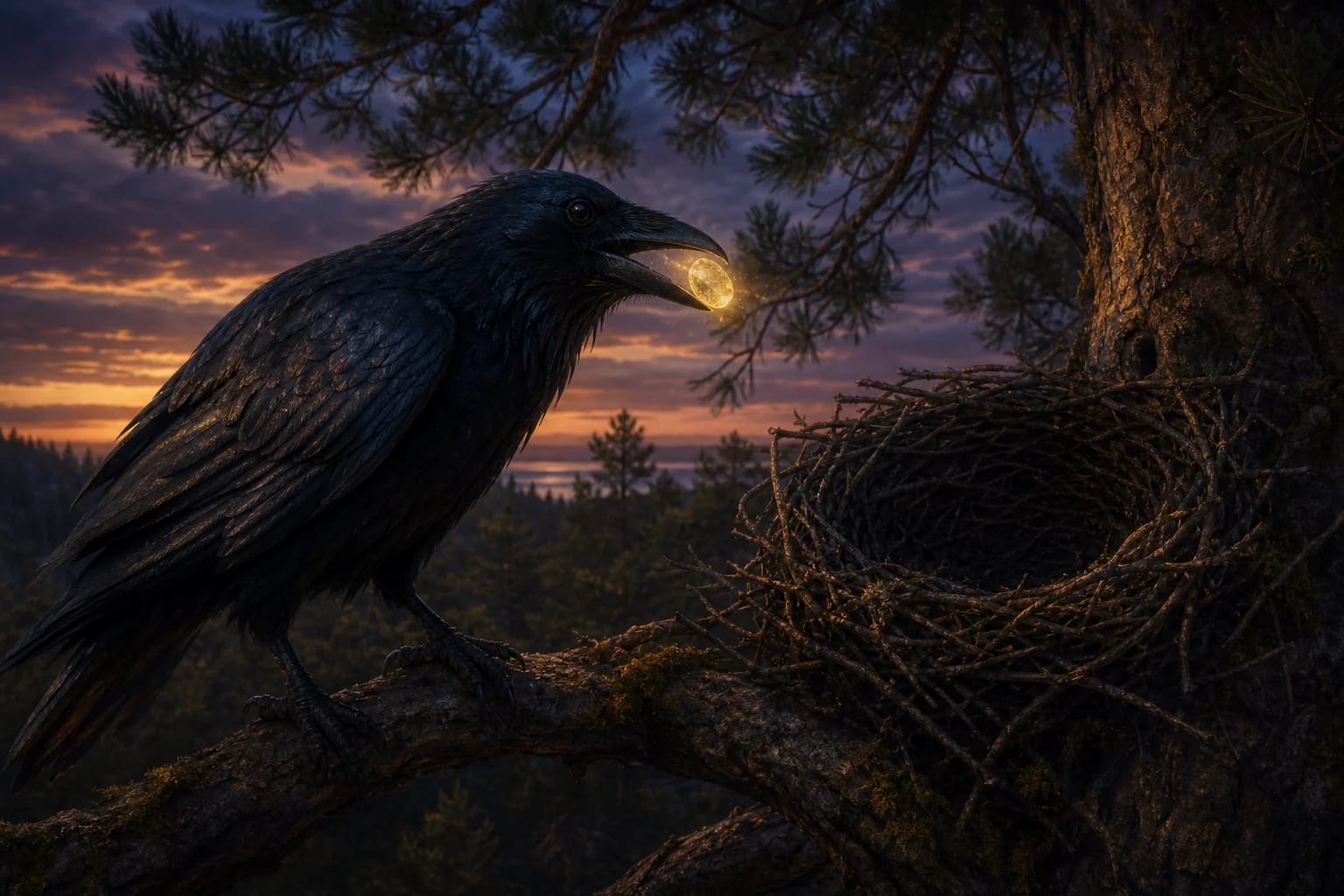
In the account, the young bird is suspended near its nest by a black horsehair. The adult raven cannot see what holds it and cannot bear its suffering. It finds the stone and places it in the young bird’s beak.
The young bird disappears from the raven’s sight, easing its distress. The belief account ends with the person taking the stone from the beak.
Interpretation: what does the magic stone mean?
A present-day reading can ask what price is paid for a desired power. This is an editorial interpretation: the source does not describe the person’s guilt or any later reckoning of conscience.
The raven here knows a secret of nature that the human does not possess. The human extracts it not by wisdom but by violence, so the gained power is morally stained.
The sakme warns that magical knowledge can be dangerous not only because of its result, but because of the way it is acquired.
The source variant
Vaikams.lt: „Stebuklingas akmenukas“, complete legend text. An editorial retelling of the specific cited variant, checked against its complete source narrative. This is not a literal transcript.
The price of invisibility
This sakme is especially relevant as a story about the desire to be unseen, evade responsibility, and act without consequences.
Yet the story does not let the price be forgotten: a person may hide from other eyes, but not from the memory of their own actions.