- Genre
- Mythological sakme
- Source status
- folkloric
- Motifs
- Laumės in the bathhouse, hot water, bath whisks, reward for respect, woven goods
The sakme
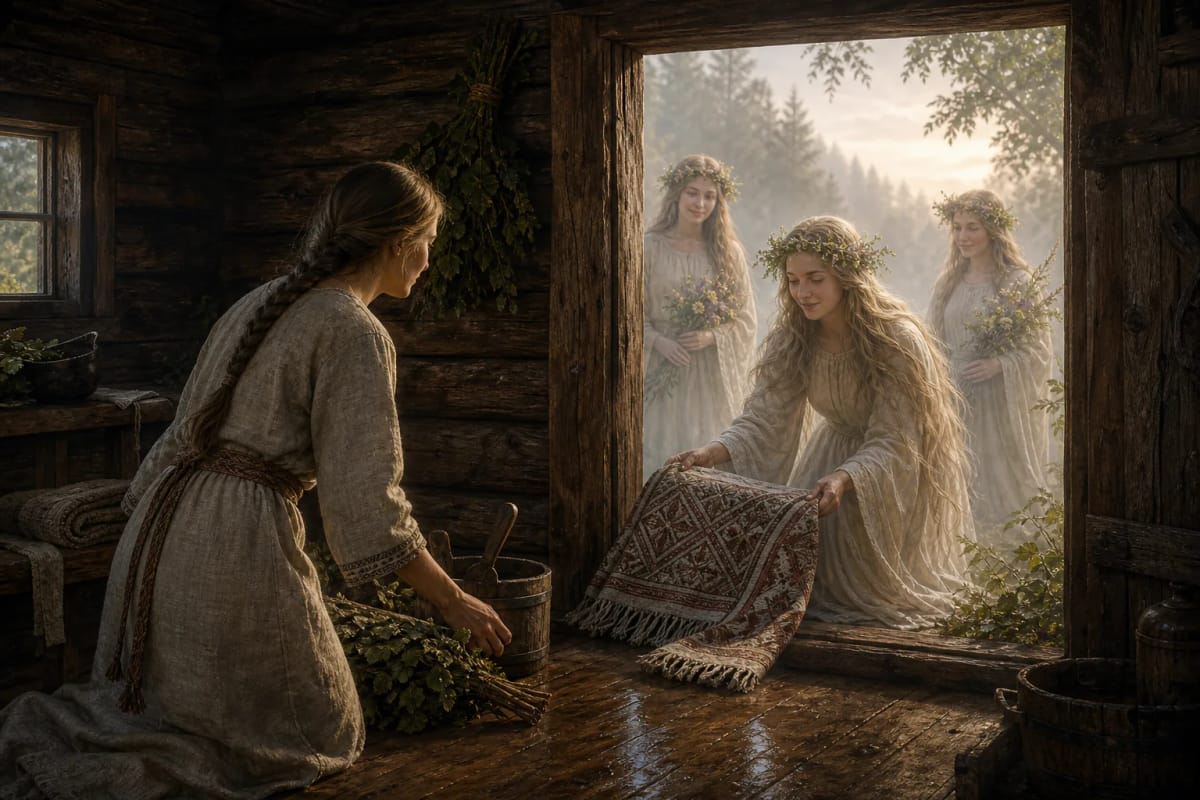
A woman knew that Laumės sometimes came to their bathhouse to wash. She did not drive them away or frighten them. On the contrary, after heating the bathhouse she left hot water, bath whisks, and cleanliness for them.
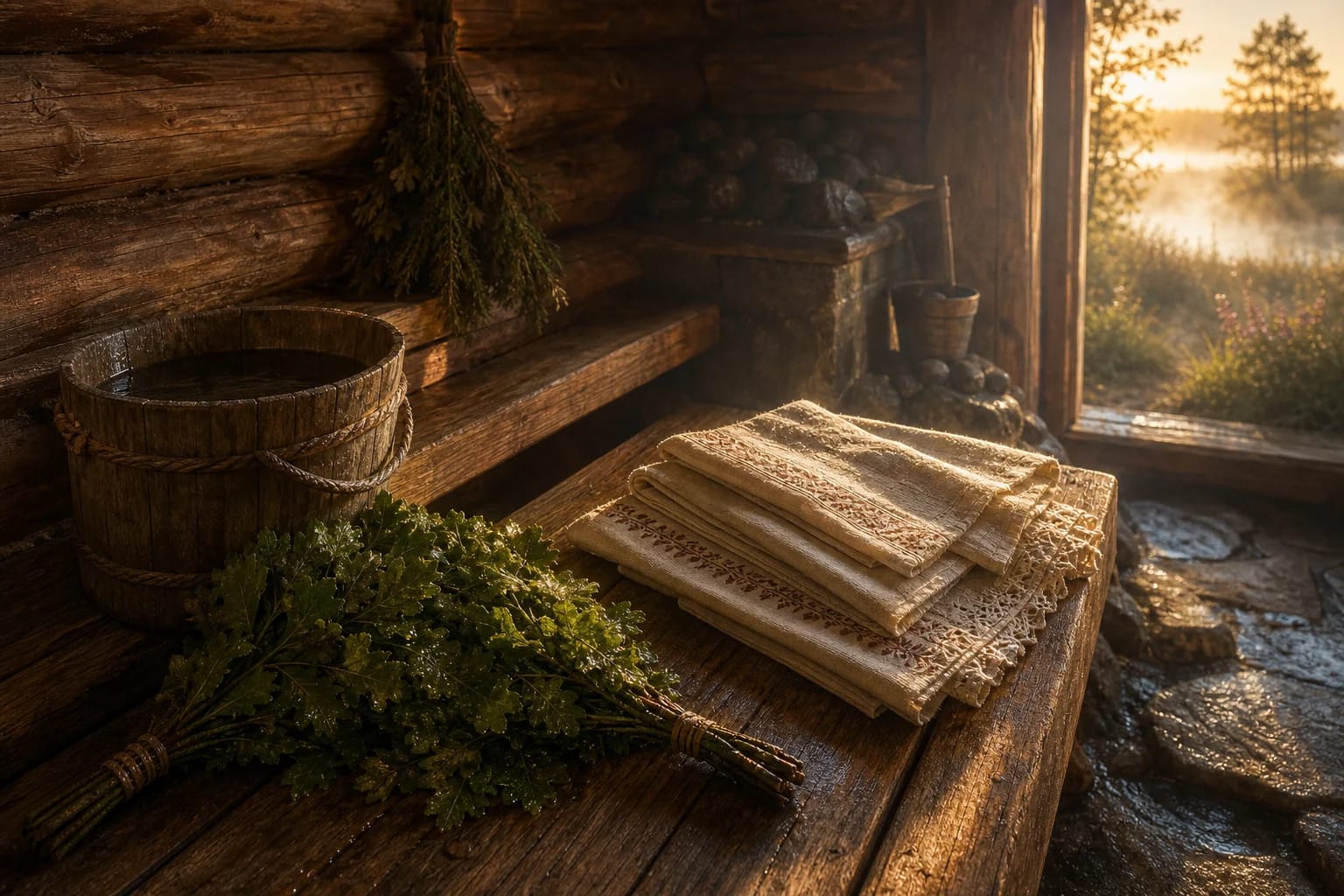
The Laumės understood that this was being done for them. From then on the woman would find gifts left in the bathhouse: now a length of linen, now sleeves, now a towel. The work was so fine that human hands could hardly match it.
Interpretation: what do the Laumės’ gifts mean?
The sakme speaks about respect for liminal beings. Laumės can be dangerous, but in this story they respond to human tact.
The bathhouse is an important threshold: water, fire, the body, cleanliness, and birth or healing customs meet there. It naturally becomes a place where Laumės may appear.
The gifts, linen, sleeves, and towels, show the Laumės’ connection with weaving and women’s work. This is not abstract wealth but a sign of careful hand culture.
The source variant
Vaikams.lt: „Laumių dovanos“, complete legend text. An editorial retelling of the specific cited variant, checked against its complete source narrative. This is not a literal transcript.
Bathhouse, weaving, and Laumės
The bathhouse and textiles form one cultural field in the story. Water and heat cleanse the body, while cloth clothes and protects it.
Laumės give not money but things that enter household life. The sakme is therefore especially suited to speaking about old hospitality toward an unknown and unseen guest.