- Genre
- Mythological sakme
- Source status
- folkloric
- Motifs
- stolen baby, changeling child, bundle of straw, little Laumė-being, night exchange
The sakme
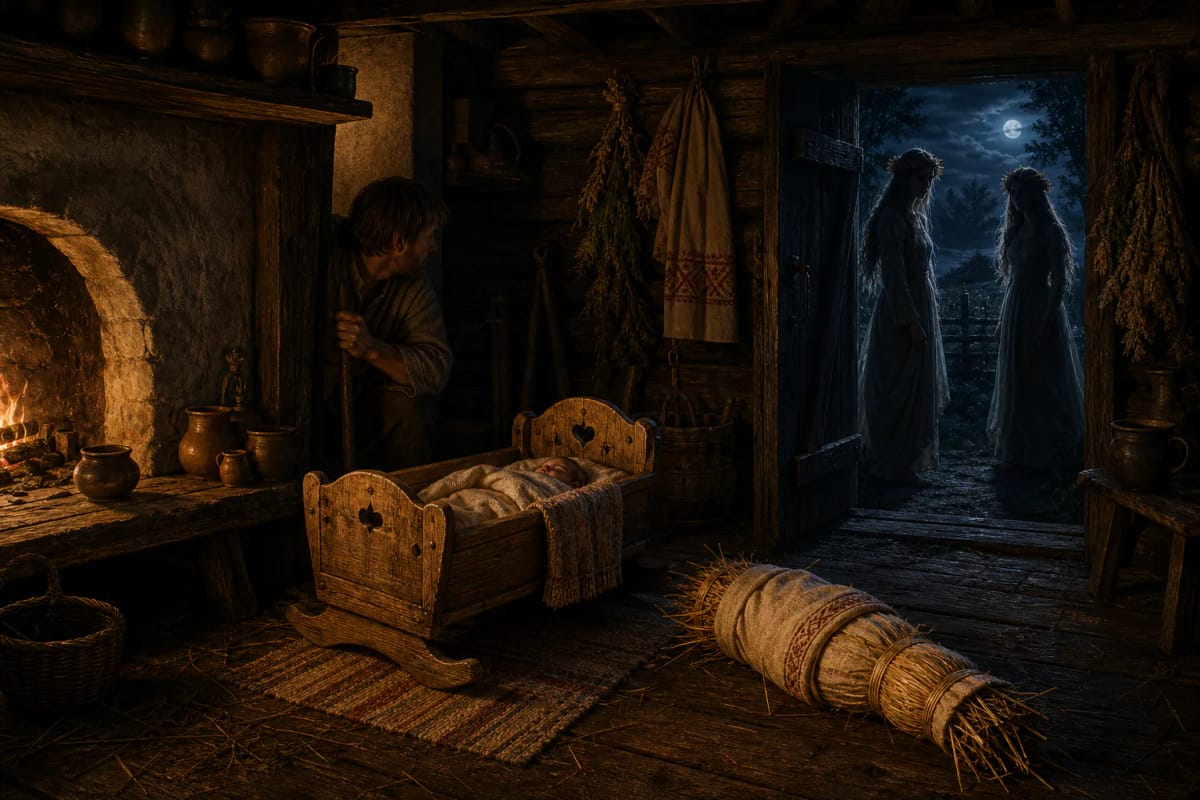
One night a farmhand lay in the cottage. At midnight laumės arrived with the household’s stolen baby. They laid it on the farmhand’s bed and began tying a bundle of straw.
Once the bundle was ready, each told the other to take it to the cradle. Neither dared go alone, so both carried it together. While they were away, the farmhand hid the real baby beneath the bedding.
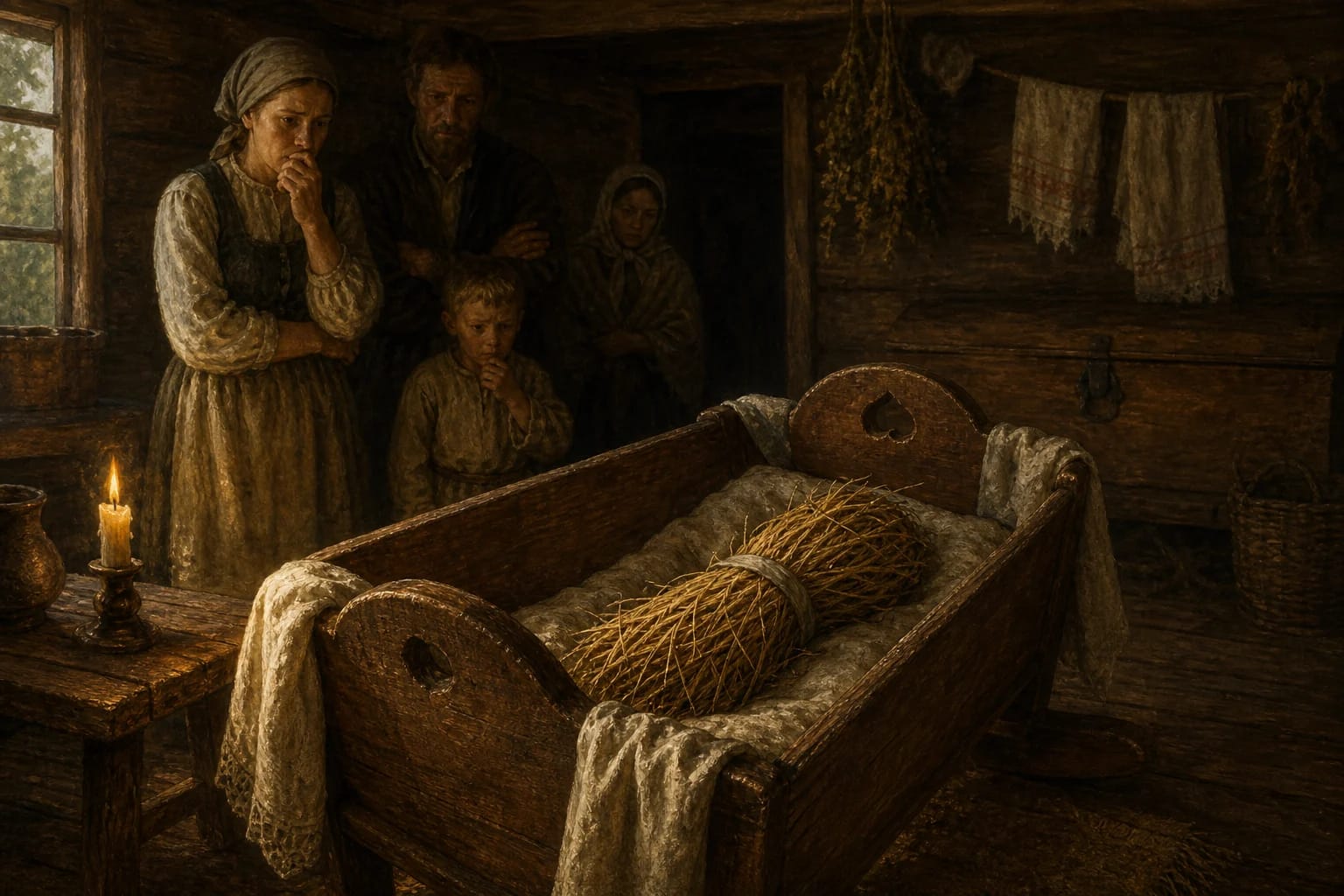
Returning, the laumės could not find the child and left empty-handed. In the morning the farmhand asked where the baby was. The family thought it was asleep. He uncovered the cradle and showed them the substitute.
A changeling’s head was already growing from the straw. When they cut it off, blood flowed from the bundle. The narrator explained that, with a little more delay, the straw would have become a living laumiukas.
Interpretation: what does the Laumės’ changeling mean?
The sakme speaks about an infant’s vulnerability and the guarding of the household boundary. Laumės come when everyone sleeps, so the danger is not battle but an unnoticed substitution.
The bundle of straw is an imitation of life. It looks lifeless, yet in the sakme it begins acquiring a body. It is a disturbing image of false, foreign life admitted into the home.
The farmhand’s vigilance saves the child. The story values not heroic strength but attentiveness, courage, and the ability to understand that something extraordinary is happening at night.
The source variant
Lietuvių tautosaka, IV (1967), no. 538, p. 545–546: „Laumių padėlys“. An editorial retelling of the specific cited variant, checked against its complete source narrative. This is not a literal transcript.
Child, cradle, and household protection
The cradle is the most important household center in the sakme. One’s own child must lie there; when a foreign creature enters it, the whole family order is violated.
For that reason the sakme stands close to old prohibitions against leaving a baby unattended and to the guarding of thresholds, windows, bathhouses, and evening hours.